

A store locator can either capture local demand or leak it. In 2026, AI overviews, voice search, and map-first results reward brands that give each branch a clear, trustworthy web presence.
Strong store locator SEO now sits where local search, GEO, and AEO meet. The brands gaining ground in local search results treat the locator as a real content system, rather than a small widget buried in the header.
Key Takeaways
- Treat the store locator as a primary content asset: Move beyond simple widgets and build a robust architecture where every branch has a unique, crawlable landing page that signals local relevance to search engines.
- Prioritize answer-ready content: Use specific FAQ sections and clear, plain-language details—such as parking, pickup options, and hours—to satisfy both human intent and AI-driven search queries.
- Ensure NAP and signal consistency: Maintain perfect alignment between your website location pages and your Google Business Profile to build entity trust and improve your chances of appearing in the local pack.
- Design for the mobile moment: Focus on high-speed performance and clear, top-of-page calls to action, as mobile users searching for local services prioritize instant information and quick navigation over brand fluff.
- Measure performance at the branch level: Avoid relying on aggregate traffic reports, which often hide poor-performing locations; instead, track metrics like direction clicks, calls, and review velocity to identify actionable growth opportunities.
Why store locators matter more now
Search engines no longer look at a locator as a simple convenience page. Instead, they use it to evaluate your local SEO and decide whether your brand can answer specific queries with enough precision to deserve visibility.
This shift matters because AI-powered search is designed to pick the best nearby option rather than just listing ten blue links. By providing accurate, real-time data, these systems help brands capture near me searches by offering clear answers to local intent. A weak locator leaves the engine guessing, while a strong one makes the decision easy by showing which branch is open, what it offers, how close it is, and why it fits the search.
This is why multi-location brands are moving from being listed to being chosen. Recent 2026 reporting points the same way, and guides like Mapular’s multi-location SEO breakdown echo the same pattern. Optimized location pages are winning because they answer local needs better than generic brand pages.
Many digital marketing teams still treat the locator as a side tool, which creates gaps in your strategy. SEO needs crawlable location pages to gain traction. Performance marketing needs landing pages that match local ads, while social media marketing often pushes store-specific traffic during promotions. Website development must build the locator so search engines can read it and shoppers can easily navigate it on a mobile device.
When those teams work apart, the locator becomes a patchwork. When they work together, it becomes one of the strongest local assets on the site.
Build site architecture before you polish store pages
Good local visibility starts with a clean site structure. If your architecture is messy, even the strongest location content will struggle to rank.
Most multi-location brands need a clear path from the brand level down to the branch level. That usually means establishing core service or category pages, a central locations hub, regional or state hubs when needed, and one unique URL for each store. The goal is simple: every page should explain exactly where it sits in the brand’s local system.
Publish a clearer system, not more pages.
Many teams rush into creating hundreds of pages without a proper framework. This often leads to orphan pages, duplicate content across your various physical locations, and thin city pages that fail to rank. Instead, build predictable folders and ensure you are using SEO-friendly URLs that follow a consistent naming convention. Your internal links are just as important; a location page should link back to the right regional hub, and service or product pages should point users toward their nearby branches. Breadcrumbs help both users and search engines understand the relationship between these pages.
For franchise groups and national chains, this balance matters even more. You need a shared template to maintain consistency, but each store still requires its own local identity. ClickyOwl’s guide to franchise multi-location SEO strategies explains that balance well, and PowerChord’s strategy guide reinforces the same point from a platform angle.
A good architecture also protects you from future growth pains. If you open 50 more stores next year, the site should be able to absorb them without requiring a total rewrite. Search engines prefer systems they can crawl easily, and brands prefer systems that allow them to scale efficiently.
Make each location page unique and easy for answer engines to read
Copy-paste location pages are still one of the biggest problems in local SEO. Simply swapping city names into the same template does not create local relevance; instead, it creates thin pages with weak signals and triggers duplicate content issues that can hinder your search rankings.
Each store page needs localized content that reflects the reality of that specific branch. Start with the basics, such as the address, phone number, hours, and the department information or product categories available at that location. Then, incorporate details specific to that city or neighborhood that shoppers actually need before they visit. Parking access, transit notes, accessibility details, in-store pickup, curbside options, appointment rules, and local staff photos all help provide a better user experience.
A good page also answers the small questions that stop people from converting. Can I return online orders here? Do you offer same-day pickup? Is this branch open on Sundays? Those answers help potential customers, and they also help AI systems summarize your page accurately.
Write short answers that remove one extra step
For answer engine optimization, short FAQs work better than vague marketing copy. Keep them plain and specific. If pricing varies, say that clearly. If stock changes by store, say to call before visiting. If a branch has a travel limit or service radius, publish it.
The best answers reduce friction. A customer should not have to jump between your store page, your business profile, and a phone call just to learn if the branch handles a basic need.
Hybrid brands can also borrow ideas from this local service area page content guide when a location supports both walk-in traffic and nearby delivery or field service. For a second outside view, Devtrios’ branch-level local SEO guide shows how brands can scale unique local content without turning every page into a template clone.
Implementing schema markup helps here, but only when it matches what visitors can already see. LocalBusiness or Store schema, FAQPage markup, and BreadcrumbList are useful for many locators. When you use this structured data correctly, search engines can better parse your page facts, whereas hidden details, invented reviews, or mismatched hours create trust problems instead of fixing them.
Technical SEO keeps store locator pages visible
A beautiful locator can still fail if search engines cannot crawl it. This is where a lot of modern builds fall short.
If your entire store search runs inside JavaScript with no indexable URLs, search engines see a shell. Every branch needs a real page with a stable URL. Search results should not depend on a user typing into a form before anything appears.
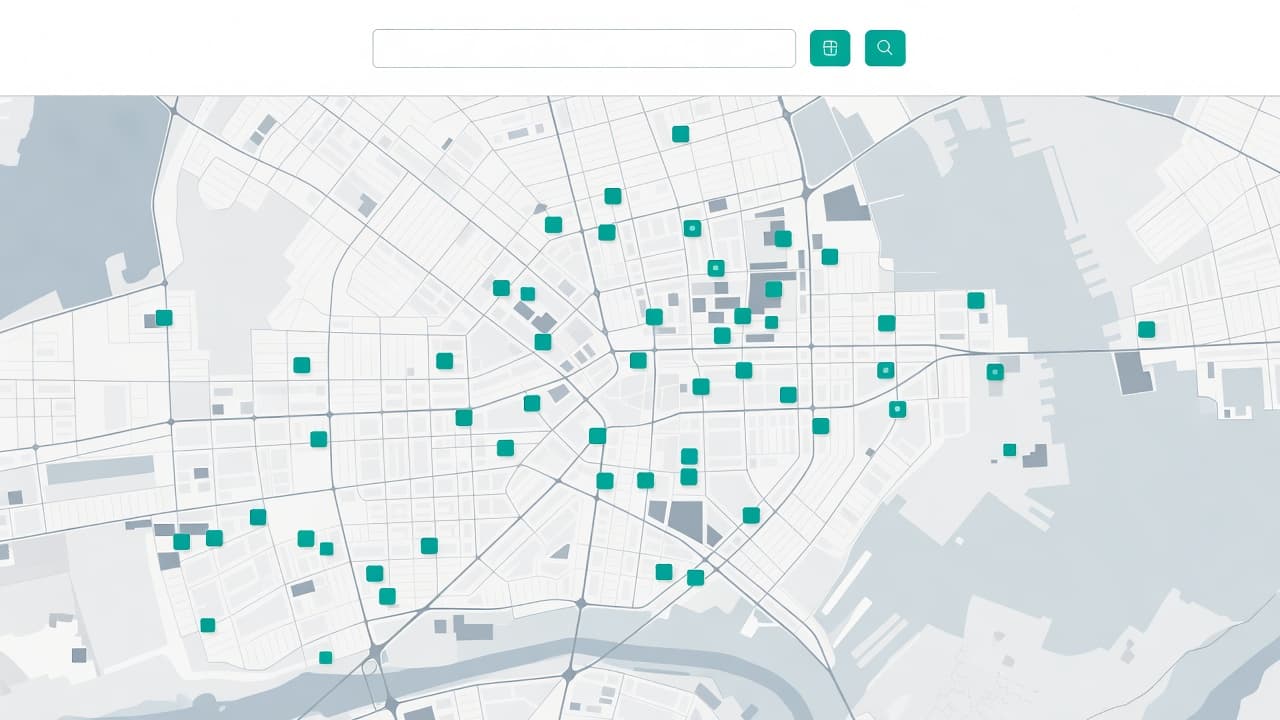
Maps help users, but they should support the page, not replace it. Keep the important facts in crawlable HTML, as an embedded Google Maps element alone will not rank a store page.
Page speed matters even more on location pages because most local visitors arrive on phones. To support mobile optimization and responsive design, compress images, trim scripts, lazy-load content below the fold, and keep interaction speed tight. Many 2026 site audits are paying closer attention to mobile responsiveness, and strong Core Web Vitals still correlate with better local landing page performance.
You also need clean indexing signals to drive organic traffic. Submit a sitemap that includes only URLs you want ranked. Keep old store URLs redirected properly during moves or remodels, and use canonicals when filters or parameters create alternate versions. If you have many stores, domain-level Search Console verification through DNS is the safer long-term setup because it survives redesigns and platform changes.
A short monthly audit goes a long way. Check mobile speed, broken links, schema, redirect paths, NAP consistency, and whether new store pages are actually indexed. A fast page with real local data is easier for both search engines and AI systems to trust.
Match every store page to Google Business Profile signals
Your website and your Google Business Profile should tell the same story. When they disagree, rankings, trust, and conversions all suffer. Aligning your profile with your website helps search engines confirm your authority, which significantly increases your chances of appearing in the Google Local Pack.
Each branch should have its own profile when the business qualifies. That profile should point to the most relevant landing page, which is usually the matching store page, not the homepage. Our advice on linking Google Business Profile to location pages lines up with what multi-location brands keep seeing in practice: local intent converts better when the profile links directly to these specific location pages.
The business name must stay clean. Use the real public-facing name, not a wish list of services and cities. Google cross-checks that field against your site, directories, and social profiles, so stuffed names often get edited back or flagged. Categories matter too. Pick the closest fit to the work or products that branch is known for.
Consistency goes beyond name and URL. You must ensure your NAP details, including hours, phone numbers, and address formatting, match perfectly across the site, the profile, and major citations. If Google keeps reverting your edits, the site often has conflicting data in the header, footer, contact page, or schema.
Accuracy also matters during exceptions. If a branch is temporarily closed, mark it correctly. A misleading open status hurts trust faster than a temporary visibility dip.
This is also where entity trust starts to build. When your profile, your store page, and your structured data all agree, you reduce confusion and protect yourself from zero-click losses.
Design mobile pages that turn local searches into visits
Most local intent comes from phones, and mobile users decide fast. A strong store page should prioritize user experience to ensure that visitors can make quick, informed decisions.
Put the main action high on the page. For retail, that might be “Get directions” or “Call store.” For clinics, salons, or service brands, it might be “Book appointment” or “Request a quote.” If a branch supports pickup, curbside, or stock checks, say it near the top.
Then repeat the action where it helps. A second CTA after the key store details works well. So does a clean footer block with directions, call, and hours. If a location uses a form, keep it short. Name, phone, service need, and ZIP code are enough for many local brands.
Message match matters too. If an ad promises same-day pickup, the local landing pages should confirm that near the top. If a profile says a branch handles screen repairs or alterations, the landing page should support that claim with plain copy and proof.
Tracking closes the loop. Use Search Console for query and page data, and add UTM tags to profile links so you can separate location traffic from other brand visits. Still, don’t expect website analytics to match your CRM exactly. People switch devices, submit duplicates, and complete the sale later. That gap is normal. What matters is whether the store page helps improve your conversion rate by turning local interest into real action.
Build local proof that people and AI can trust
A store page without proof is easy to skip. People want signs that a branch is active, real, and well run. AI systems look for many of the same signals.
Customer reviews are one of the clearest examples. A steady flow of honest branch level reviews helps far more than a sudden burst of generic praise. Ask for these reviews soon after the visit, often within 30 to 120 minutes while the experience is fresh. Keep the request simple and ask for honest feedback, not keyword stuffed language.
Responses matter too. Short, calm replies show that the branch is monitored. Thank people for positive feedback. For neutral or negative reviews, acknowledge the issue and move the fix offline. Public arguments rarely help. Google is also filtering suspicious review activity more aggressively, so slow and natural growth wins.
Photos do more work than many brands realize. Fresh storefront images, team photos, parking entrance shots, curbside pickup areas, and department highlights all reduce uncertainty. They also make store pages more believable than stock heavy templates.
Use Q&A and FAQs to remove hesitation
Branch pages should answer local questions before they become bounces. The same goes for Google Business Profile Q&A. Don’t wait for the public to ask the best questions. Pull them from calls, chats, reviews, and support logs, then answer them clearly. By incorporating location-specific keywords into these answers, you remove customer hesitation while providing the direct signals that support GEO and AEO discovery. If a customer answers first, thank them and add the official detail.
That kind of upkeep supports GEO and AEO because answer engines prefer pages and profiles with direct, verifiable facts. If you are still making the business case for local page upkeep, Ileana Kane’s 2026 view of local SEO value is a useful companion read.
Local proof is what turns a locator from a directory into a decision page.
Measure by location page performance, not only total traffic
Brand-level traffic hides local problems. One great city can make ten weak branches look healthy in a dashboard.
Track your locator by page, by branch, and by action. That means looking beyond sessions and rankings. You need signals that connect visibility to visits, calls, bookings, and revenue.
This scorecard keeps the review focused:
| Metric | What it shows | Best source |
|---|---|---|
| Indexed store URLs | Crawl and technical health | Search Console |
| Organic traffic by location page | Local demand capture | Search Console |
| Calls, direction clicks, bookings | Local intent and UX | GBP insights, analytics |
| Qualified leads or store visits | Revenue quality | CRM, POS, call logs |
| Review velocity and response time | Branch trust and activity | GBP |
Review weekly for changes in impressions, clicks, and local actions. Then review monthly for page speed, broken links, NAP issues, schema, fresh photos, and your conversion rate. If a store page gets traffic but few actions, the offer may be unclear. If calls are strong but booked outcomes are weak, the page may be fine and the handoff may be the issue.
Store locator reporting also works better when teams share the same rules. Marketing platforms count web actions. Sales systems count people and outcomes. Those numbers drift because attribution models differ, users switch devices, and sales happen later. Use the gap as a clue, not as a reason to stop measuring.
If your locator work spans SEO, paid media, dev, and branch operations, alignment matters more than another dashboard. For teams that need help tying those pieces together, Get In Touch With Us.
Frequently Asked Questions
Why shouldn’t I just use a simple map widget for my store locator?
Search engines struggle to index information buried within map widgets or JavaScript-heavy interfaces. By building unique, HTML-based landing pages for each location, you provide crawlers with the stable, accessible content needed to rank for “near me” searches.
How does AI-powered search change how I write location pages?
AI models prioritize direct, concise answers over vague marketing copy. Using structured FAQ sections that address specific customer concerns helps search engines summarize your business details accurately, making it easier for AI to recommend your store as the best local option.
What is the most important element for local search ranking consistency?
NAP consistency—the alignment of your Name, Address, and Phone number—is critical across your website, Google Business Profile, and third-party directories. When these details conflict, search engines lose trust in your data, which often results in lower search visibility and ranking penalties.
Should I use the same template for all of my location pages?
While a shared template helps maintain brand consistency, you must avoid “copy-paste” content that only swaps out city names. Each page must feature unique local details, such as specific staff photos, neighborhood-specific parking instructions, or local services, to avoid duplicate content issues and prove local authority.
Conclusion
The strongest store locators in 2026 are not just map widgets with pins. They are fast, local destination pages backed by clean data, direct answers, and authentic branch proof.
When each location has a clear URL, unique content, matching profile signals, and mobile-first CTAs, both search engines and AI tools have less to guess about. Prioritizing robust store locator SEO is the real edge for multi-location brands today, as it eliminates digital noise and provides the clarity needed to capture local intent. Ultimately, winning in 2026 comes down to providing the most helpful answer for the customer who is standing closest to the sale.