
A wide map looks impressive, but it often weakens a home service profile. For home service companies, Google Business Profile service areas are not a wish list. They are an operating map.
Many owners still add every nearby town and hope Google spreads visibility across the region. In 2026, that still falls flat. Accurate coverage, strong local proof, and a website that backs the profile do more than a bloated service list ever will.
Start with the places you can serve well. Then support that footprint with the right pages, reviews, and tracking.
Defining Your True Reach
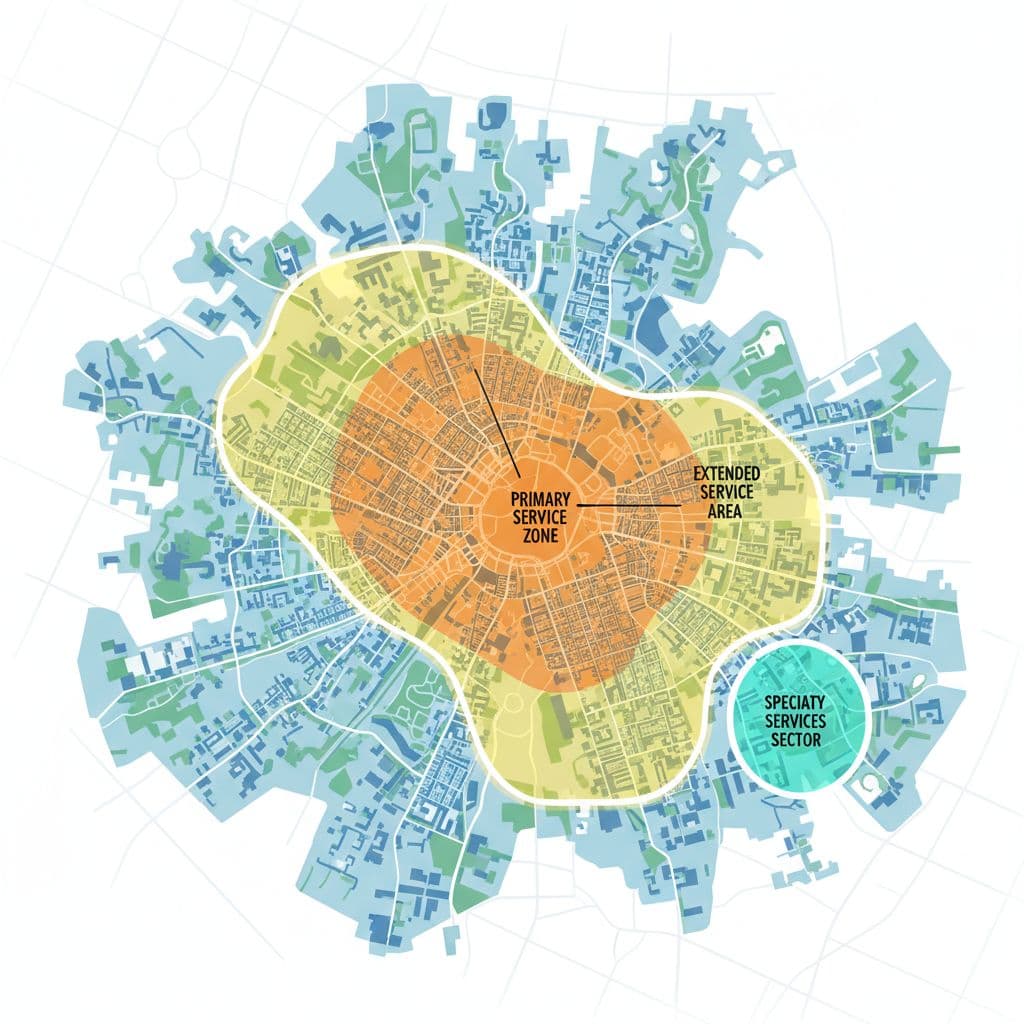
Google still treats service-area businesses differently from storefronts. If customers don’t visit your base, hide the address and list the cities or ZIP codes you actually cover. Google no longer lets you set a simple radius, and current setup guidance still points owners toward real places entered one by one.
A few rules matter right away. You can add up to 20 service areas. If you have a staffed location where customers can visit during posted hours, you can show that address. If you work from home or dispatch from a non-public base, keep the address hidden. Google’s business representation guidelines also make clear that mailboxes and similar remote addresses are not acceptable.
If you run a hybrid model, such as a showroom with in-home estimates, you can show the address and still define the areas you travel to. The setup has to match real-world operations. Customers should be able to visit the listed location during stated hours if the address is visible.
Edits can take time to appear, so don’t judge the change five minutes after you save it. Give Google time to process the update, then check the live profile again.
Service areas also don’t work like a rank button. They tell customers where you work, but they don’t force Google to rank you in every place on the list. A useful service-area business guide for 2026 repeats the same point many owners miss: keep coverage within a real driving range, not a target map drawn by ambition.
Choose places from dispatch reality, not wishful thinking
Pull the last six to twelve months of jobs, quotes, missed calls, and booked appointments. Group them by city or ZIP. Then compare close rate, job value, travel time, fuel cost, and repeat work. The goal is not the largest footprint. The goal is the strongest footprint.
Break those numbers down by service type too. Same-day drain clearing and full repipes do not share the same travel limits. Emergency electrical calls, HVAC repair, roof inspections, and recurring lawn service each behave differently. A market that works for one service may be a bad fit for another.
For plumbers and electricians, that often means a tight core because emergency work depends on fast arrival times. HVAC companies may find that repairs need a smaller zone, while installs can stretch farther. House cleaning businesses often win by focusing on dense ZIP codes, because route efficiency matters more than broad city coverage. Roofers can travel farther for larger jobs, but only if sales, permits, and crews can keep up.
Put places in your profile only if a truck can reach them and your team can serve them well.
That rule cuts out a common problem. Far-away leads may look exciting in reports, yet they often book poorly, cancel more, and leave weaker reviews when response time slips. A smaller map with better service usually beats a wider map with disappointed customers.
Decide when to use cities, ZIP codes, and counties
City names work well when customers think in city lines. That is common for plumbers, HVAC contractors, roofers, and garage door companies serving suburbs around a metro. ZIP codes can be smarter in dense markets where neighborhood fit matters, such as cleaning, lawn care, handyman work, or pest control. Counties can help on the website in rural areas, but they should not become a catch-all inside the profile.
Because Google gives you 20 slots, each one has to earn its place. Most home service companies do best with a simple zone model. Keep a core zone in the profile first. Add outer areas only if profit and response times still hold up. Put fringe markets into your website and local SEO plan before you add them to GBP.
A lawn care company may keep weekly route towns in the profile and leave one-off cleanups outside it. Meanwhile, a pest control business may include suburbs where route density is strong and leave scattered rural stops off the list. If a town matters but is not ready for a slot, support it with a relevant page, honest travel notes, and local proof first. When the market starts closing consistently, move it into the profile and remove a weaker area.
Beyond the Map: Website and Local SEO Alignment

A clean profile is only half the job. The other half lives on your website, in your reviews, and across the local signals that support those service areas.
For most owners, Google Business Profile sits beside SEO, Performance Marketing, Social Media Marketing, Website Development, and the rest of DIgital Marketing. Each channel has a different job. GBP captures high-intent local demand. Your website and local SEO prove that the business belongs in those towns. Paid campaigns can push into new markets faster, but they do not fix weak local relevance.
This split is easier to see side by side.
| Inside Google Business Profile | Outside the profile | Why it matters |
|---|---|---|
| Categories, services, hours, attributes | Service pages and local support pages | Google needs a clear match between what you do and where you do it |
| Service areas and address visibility | Consistent citations and local mentions | Mixed location signals create doubt |
| Photos, reviews, Q&A, booking links | Mobile speed, forms, call tracking, analytics | Visibility is wasted if leads cannot convert |
| Profile updates and moderation | Keyword mapping, internal links, and local proof | Strong pages help wider area coverage make sense |
| Review responses and fresh media | Links from relevant local sources | Prominence grows when trust signals line up |
The profile can describe coverage. Your site has to prove relevance and trust.
What you can control inside GBP today
Start with the primary category. A plumber should choose “Plumber”, not a vague umbrella label. An HVAC company should use its closest true category. Then add secondary categories only for services you deliver every week. The same rule applies to electricians, cleaners, roofers, garage door companies, and landscapers.
Next, fill out services in plain language. “Emergency drain cleaning” is stronger than a generic line item. “AC installation” beats fluffy wording. The business description should lead with the main location, core services, proof, and a clear next step. If you want a practical checklist for those fields, this Google Business Profile optimization guide is a useful reference, and this home service GBP guide shows how those elements work for contractors.
Then tighten the trust signals. Keep hours accurate. Update holiday hours. Add recent photos from real jobs. Ask for reviews right after service while the experience is fresh. Reply to reviews with natural mentions of the service completed and the area served. Those replies help future shoppers and add helpful local context.
Q&A is another missed area. If customers often ask about emergency service, financing, same-day booking, or travel fees, answer those questions on the profile before they become friction points. A good profile removes doubt fast.
Avoid shortcuts that create risk. Don’t stuff cities into the business name. Don’t create extra profiles for suburbs you do not staff. One real profile with strong reviews, accurate categories, and fresh media is far safer than several thin listings waiting for suspension.
What your website and local SEO still have to prove
Service areas alone will not rank a business for “water heater repair in Frisco” or “house cleaning in Park Slope.” Those searches usually need a strong service page, clean internal linking, and proof that the business works in that market.
Begin with the service pages that drive real revenue. Each major service needs clear copy, trust signals, FAQs, and a direct call to action. If you want a clean structure, this service page SEO template is a solid starting point. When you expand into multiple towns, good mapping matters too. This local SEO keyword research template can help pair actual services with actual places.
Local pages only work when they say something useful. A page for “AC repair in Frisco” should mention response times, the neighborhoods you reach, common job types in that market, and reviews or photos that feel local. A roofing page for a storm-prone suburb should show recent local projects, inspection timelines, and insurance-related help if you offer it. Thin city pages copied twenty times will not carry much weight, and they turn visitors off fast.
Website Development plays a bigger role here than many owners expect. A slow mobile page loses people who tapped through from Maps. Weak forms kill outer-market leads where shoppers compare several contractors at once. Fast pages, visible licenses, warranty details, and tap-to-call buttons turn profile traffic into booked work.
Besides pages, keep your business details consistent across major directories, suppliers, trade associations, and local partners. A link from a neighborhood chamber or community event page often helps more than a pile of generic listings. If your website says you serve twelve towns but every mention online points to one city, the support looks thin.
Where the rest of your marketing fits
Social Media Marketing can support this work, but it does not replace it. Job photos on social platforms can build branded searches later. A short video from a real install, a before-and-after cleaning post, or a pest control walkthrough can give future reviewers something familiar to reference.
Performance Marketing also has a place. Paid search can test a fringe market before you commit to deeper local pages. Local Service Ads and Google Ads can show whether a town produces the right type of lead. However, paid traffic should follow service reality, not override it. If the team cannot answer fast, drive there profitably, or support the area on the site, the profile should not pretend otherwise.
Service areas can describe coverage, but they cannot replace proof on your site.
Performance Metrics, Regular Audits, and Final Takeaways

Once your profile, service areas, and website point in the same direction, treat them like an operating system. Review them every month, then make small changes based on booked work, not on random ranking screenshots.
What to review every month
Google’s built-in performance data helps, but it is not enough on its own. Watch calls, website clicks, messages, booked jobs, and close rate by area. If your address is hidden, direction requests matter less than phone calls and form fills. For scheduled services, track profit after drive time and fuel, not only lead count.
Pair profile data with call tracking, your CRM, and website analytics. Tagged links from GBP can show what happens after the click. Then compare your core towns with outer towns. If one suburb brings lots of calls but weak close rates, it may not belong in the profile. If another ZIP produces high-ticket work with short travel time, that area deserves more support on the site.
Reviews belong in the audit too. Are recent reviews tied to the markets you want to grow? Do photos show current jobs, trucks, staff, and finished work? A roofer should refresh galleries after storm season. An HVAC contractor should update equipment and technician photos through the year. A cleaning company can rotate before-and-after images that match real home types in its core zone.
Set a quarterly cleanup day as well. Recheck categories, services, hours, seasonal offers, and old photos. Remove towns that no longer fit. Add new areas only after your site, reviews, and dispatch capacity support them.
When to add or remove a service area
Add a new town only when you have proof behind it. That proof can be steady booked work, strong close rates, a page that serves the market well, and a few recent reviews or project examples nearby. If you add the town first and build support later, the profile often gets ahead of the operation.
Removing an area can be just as smart. If a suburb keeps producing price shoppers, long drives, or low review quality, it may not belong in your map. Many owners leave weak areas in place because they fear losing reach. In practice, trimming dead weight can improve lead quality and route efficiency.
Seasonality matters here too. HVAC, roofing, gutter work, lawn care, and holiday lighting businesses may need to shift their focus through the year. The service area list does not have to change every month, but your supporting pages, photos, review requests, and ad targeting should reflect what the team can handle right now.
How common home service niches should adjust in 2026
Plumbers and electricians usually need tighter coverage for emergency jobs because speed sells. If crews cannot reach a town fast, drop it from the profile or support it only with scheduled-service pages.
HVAC companies can split their plan by season. Keep repair coverage tighter in peak months, then support a wider install area with dedicated pages and ad targeting when crews have room. Roofing businesses often travel farther, but they still need proof in each market, such as storm-response pages, local reviews, and recent project photos.
Cleaning companies and lawn care brands should care more about route density than map impressions. Three ZIP codes with repeat work can beat ten scattered cities. Pest control firms often see the same math because recurring routes win when stops stack close together.
This is where the wider channel mix comes back in. This 2026 home service marketing guide is worth reading if you are lining up local SEO, Google Ads, and seasonal lead flow. Paid campaigns can test demand in a fringe market before you build out more local pages, but they should follow the service reality, not override it.
If the pieces do not line up, fix the basics first. Tighten the service-area list. Improve the matching pages. Refresh reviews and photos. Then revisit campaigns and content. If you want help aligning GBP, local SEO, site pages, and lead tracking, Get In Touch With Us when you are ready to clean it up.
Smart coverage is smaller and sharper than most owners expect. The best home service brands do not try to look local everywhere. They prove local value where they can respond fast, do strong work, and earn reviews that back up the promise.
That is the real 2026 play. Keep your coverage honest, support it with local SEO, and review the data often. When those pieces stay aligned, your Google Business Profile service areas stop being a settings field and start working like a growth system.