

A lot of service business sites still work like brochures. They list services, mention a few cities, and hope calls show up. That's not enough in 2026.
Local SEO internal linking turns your site into a guided path. It helps Google connect your services, locations, and proof. Just as important, it helps a homeowner, patient, or client move from “Can you help?” to “I'm ready to book.”
Why Internal Linking Boosts Local SEO
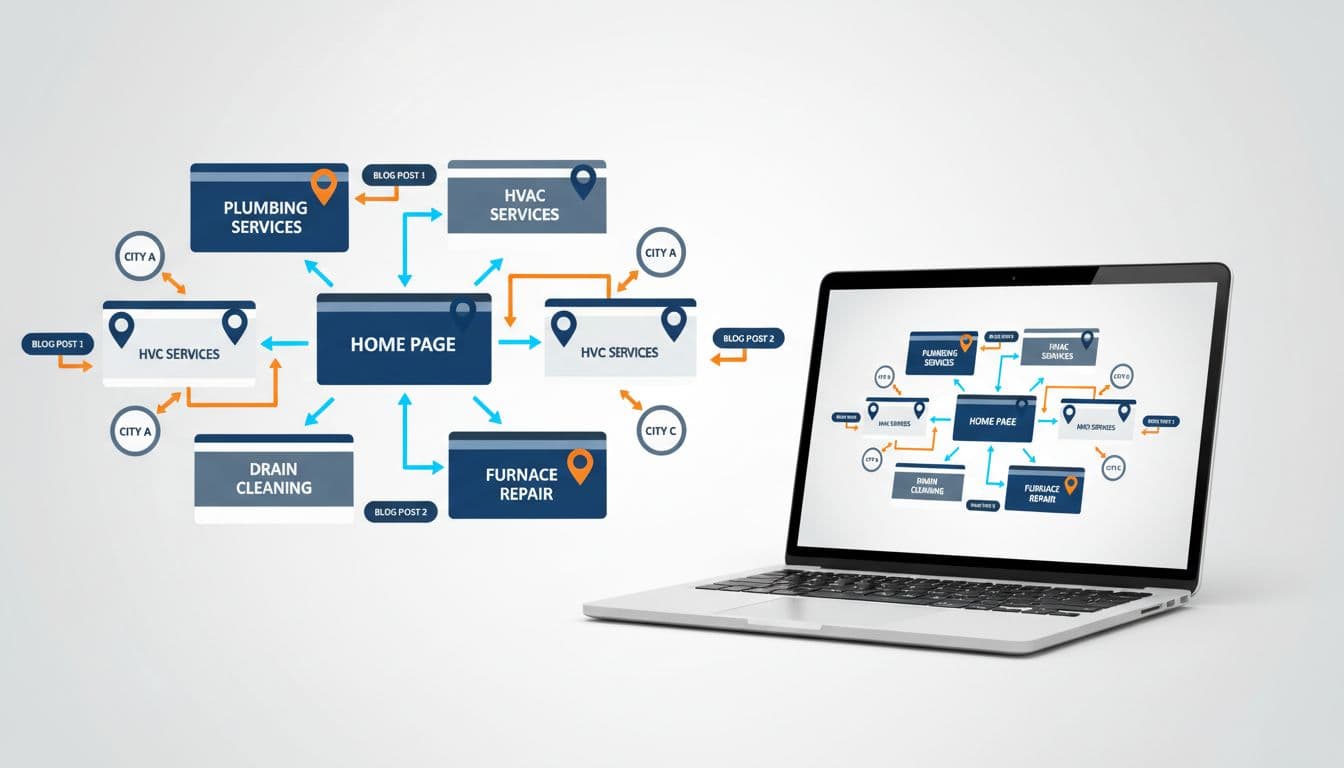
Internal links do three jobs at once. They help search engines find pages, show which pages matter most, and guide visitors to the next step. For plumbers, HVAC companies, roofers, dentists, and lawyers, that means stronger links between service pages, city pages, blogs, and quote forms.
That structure matters more now because AI summaries and map-based results reward clear site relationships. The broader shift toward internal linking for SEO and GEO points in the same direction. If your Austin water heater page never connects to your Austin plumbing page, you're hiding your own relevance.
Key Principles of Local SEO Internal Linking
Keep the system simple. Give each core service its own page. Give each real service area its own page. Then use blogs, FAQs, and case studies to support those money pages.
Also, keep important pages within 3 clicks of the homepage. If a location page takes five clicks to reach, it's buried. Before building links, map your page targets with a local SEO keyword research template.
A few rules help fast:
- Link related pages, not random pages
- Avoid orphan pages with no internal links
- Use in-content links, not just menus
- Vary anchor text naturally
Map Your Site for Maximum Impact
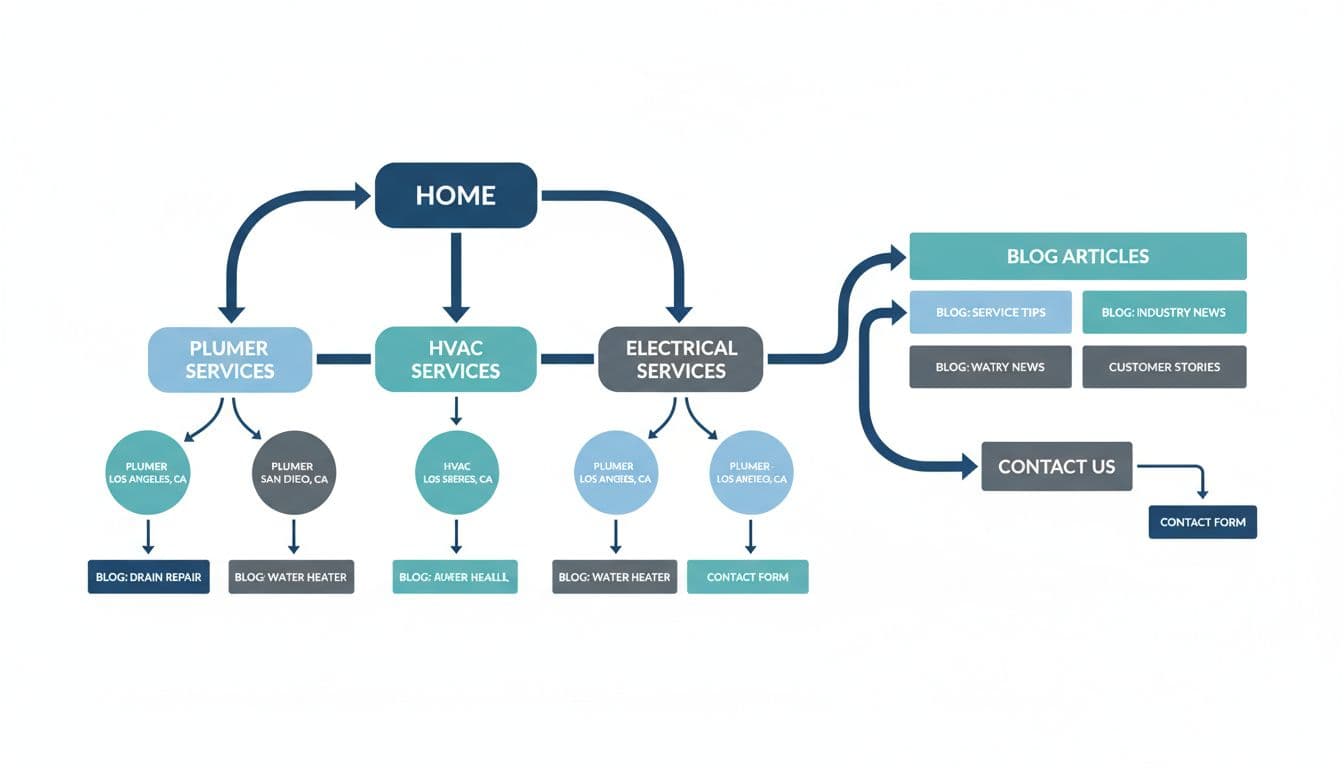
Think in hubs and spokes. Your main service page is the hub. Related city pages, blog posts, and quote pages are the spokes.
This basic map works for most service businesses:
| Page type | Should link to |
|---|---|
| Service page | Related city pages, quote page |
| City page | Matching services, testimonials |
| Blog or FAQ | Service page, city page |
| Contact or quote page | Top services, financing or trust pages |
For example, a roofer might link /roof-repair/ to /roof-repair-dallas/, a storm damage guide, and the estimate form. A dentist can link implants, city pages, cost guides, and booking pages the same way. The takeaway is simple, every page should point somewhere useful.
A page that doesn't connect to the next logical page is a dead end.
Craft Effective Anchor Text
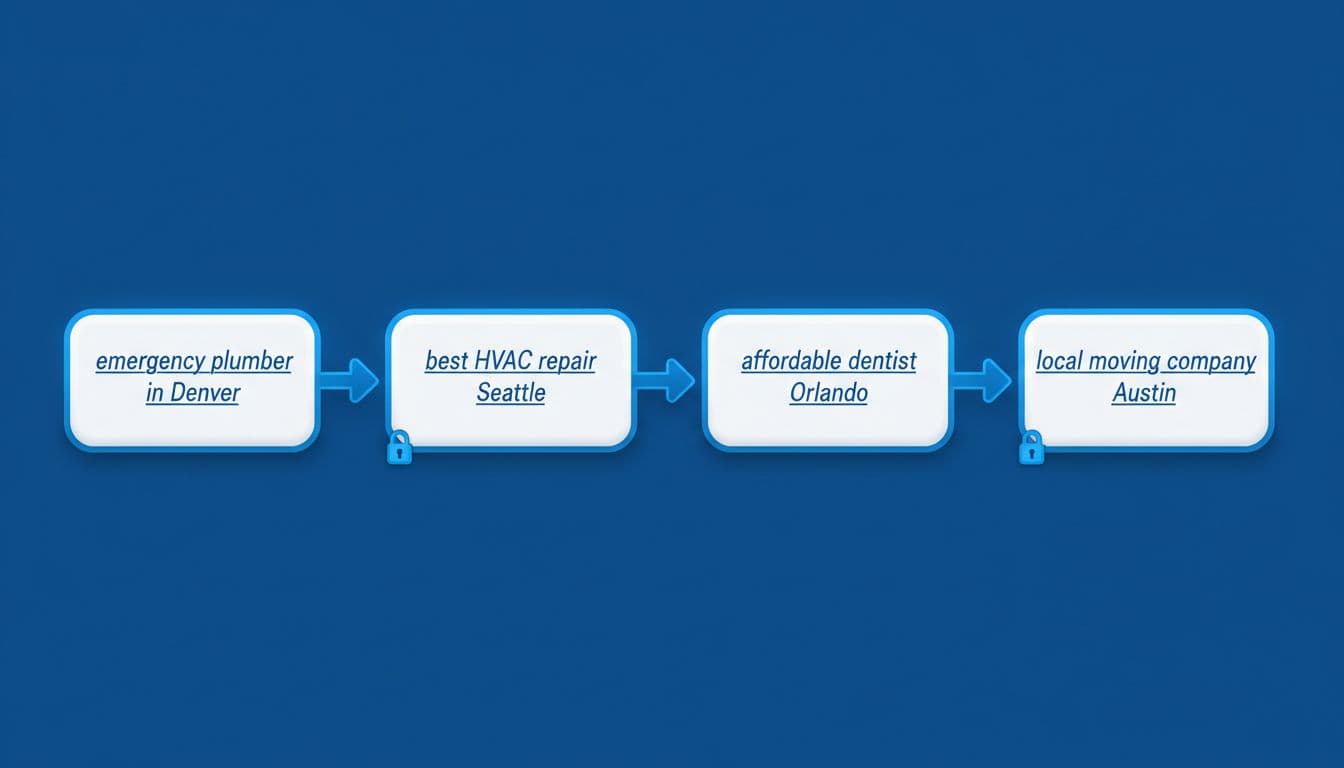
Anchor text is the label on the door. “Click here” tells nobody anything. Clear phrases tell users and search engines what sits on the next page.
Good anchor text sounds natural and matches intent. A few examples:
- Emergency plumber in Austin
- AC repair in Plano
- Dental implant cost guide
- Request a roofing estimate
Mix the wording. Your HVAC page doesn't need the exact same anchor every time. Use service-plus-city anchors on city pages, and more general anchors inside educational blog posts. That balance keeps links readable and useful.
Link Service, City, Blog, and Contact Pages
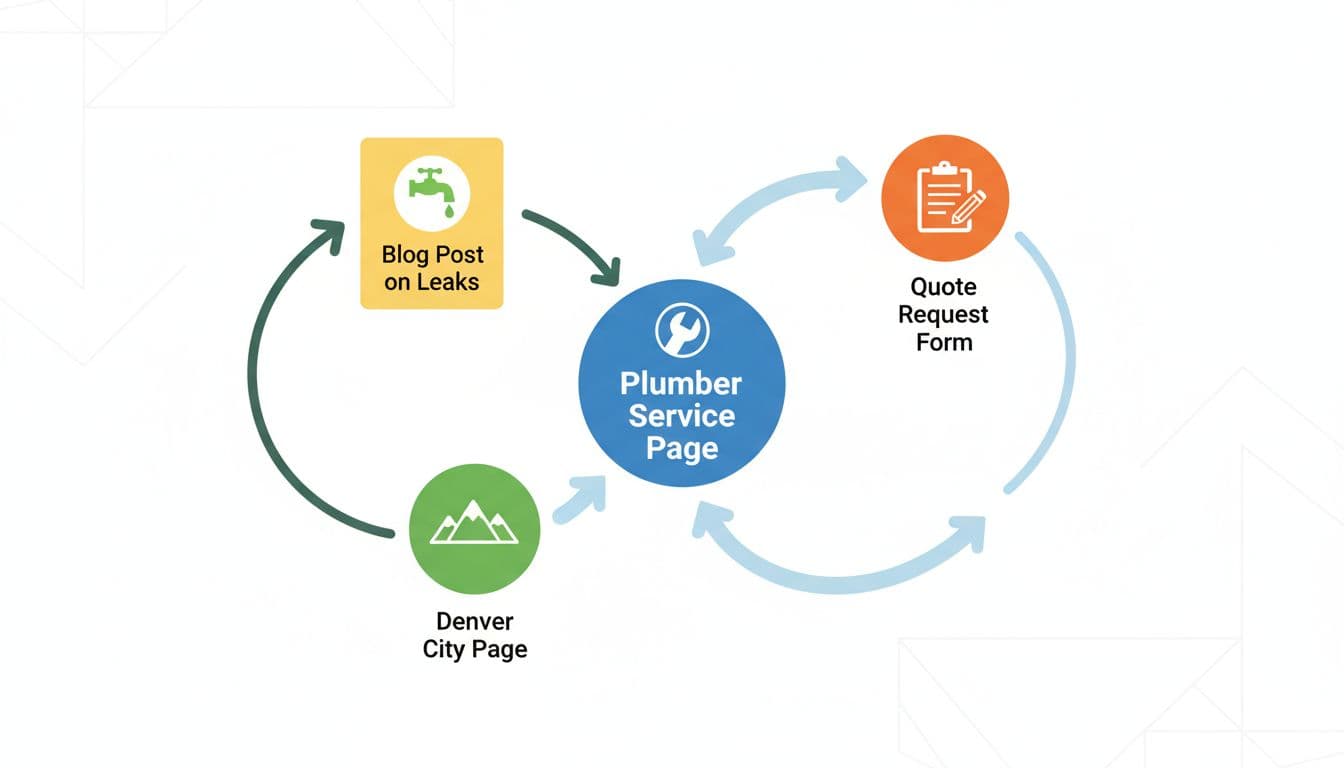
Many local sites make one costly mistake. Service pages link only to the contact page, while city pages sit alone. That wastes ranking signals and user flow.
Instead, create loops. A plumbing service page should link to the cities it serves, a leak repair blog, and the quote form. Each city page should link back to the core service page, plus one proof page such as reviews, pricing, or a case study. Blog posts should support both.
Here's a clean example for HVAC: AC repair page → AC repair in Round Rock → “5 signs your AC may fail” blog → request service form.
That same pattern works for lawyers with practice areas, dentists with treatments, and roofers with storm damage pages.
Your Implementation Checklist
You don't need a huge rebuild to start. A short monthly pass often fixes the biggest issues.
- Every core service page links to relevant city pages
- Every city page links back to the matching service
- Every blog links to a commercial page where it fits
- No important page sits more than 3 clicks deep
- Broken and orphan links get fixed each month
For audits, a simple process like the one outlined in internal linking best practices for SEO 2026 is enough. Start with your highest-value services first, then expand.
Track Your Progress
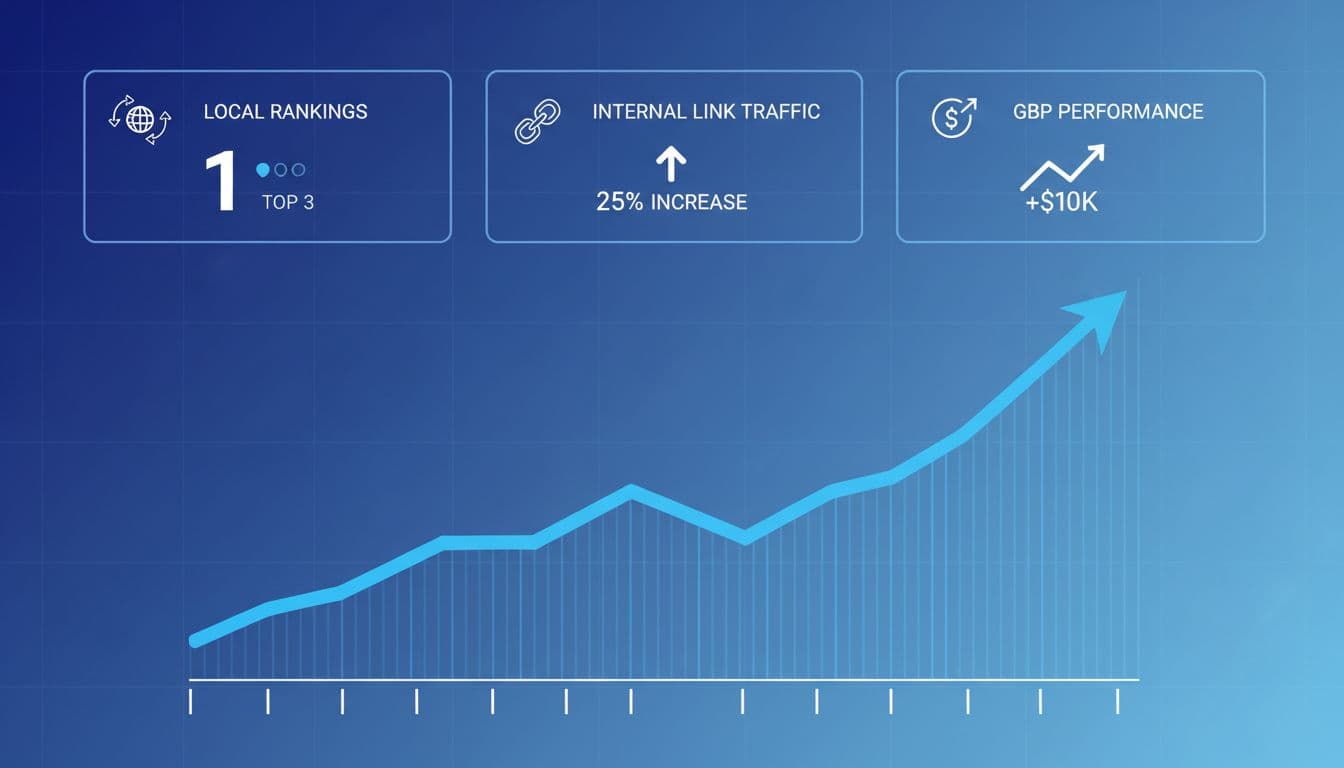
Watch more than rankings. Good internal linking should improve crawl paths, page views, calls, and form fills. Check Search Console for indexed pages and impressions. Then check analytics and call tracking for the real payoff.
Also, pair this with strong Google Business Profile optimization, because local visibility doesn't live on your website alone. Internal links are your on-site roads, while local mentions and backlinks still matter, as shown in local SEO link building tactics that work in 2026.
Internal linking isn't busywork. It's site structure, user flow, and local relevance rolled into one. Start with one service, one city, and one support article, then connect them well. If you want help building that system, focused local SEO services can speed up the work and keep the structure clean.