

Google Ads gets most of the attention, but many local companies are finding cleaner leads from Bing Search with a smart Microsoft Ads strategy in 2026. Service businesses targeting high-intent audiences on Bing Search often see stronger lead volume than with Google Ads. If your team lives on phone calls, quote requests, and booked jobs, that matters.
Microsoft has made the platform easier to import, automate, and track. The win comes from building around local buyer behavior, not copying your Google Ads setup line by line.
Key Takeaways
- Microsoft Ads delivers cleaner, high-intent leads at lower CPC than Google Ads for service businesses, especially B2B audiences on Bing Search who drive calls and bookings.
- Build campaigns with tight local targeting by ZIP code, service line, and territory, using Responsive Search Ads with intent-focused copy and extensions to boost Quality Score.
- Leverage 2026 AI features like Performance Max with negative keywords for control, Smart Bidding starting with Maximize Conversions, and Audience Network for remarketing.
- Track leads properly with UET tag to differentiate calls, forms, and revenue—teaching the platform to optimize for closed deals, not just clicks.
Why Microsoft Ads Works for Service Businesses in 2026

Service businesses often miss Microsoft Ads because they assume the volume is too small compared to Google Ads. In many markets, that’s the wrong call. Bing Search traffic may be lower overall, yet it delivers a less crowded environment with lower CPC that is easier to turn into calls for local businesses.
That matters most for the B2B audience on Bing Search who search from laptops at work, compare options at home, or book during business hours. LinkedIn targeting gives you a unique edge to reach this B2B audience of professionals with high-intent needs. For law firms, dentists, plumbers, and roofers, those Bing Search moments often turn into valuable leads.
Microsoft also kept improving the platform in early 2026. The January 2026 product updates added stronger Performance Max options and easier campaign imports. So if you already run paid search elsewhere, setup can move faster than expected, especially with the lower CPC advantages over Google Ads.
If you’re weighing budget split across channels, this Microsoft Ads vs Google Ads guide gives useful context.
Don’t treat Microsoft Ads like a backup channel. Treat it like a focused lead source with its own strengths.
Target Local Customers with Precision

A strong Microsoft Ads strategy starts with tight geography and thoughtful campaign structure. Too many service businesses target an entire metro area, then wonder why lead quality slips. If you don’t serve a ZIP code, exclude it with negative keywords. If one suburb closes better, give it its own campaign. Review search partners to control where your ads appear for better local precision.
Split campaigns by service line and territory when margins differ as part of your campaign structure. An HVAC company, for example, might separate emergency repair from full system installs. A personal injury firm might split branded searches from “car accident lawyer” terms by county. Performance Max serves as an option for broader local reach while keeping focused control.
Audience Ads, powered by the Microsoft Audience Network, deserve attention in 2026. They place your message across Microsoft-owned surfaces like MSN and Outlook with native placements, aiding remarketing and mid-funnel awareness. Refine with LinkedIn profile data for job titles tied to B2B service leads via LinkedIn targeting. The Microsoft Audience Network also uses LinkedIn profile data to enable precise LinkedIn targeting. Better placement visibility, highlighted in the February 2026 updates and Ad Preview Hub news, simplifies reviewing those campaigns and search partners before spend grows.
Local targeting works best when your landing page matches the area. Send “roof repair in Plano” traffic to a Plano-focused page, not a generic homepage.
Build Ads That Drive Calls and Bookings

Your ad only has one job: move the searcher to the next step fast. For service businesses, that step is usually a call, short form, or booked consult. Responsive Search Ads excel here as the primary ad format, letting you test multiple ad copy variations to find what drives calls best.
Write ad copy around intent, not brand slogans. A better message sounds like “Same-day drain cleaning in Austin” or “Free consult for DUI cases.” It tells people what you do, where you do it, and what happens next. In Responsive Search Ads, pin your strongest headlines and descriptions upfront for top performance.
A few basics still carry the account:
- Use ad extensions like call assets when calls matter most.
- Add sitelinks via ad extensions for pricing, reviews, financing, or service areas.
- Match ad copy to the landing page headline to boost Quality Score, which lowers costs and improves ad position (much like in Google Ads).
Unlike the more manual asset-building process in Google Ads, Responsive Search Ads in Microsoft Ads combine your inputs with AI for dynamic optimization, while ad customizers let you swap in location names, time-based offers, or urgent language for after-hours services. That helps a cleaning company show one message for office cleaning and another for move-out cleaning, without building dozens of separate ads. For a visual boost, try Multimedia Ads as an alternative to grab attention.
Quality Score also ties directly to creative performance metrics, so preview your Responsive Search Ads before launch. The Ad Preview Hub updates make it easier to catch bad layouts, weak assets, or mismatched formats before they hurt response.
Use 2026 AI-Powered Features Without Losing Control

Automation is better in 2026, but you still need guardrails. Performance Max can help local service brands find more leads, especially when you feed it solid conversion tracking, good images, and strong service pages. This foundation powers automated bidding effectively.
Start small. Build one PMax campaign per major service category, not one giant account-wide bucket. Keep emergency services separate from planned services. A plumber should not mix “water heater install” with “burst pipe now” and expect Smart Bidding to sort it out.
Microsoft also expanded control. The March 2026 product news included negative keywords for PMax, which is a big deal for lead quality. Now you can block junk traffic with more confidence using negative keywords.
Autogenerated assets can save time, too. Still, review them weekly and ensure your conversion tracking stays accurate. If the system pulls weak page language, your ad may get more clicks but fewer real prospects.
Smart Bidding and Budget Management

Microsoft simplified automated bidding in 2026 through Smart Bidding, which makes account setup less messy. As Search Engine Land reported, advertisers can now use cleaner automation paths while keeping outcome targets in place. This approach mirrors updates in Google Ads, streamlining Smart Bidding for better control.
For most service businesses, Maximize Conversions is the best place to start. Once you have stable lead volume, add a Target CPA. Don’t rush that step if you only get a few conversions each month. Target CPA shines for lead-gen focused businesses chasing calls and bookings.
Budget by margin, not by guesswork. If a dental implant lead is worth far more than a teeth-cleaning lead, separate them. For high-margin services, Target ROAS helps maximize Return on ad spend, much like in Google Ads. Businesses selling service parts or equipment can also leverage Shopping Ads through Microsoft Merchant Center, applying automated bidding with Target ROAS to boost Return on ad spend further. Even with Shopping Ads, schedule reductions for low-quality times like weekends instead of cutting entire campaigns.
Most of all, don’t spread a small budget across too many campaigns. One well-funded local campaign, including targeted Shopping Ads, beats six starved ones.
Frequently Asked Questions
Is Microsoft Ads better than Google Ads for local service businesses?
Microsoft Ads often provides cleaner leads in less crowded auctions with lower CPC, ideal for high-intent Bing Search users like B2B professionals booking services. While Google has more volume, Bing excels for local calls from laptop searches during work hours. Use LinkedIn targeting for an edge in reaching decision-makers.
How should I structure campaigns in Microsoft Ads?
Split by service type, territory, and margins—e.g., emergency vs. planned repairs—for better control and lead quality. Exclude unserved ZIPs with negative keywords and review search partners. Performance Max works for broader reach but start with focused campaigns, not account-wide.
What bidding strategy works best for call-driven services?
Start with Maximize Conversions once tracking is solid, then add Target CPA for stable volume. Use Target ROAS for high-margin services or Shopping Ads. Avoid spreading small budgets thin; fund one strong local campaign over many weak ones.
How do I track leads effectively in Microsoft Ads?
Install the UET tag for Universal Event Tracking to separate calls, forms, and bookings from junk. Connect to CRM for revenue feedback so Smart Bidding learns real value. This closes the loop from clicks to closed jobs, improving ROI faster than click-based metrics.
What’s new in Microsoft Ads for 2026?
Updates include Performance Max enhancements, negative keywords for PMax, simplified Smart Bidding, and better Ad Preview Hub for placements. Audience Network uses LinkedIn data for precise targeting. These make setup faster and control stronger for service leads.
Track Leads from Clicks to Closed Deals
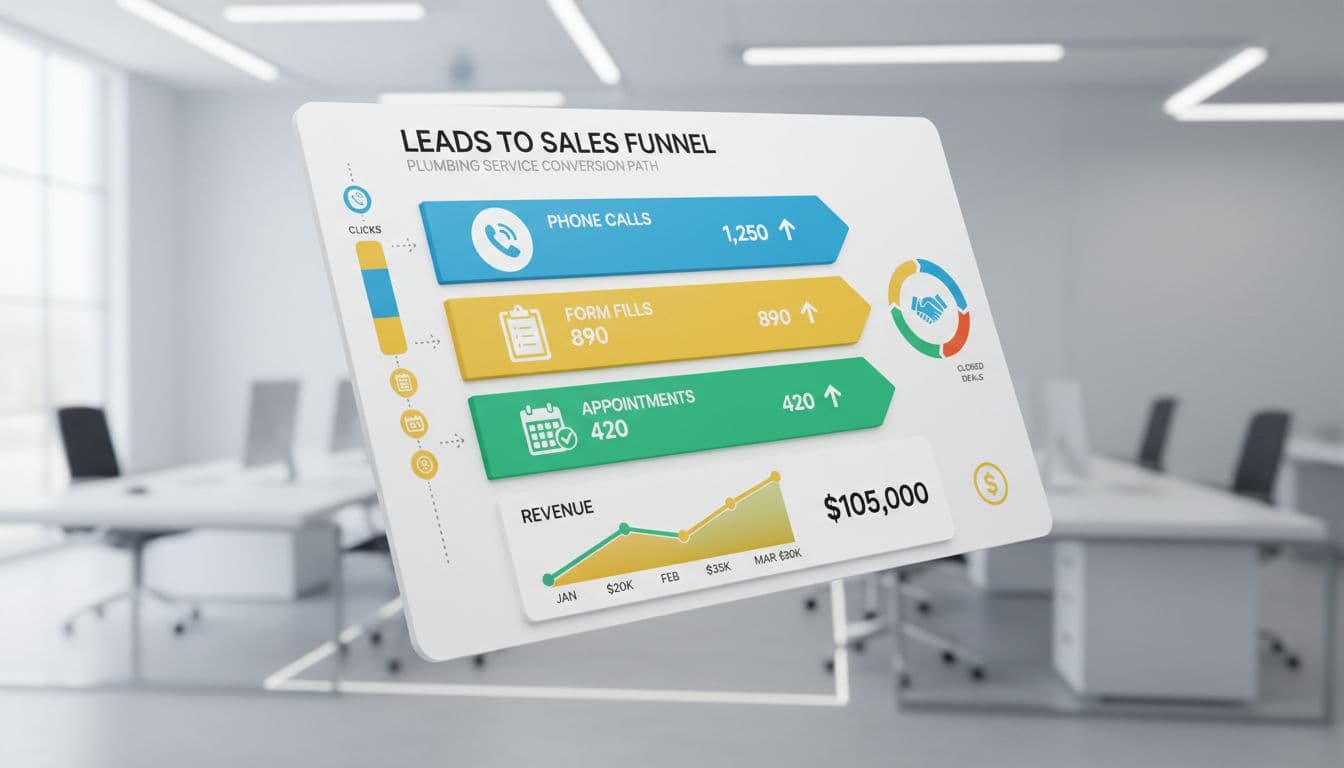
This is where most accounts break. They count every form fill the same, then let the system optimize toward weak leads.
Set up Universal Event Tracking with the UET tag to track your real actions separately. Calls from ads, calls from the site, form fills, and booked appointments should not sit in one bucket. A two-minute phone call often means more than a six-second misdial. Your bidding should know that.
Then connect lead source to your CRM or booking flow using conversion tracking. If you can pass back which leads became estimates, consults, or closed jobs, Microsoft has better feedback to work from. That’s how the platform learns the difference between cheap clicks and revenue. Build remarketing lists from this tracked data to re-engage promising leads, just as you would in Google Ads for better sophistication.
The account that wins isn’t the one with the most leads. It’s the one that teaches the platform which leads become customers.
If your current reporting ends at the thank-you page, fix that first with Universal Event Tracking, the UET tag, and conversion tracking. It’s the fastest way to improve cost per booked job. Use those insights to refine remarketing lists and close the data loop from clicks to revenue.
The best Microsoft Ads strategy for 2026 is simple at its core: tighter local targeting, clearer call paths, smarter automation, and better feedback on what becomes revenue. Microsoft Ads tracking rivals Google Ads in depth when you set it up right.
If your account still judges success by clicks or raw lead count, change that this week. When Microsoft can see which calls turn into real jobs, the whole system gets sharper.