

Google can now answer a service question before a prospect ever clicks your website. That's why AI Overviews SEO matters in 2026, especially if you rely on local calls, form fills, and booked appointments.
You still need rankings, but rankings alone aren't enough. Google wants clear facts, real proof, and pages it can trust fast. That shift changes how buyers compare plumbers, dentists, lawyers, contractors, and agencies. Once you build for that, AI Overviews become less of a threat and more of a new route to visibility.
What AI Overviews Mean for Your Service Business
Google's January 2026 Gemini 3 rollout made AI Overviews smarter and more common. March 2026 reporting puts them on about half of US searches, while pure local queries still trigger them much less often. Even so, they matter because they shape first impressions and cut clicks. Recent Google AI Overview statistics for 2026 show why many businesses now see more impressions but fewer visits.

Think of the overview as a fast receptionist. It scans the web, picks facts it trusts, and guides the buyer before your site loads. If your hours, service area, or proof are messy, Google may quote someone else.
If Google can't verify the basics fast, it won't feature you confidently.
Strengthen Local SEO to Break Into AI Summaries
Local SEO is still the base layer. If you want AI summaries to mention your brand, you first need a clean Google Business Profile, accurate NAP, strong categories, recent photos, and pages that match real services. A plumber should have separate pages for drain cleaning, water heater repair, and emergency plumbing. A med spa should split Botox from laser treatments.

Location pages matter too, but only if they're real. Give each city page unique proof, local testimonials, driving details, and service-area notes. Then compare your site with the brands already winning in maps and organic results. This local SEO competitor audit guide is a good model for that process. The goal isn't more pages. It's clearer local relevance.
Build Strong Entity Signals and Trust
Google can't trust what it can't connect. That's why entity signals matter. Keep your business name, address, phone, owners, providers, and social profiles consistent across the web. Add staff bios, licenses, insurance, awards, and case studies where they fit. March 2026 core and spam updates hit thin AI-written pages harder, so real proof now carries more weight.

For service brands, trust should sit close to the claim. If a law firm says it handles truck accidents, show the attorneys, bar status, office location, and client outcomes on that page. If a clinic says same-day care, show the provider and the policy. A roofing company should show license details, insurance, and project photos, not vague promises. That's the kind of proof AI can repeat.
Add Structured Data to Service and Location Pages
Structured data won't force an AI citation, but it helps Google read your business correctly. Add schema for LocalBusiness, Organization, Service, and Person where it applies. Use fields like address, opening hours, sameAs, areaServed, and service type. If you publish visible FAQs, mark them up too.
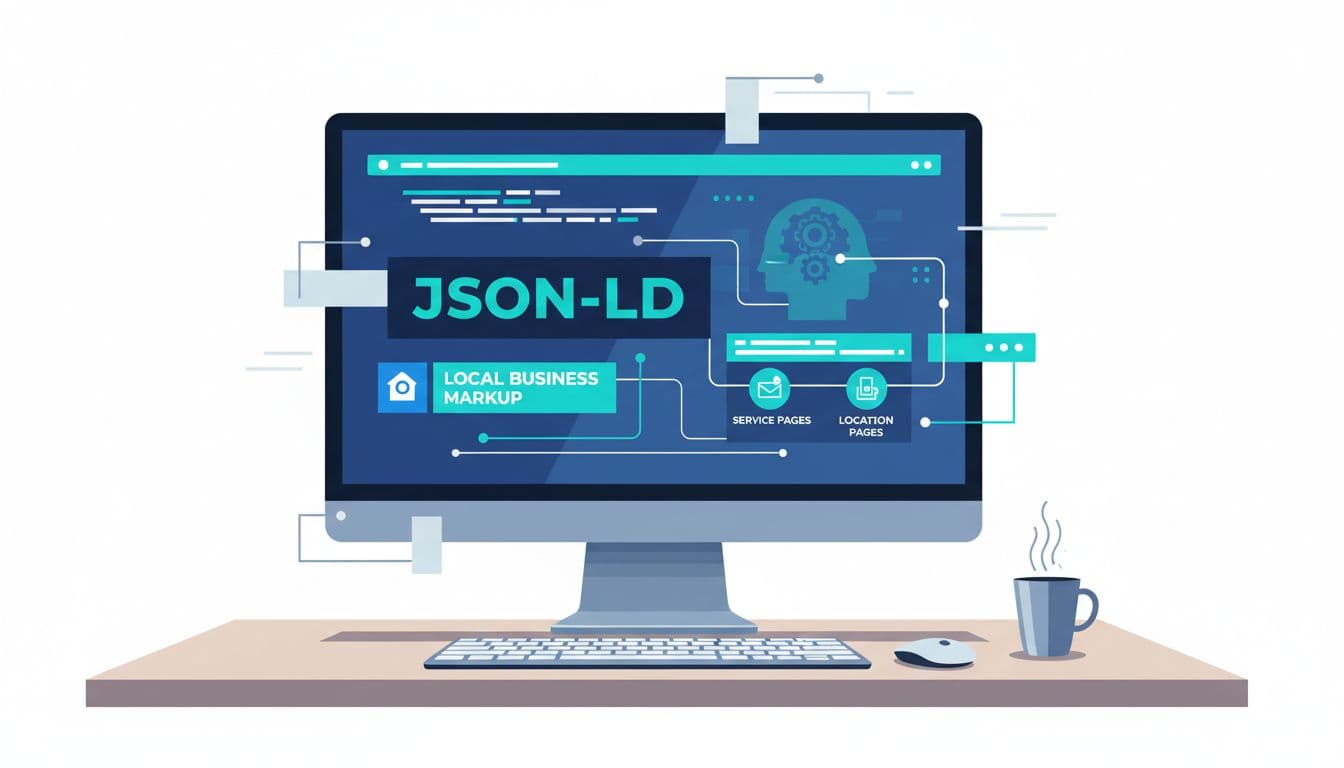
Then fix the page itself. Every service page should answer what you do, who it's for, where you work, what the process looks like, and how to book. Each location page should show local proof, not spun copy with a city swap. Good site structure helps those pages reinforce each other, so build local SEO internal linking between service, city, FAQ, and contact pages.
Use Reviews and FAQ Content to Feed Better Answers
Reviews do more than boost conversion. They supply the plain-language details Google loves to quote. Ask customers to mention the service, city, speed, and result. “Fixed our AC in Plano that night” tells Google more than “great job.” Also reply to reviews with helpful detail, not a generic thank-you.
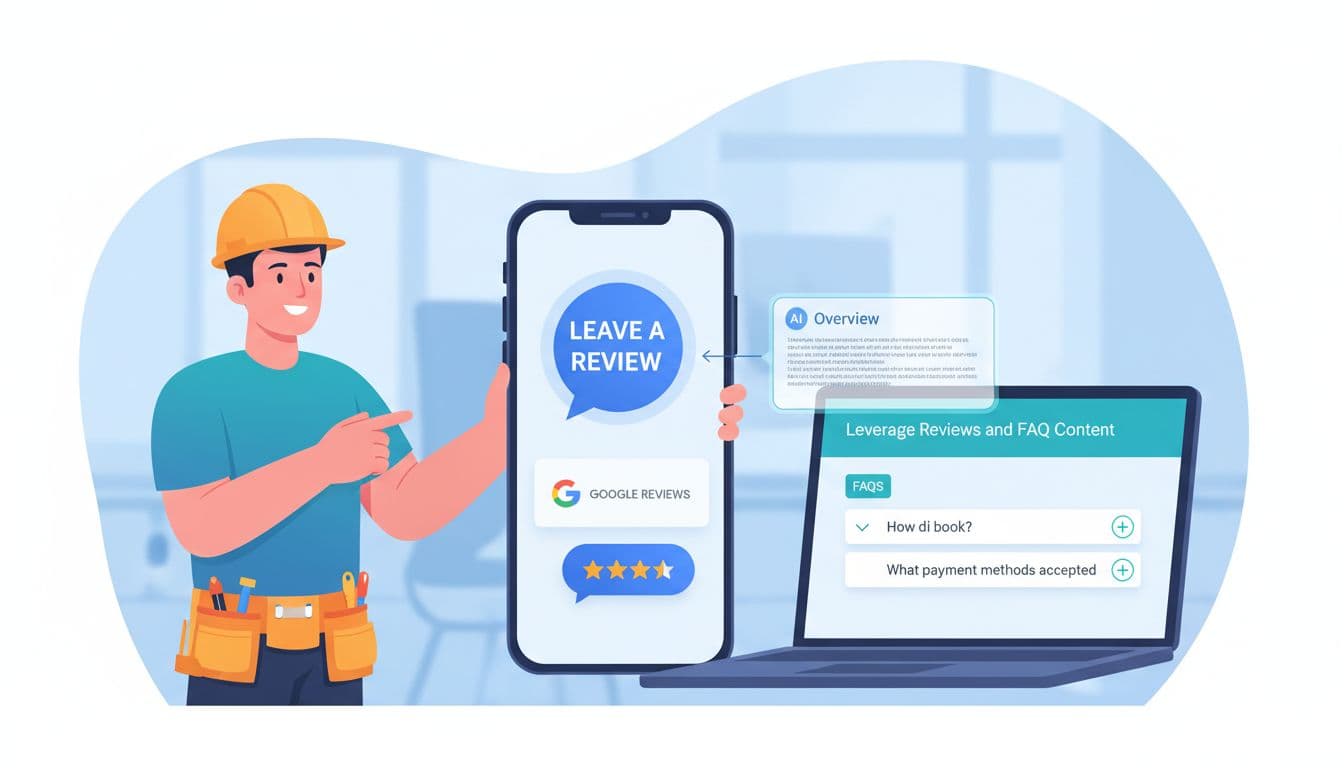
Your FAQ content should work the same way. Pull questions from calls, chat logs, and sales emails. Answer them in short blocks on service and location pages, then mirror the best ones in your profile with a clear Google Business Profile Q&A strategy. For a bigger view of how this connects to local visibility, see this guide to AI search SEO for local businesses. Keep it tight. Ten honest answers beat forty filler questions.
AI Overviews SEO works best when your business is easy to verify. Clear service pages, real local proof, strong entity signals, structured data, reviews, and useful FAQs all point to the same story.
Start with one high-value service page this week. Tighten the facts, add proof, connect the right pages, and give Google something worth citing.