

Loose targeting can fill your pipeline with junk fast. In 2026, strong Google Ads accounts win by getting better leads, not more clicks.
That changes how you use google ads match types. Automation is stronger now, but control still matters. If your setup is sloppy, Google can scale waste right along with opportunity.
What Google Ads Match Types Mean for Service Leads
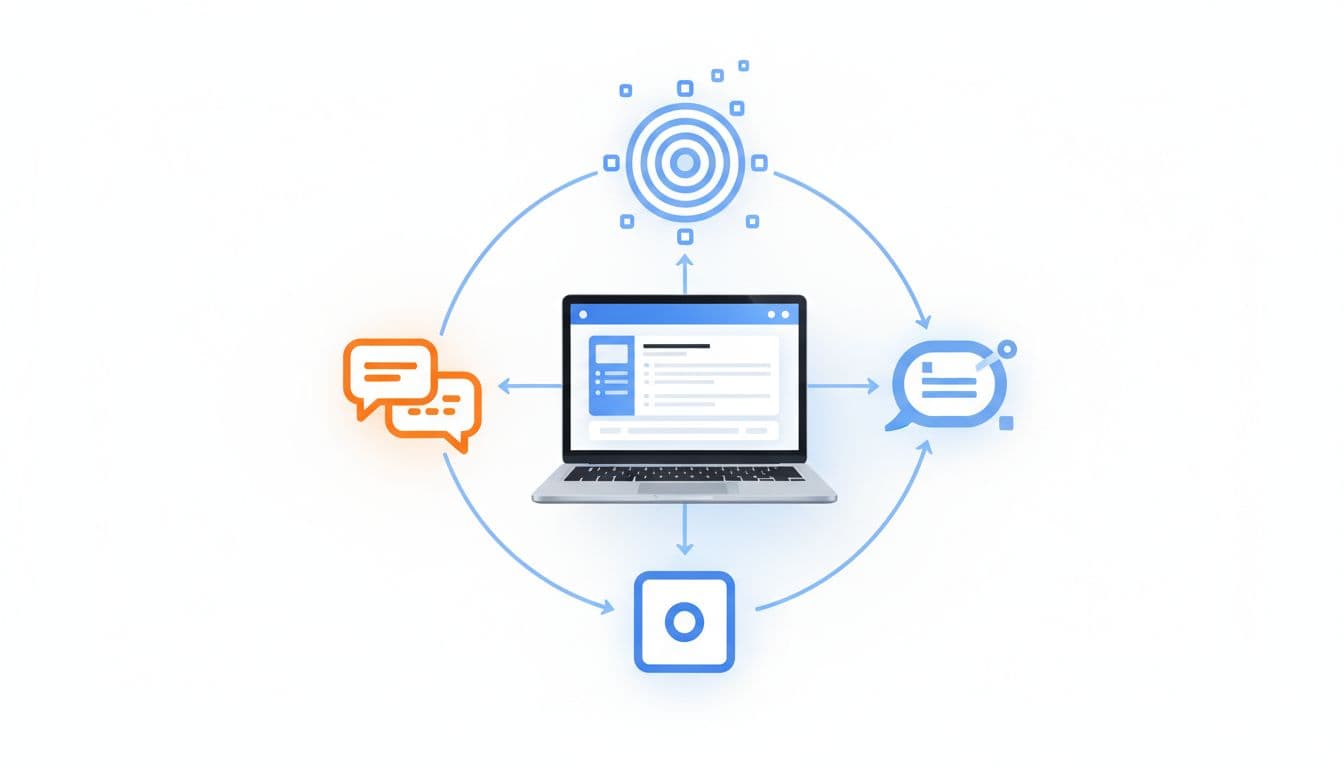
For service businesses, match types are less about textbook definitions and more about lead intent. Google now reads meaning, context, and past conversion data, so even exact match is not as narrow as it once was.
Still, the basics matter. Broad match finds related searches. Phrase match keeps you closer to a service theme. Exact match protects your best terms. Inside a clean Google Ads campaign structure for qualified leads, each one has a job.
Here’s the simple view:
| Match type | Best use | Main risk |
|---|---|---|
| Broad | Find new search demand | Weak lead fit |
| Phrase | Keep service intent tighter | Lower reach |
| Exact | Protect high-value terms | Slower scale |
For a plumber, broad match on plumber might catch “burst pipe help tonight.” That can be great. It can also catch research traffic you never wanted.
How Automation Changes Match Type Choices in 2026
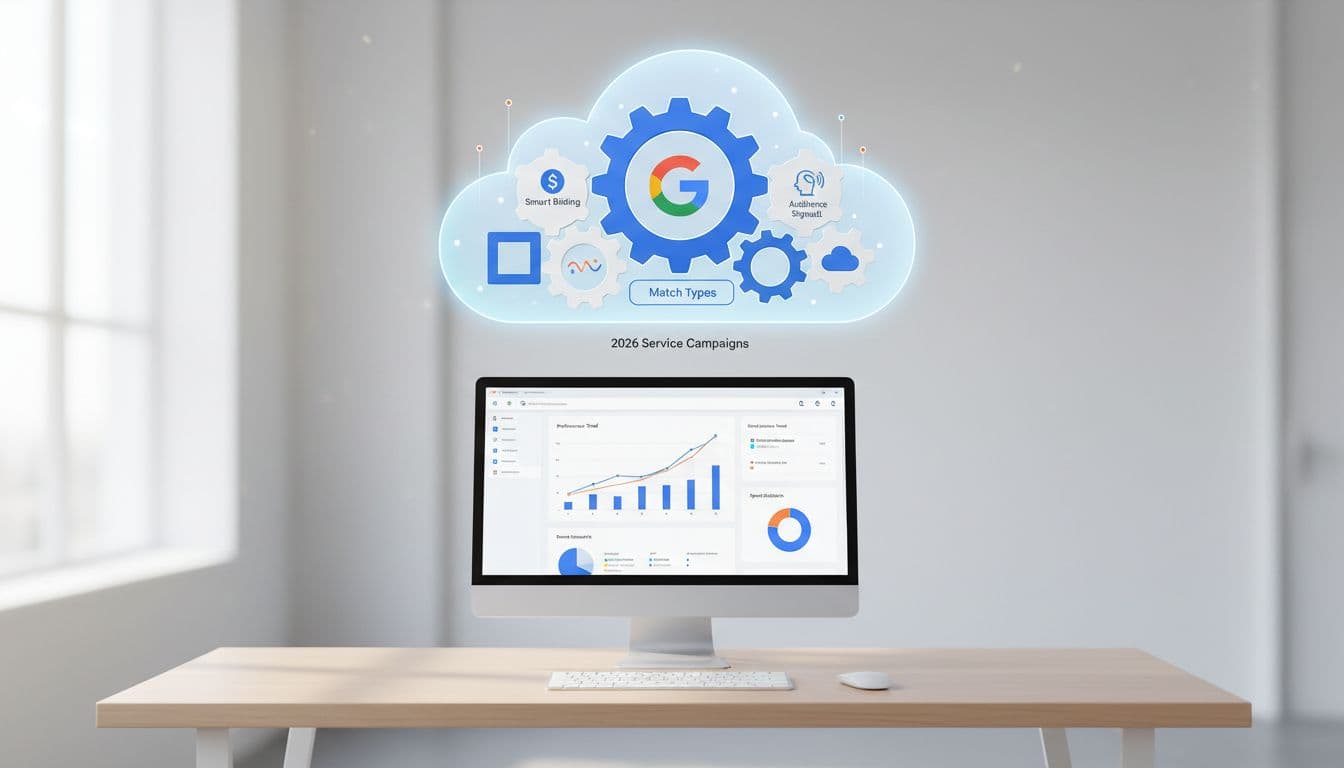
Google now blends match types with Smart Bidding, audience signals, device data, time of day, and location. That means the match type alone no longer decides where you show.
Broad match often performs best when paired with strong bidding and real conversion data. Phrase and exact still help, but they are no longer the whole steering wheel. If you’re tuning both together, this guide on Google Ads bid strategy for service businesses fits right into the process.
AI Max pushes this even further by expanding beyond your typed keywords. That makes search term review more important, not less. For added context, this overview of match types, negative keywords, and search terms shows how loose matching now works.
Broad match without clean conversion tracking is like hiring a receptionist who books every caller, even the wrong ones.
Phrase and Exact Match for High-Intent Calls and Forms
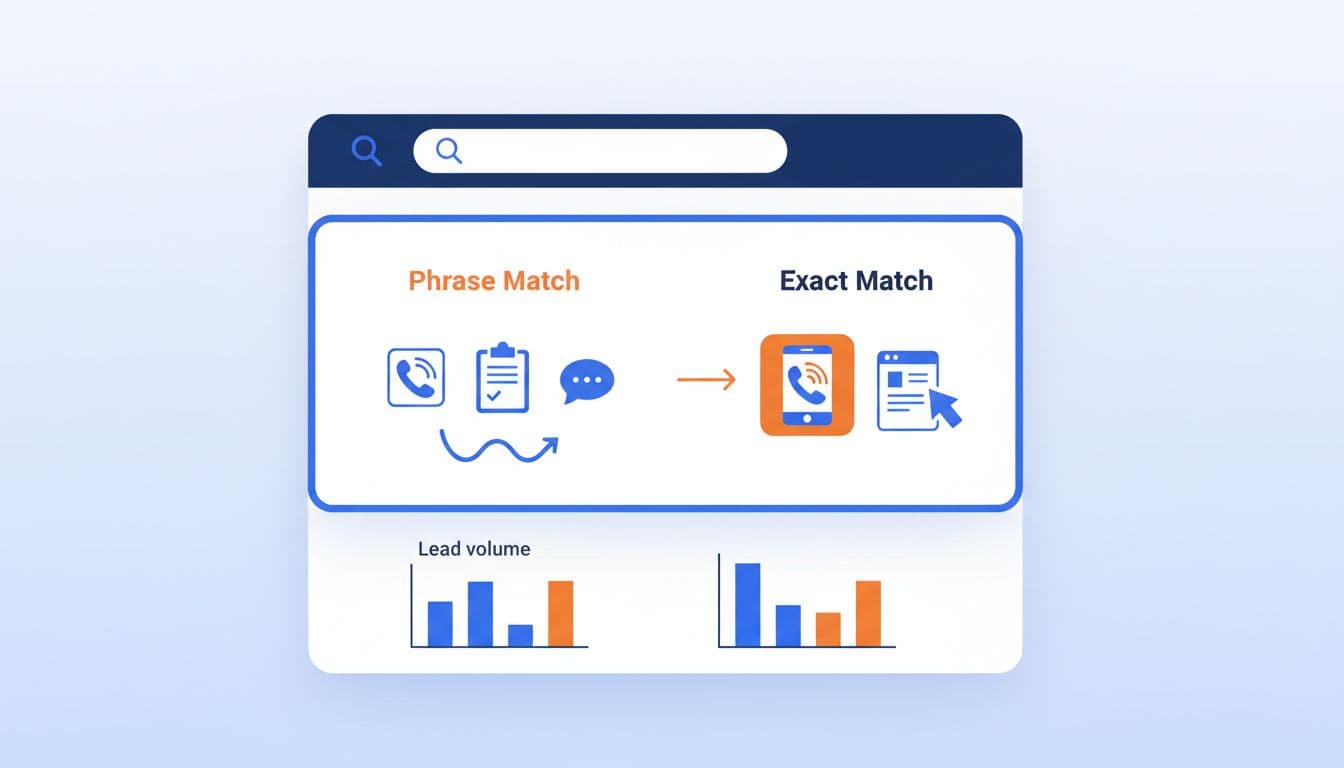
Phrase and exact match still shine when the search tells you the buyer is close. Think [emergency plumber], “AC repair near me,” [DUI lawyer], or “botox appointment near me.”
These terms usually deserve their own ads and landing pages. A roofer bidding on storm damage terms should not send traffic to a generic home page. A med spa pushing lip filler consults should not mix that traffic with broad skin care queries.
Use phrase and exact for terms tied to strong close rates, high job value, or urgent intent. Then watch search terms weekly. If “cheap,” “DIY,” “training,” or “salary” keeps showing up, block them fast.
Using Broad Match Smartly for Growth
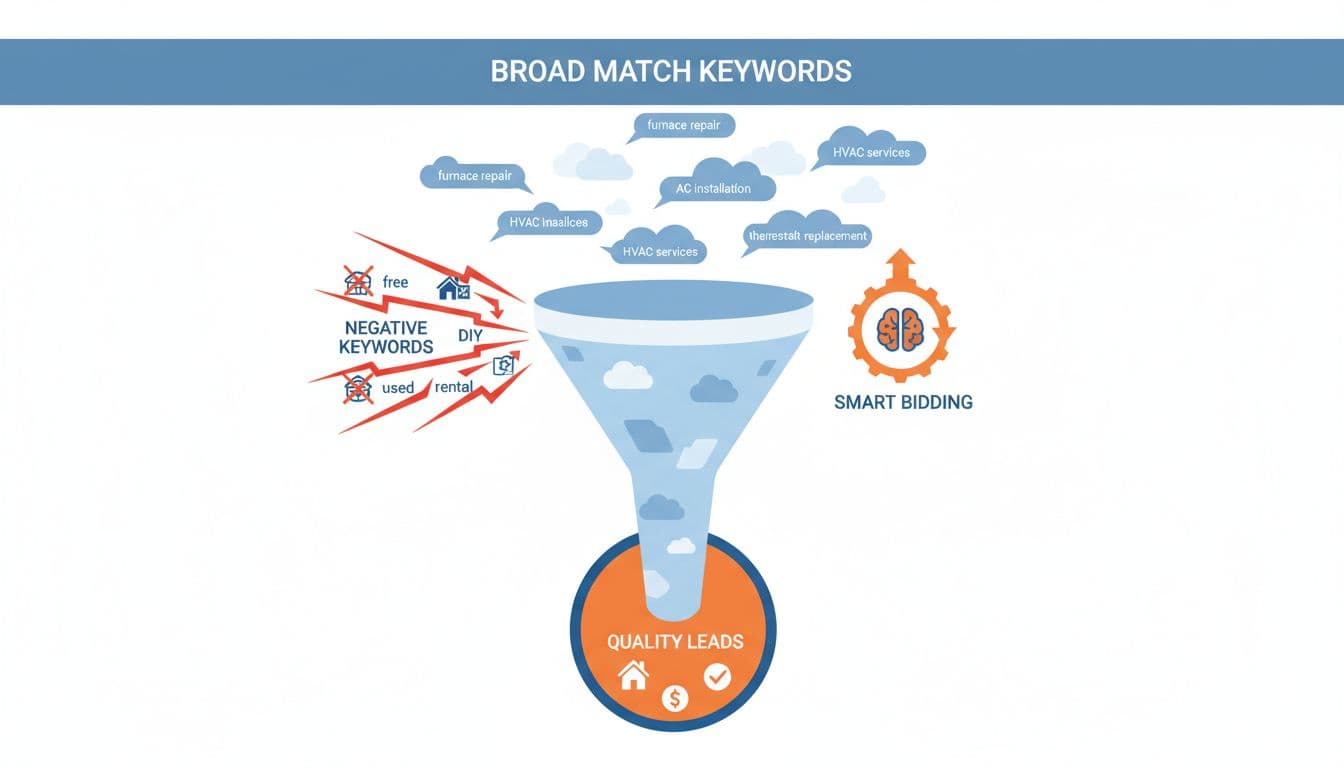
Broad match is not reckless by default. It becomes reckless when you pair it with weak data, loose geos, and no negatives.
An HVAC company can use broad match on furnace repair if the campaign has strong call tracking, booked-job imports, tight service areas, and a solid negative list. In that case, Google may find searches like “heater blowing cold air” that never sat in your keyword list.
On the other hand, a new electrician account with thin data should start tighter. Build trust first. Then test broad match in a controlled ad group, not across the whole account. If you also run cross-network automation, this guide to Performance Max strategies for service businesses helps keep lead quality in view.
Real Examples From Home Services, Legal, and Med Spas
A plumber might keep exact match on [emergency plumber] and [water leak repair], phrase match on “drain cleaning,” and broad match on sewer repair. Negatives would cut out DIY, parts, school, and jobs.
For an HVAC brand, “AC repair near me” may stay in phrase and exact, while broad match tests around cooling problems. Search term reports often surface winning language faster than brainstorming does.
Law firms need more caution because bad leads cost more. A personal injury firm may use exact and phrase heavily until offline case data feeds back into bidding.
Med spas sit in the middle. Broad match can work for treatments with clear buyer intent, but only if the landing page matches the promise and the form screens out poor-fit inquiries.
Build the Full Stack Around Match Types
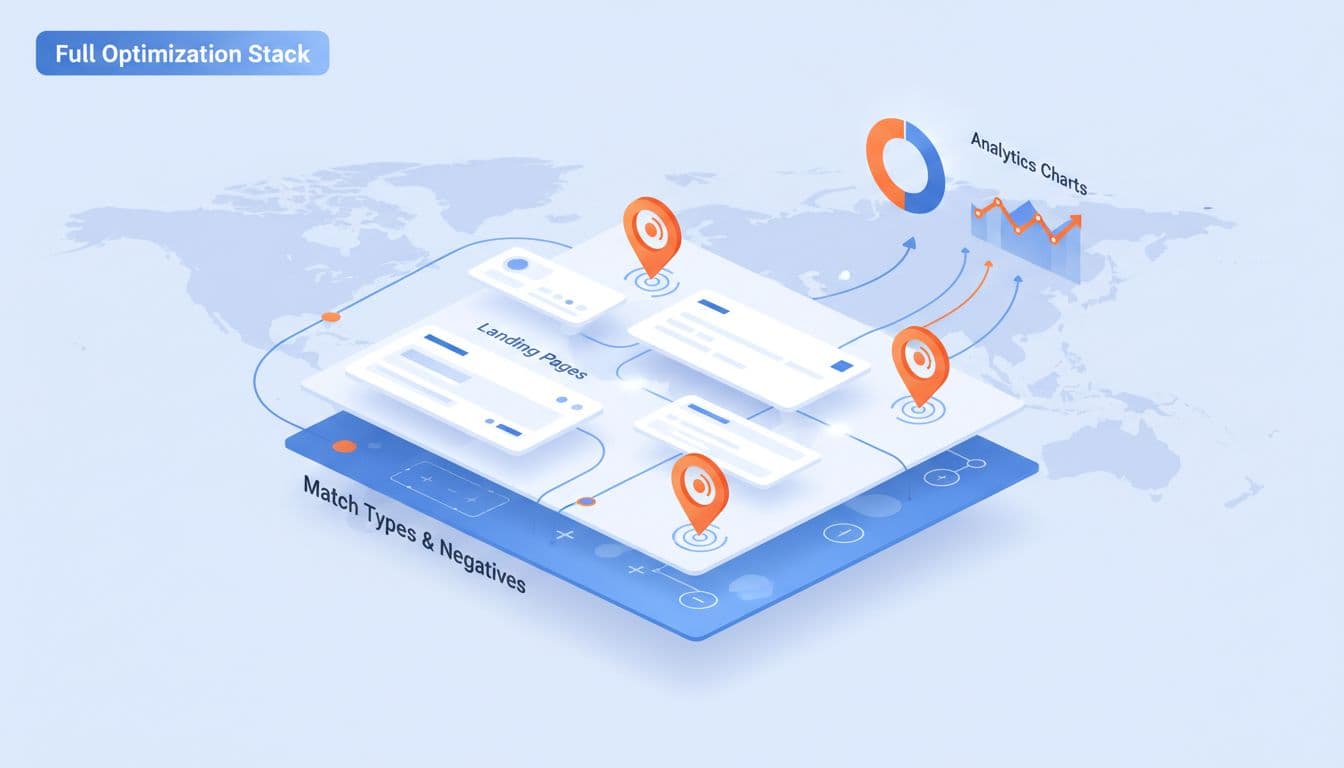
Match types never work alone. They depend on the rest of the system.
Start with tight location targeting. A roofer serving three counties should not target the whole state. Next, match each keyword theme to a landing page that answers the search clearly. Then feed back real outcomes, not only form fills. Booked estimates, qualified calls, and signed jobs teach Google what a good lead looks like.
Search term analysis still matters, even with partial visibility. Keep trimming negatives, split out strong queries, and pause terms that bring chatter instead of customers. If you want a broader view of current changes, this short read on Google Ads match types in 2026 offers a useful outside perspective.
The strongest strategy in 2026 is simple: use match types to guide intent, then let conversion data decide how much freedom Google gets.
If your tracking is solid, broad match can uncover demand you would have missed. If your tracking is weak, tighter phrase and exact match will protect your budget until the account matures.
Audit your search terms, negatives, landing pages, and lead tracking this week. That one review often tells you whether your next dollar buys growth or waste.