
If your phones aren't ringing from organic traffic, it usually isn't “because service business SEO is dead.” It's because your content isn't answering the exact local questions people ask in 2026, in a format search systems can trust for local SEO and search engine optimization.
This 90-day service business SEO plan is built for busy owners and marketing managers of service based businesses focused on lead generation. You'll publish the right pages first, support them with helpful local content, keep your Google Business Profile active, and track results weekly without drowning in dashboards.
What matters for service business SEO in 2026 (AI answers, local proof, trust)

In 2026, the landscape of local SEO and home services SEO shifts as people search with longer, more specific questions. They also accept answers from AI summaries, but they still hire based on trust signals. That means your content has two jobs: help someone decide, and prove you're real.
Start your 90 days with three foundations:
- Clarity: One primary service per page aligned with search intent, one clear next step (call, book, request quote).
- Local evidence: Photos of real jobs, service areas, pricing ranges, before and after examples, and reviewer language you hear on calls to stand out in local search results and Google Maps.
- Consistency: Accurate business info everywhere, especially your Google Business Profile (Google's own checklist helps: complete your Google Business Profile).
If you need a reference point for how agencies structure the work, skim a practical 90-day sprint model like Local SEO sprints for 2026, then simplify it for your team. For hands-on support, you can also compare what “done-for-you” looks like on ClickyOwl's SEO services.
The goal isn't more content. The goal is fewer, stronger pages that match how people choose a provider.
A sample topic cluster that fits almost any service business
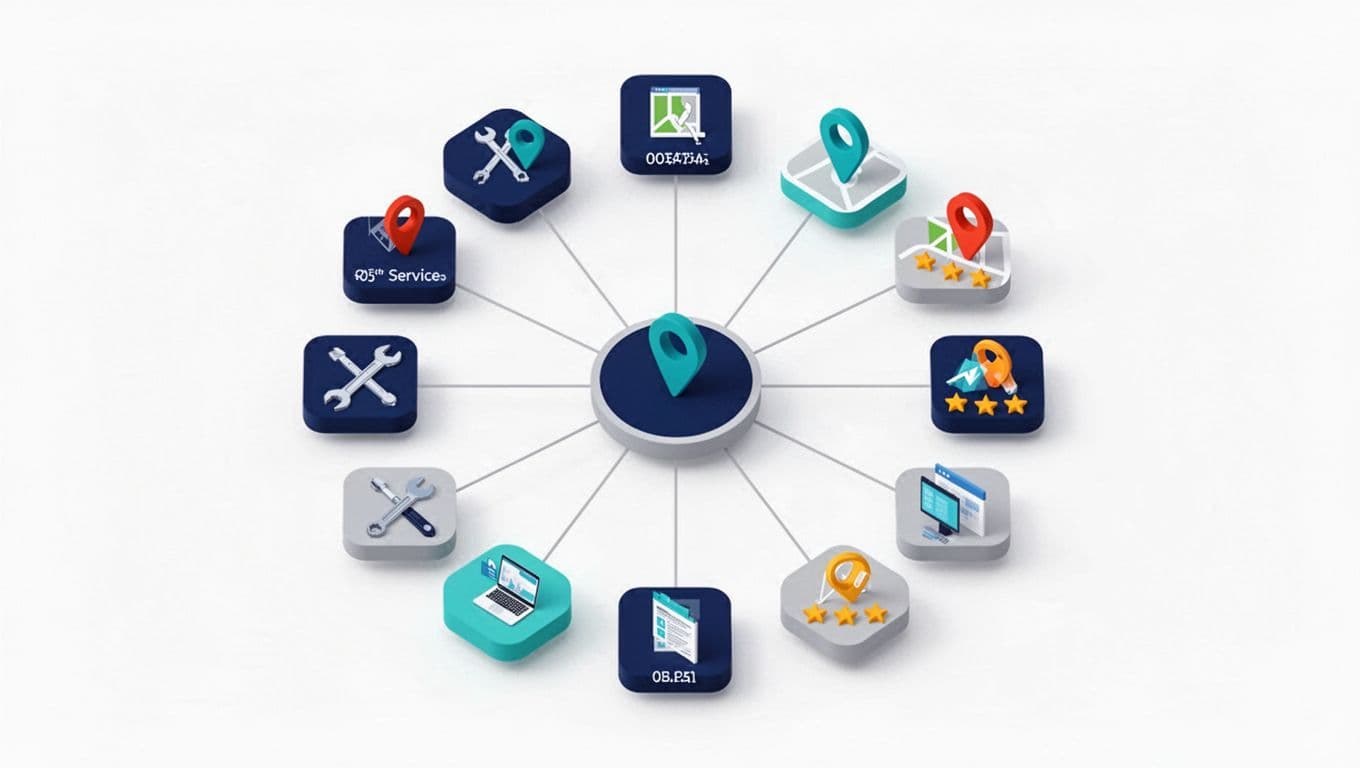
For any service area business, keyword research reveals how a topic cluster keeps you from posting random blogs that never rank. Think of it like a neighborhood map: one “main street” page, then side streets that support it.
Use this generic cluster as a plug-and-play template (swap in your service and cities):
| Cluster part | Page type | Example topic | Primary intent |
|---|---|---|---|
| Hub | Core service page | “Water Heater Repair” | Hire |
| Spoke 1 | Problem page | “No hot water, causes and fixes” | Diagnose then hire |
| Spoke 2 | Cost page | “Water heater repair cost in (City)” | Budget then hire |
| Spoke 3 | Location page | “Water heater repair service area pages in (Neighborhood)” | Local hire |
| Spoke 4 | Comparison page | “Repair vs replace a water heater” | Decide |
| Spoke 5 | Proof page | “Recent jobs and reviews (City)” | Trust |
| Spoke 6 | FAQ page | “Warranty, timing, permits, brands” | Reduce friction |
Keep internal links tight to target high intent keywords and transactional keywords. Every spoke should link back to the hub using natural anchor text. Then the hub links out to the top spokes. If you also serve SaaS or product businesses, the internal linking logic is similar to product-led SEO for SaaS, just applied to local intent and service areas.
90-day editorial calendar template (what to publish each week)
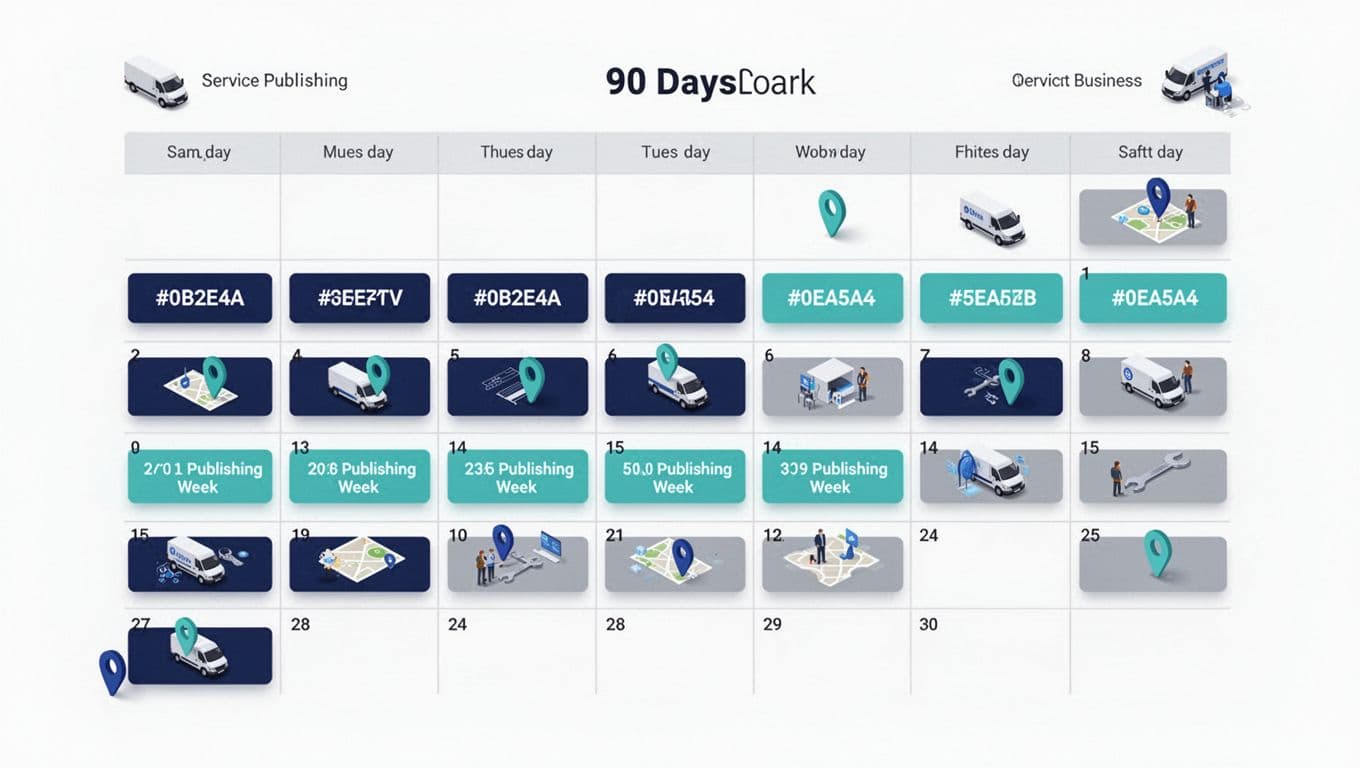
This content marketing and local SEO template assumes one strong publish per week (plus lighter updates). That pace is realistic, even for a small team, and it keeps quality high.
| Week | Primary publish (1) | Secondary action (lighter) | Local trust action |
|---|---|---|---|
| 1 | Update main service hub | Add FAQs to hub | Add 10 new job photos to Google Business Profile |
| 2 | Cost page for top service | Refresh title tags on 5 pages | Ask 5 recent clients for customer reviews |
| 3 | “Repair vs replace” page | Add internal links to hub | Publish 1 case story on site |
| 4 | Location page (area 1) | Add service area blurbs | Reply to every Google Business Profile customer review |
| 5 | Problem page (top call driver) | Add 5 FAQs + schema | Post “before/after” Google Business Profile update |
| 6 | Location page (area 2) | Improve images + alt text | Add services and attributes in Google Business Profile |
| 7 | Proof page (jobs, reviews) | Add author and license info | Upload 10 more photos to Google Business Profile |
| 8 | FAQ page (operations) | Fix thin pages | Request customer reviews with service keywords |
| 9 | Location page (area 3) | Improve CTAs sitewide | Google Business Profile post about seasonal checklist |
| 10 | Second service hub or sub-service | Add comparison links | Add Q&A to Google Business Profile |
| 11 | Problem page (secondary) | Update internal links | Share a short customer story on Google Business Profile |
| 12 | Pricing and financing options | Add lead magnet or estimate form | Publish “limited slots” update (true only) |
| 13 | Consolidate and refresh winners | Prune 2 weak posts | Review report, plan next 90 days |
One rule keeps this calendar from failing: don't ship thin AI drafts. Use AI to outline, but add real local detail, pricing context, photos, and the exact questions your staff hears in your service based business.
On-page SOP checklist (use this every time you publish)
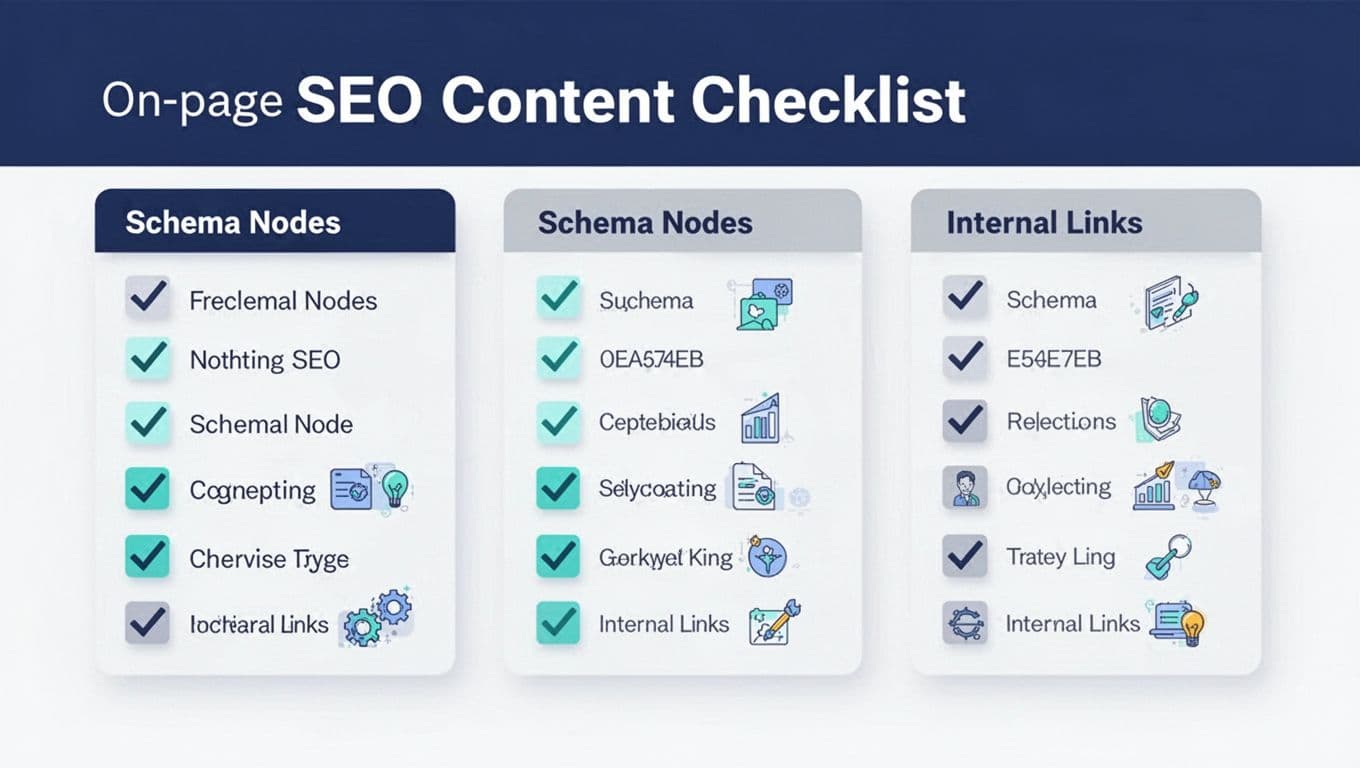
After completing a technical SEO audit, treat this like a pre-flight check. Miss one item and your page can still “look done” while underperforming.
- Search intent match: The first 120 words confirm who the page is for and what you do.
- Title and H1 alignment: Similar meaning, not identical, both include the service naturally.
- Proof near the top: Add 1 to 2 photos, a short testimonial snippet, or a credential.
- Service area clarity: Mention city or neighborhoods where it's honest, don't spam a list. Ensure NAP data consistency across your site and build local citations.
- Helpful sections: Costs, timelines, what's included, what can go wrong, FAQs.
- Internal links: Link to the hub, one related spoke, and your contact page.
- Schema and FAQs: Add FAQ markup when you truly answer common questions.
- Strong CTA: One main action, repeated once, with a clear expectation (hours, response time) to boost conversion rates.
If you want a simple framework for prioritizing page edits, borrow the “step” mindset from this Google ranking plan and apply it to your top service and top locations first.
Google Business Profile posting cadence (fast wins that look real)
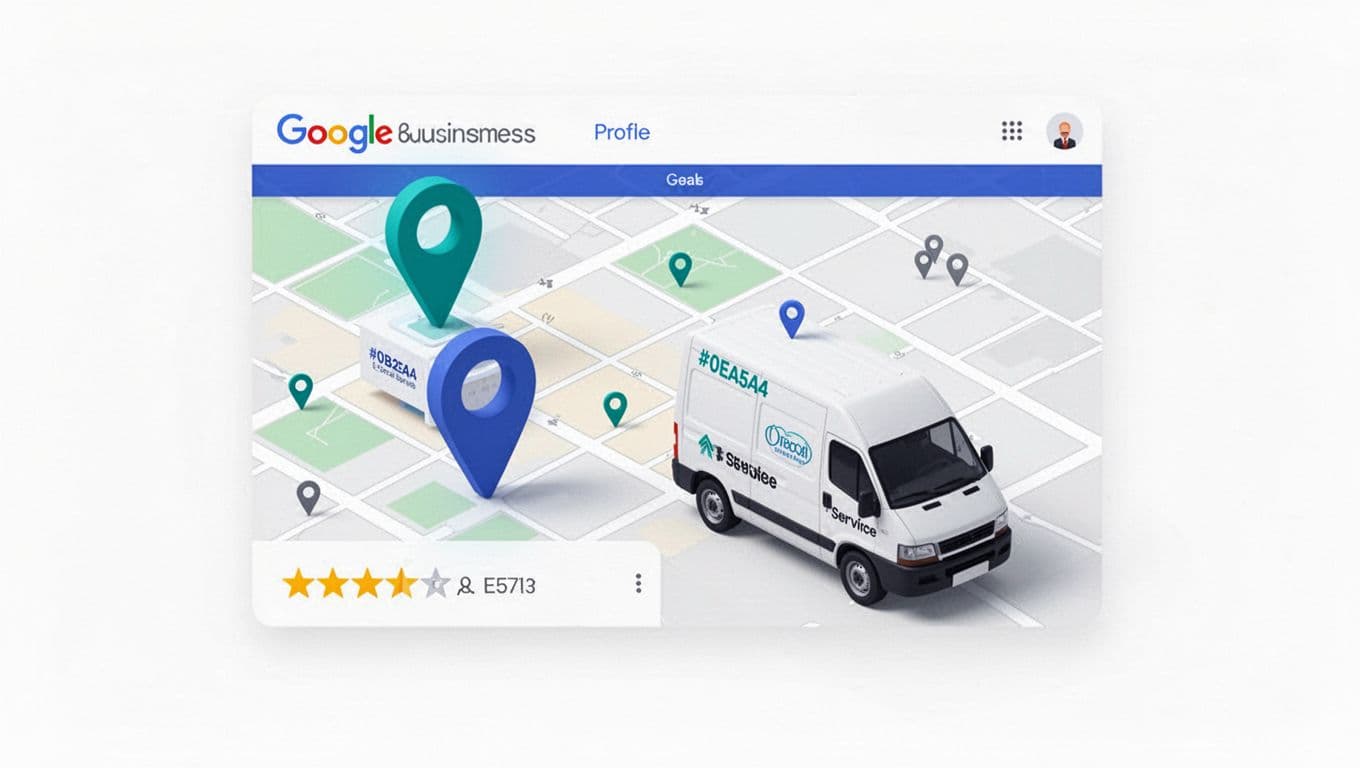
Google Business Profile activity is your “open for business” signal and boosts visibility in the Google Map Pack. Keep it steady, not spammy. If you want a deeper playbook, compare your habits to Google Business Profile best practices for 2026.
Here's a simple cadence that fits most service businesses:
| Item | Cadence | Example ideas |
|---|---|---|
| Photos | 2x per week | Job site, team, equipment, finished result |
| Posts | 1x per week | Seasonal tip, quick checklist, service highlight, Local Services Ads promo |
| Q&A | 2 per month | “Do you offer same-day?” answered by you |
| Reviews | Ongoing | Ask for customer reviews after job completion, reply within 48 hours for reputation management |
Post ideas that earn clicks: “3 signs you need (service),” “What we check in a 20-minute visit,” and “A real fix we did this week,” with one photo.
KPI tracking sheet fields, weekly reporting cadence, and a low-cost tool stack
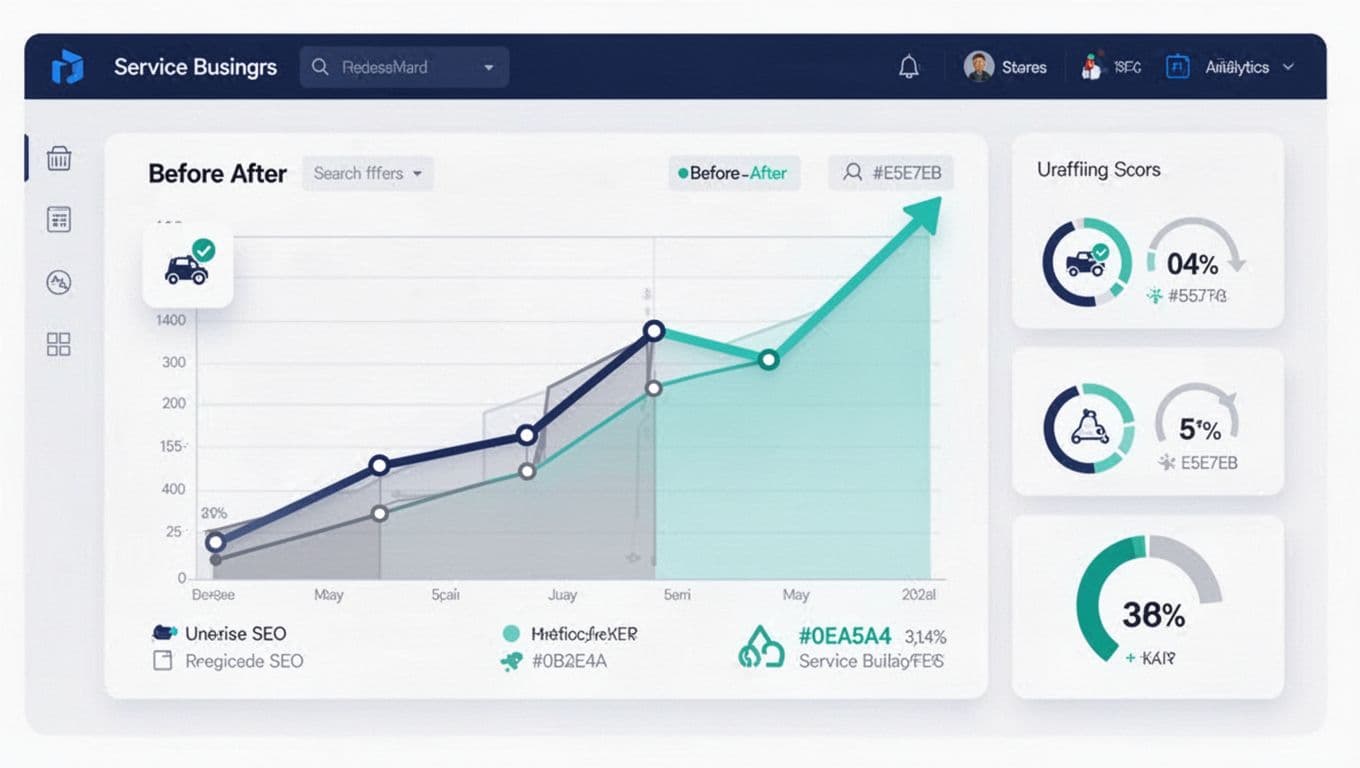
Track what turns into calls, not vanity metrics. Use a simple sheet with these fields:
| Category | Fields to track weekly |
|---|---|
| Content output | Pages published, pages updated, internal links added |
| Search (site) | GSC clicks, impressions, top queries (including near me searches for local SEO), top pages |
| Leads | Calls, forms, bookings, qualified leads (yes or no) |
| Local | Google Business Profile calls, direction requests, website clicks, review count |
| Trust | New photos added, new testimonials, response time to reviews |
Weekly cadence as part of this marketing strategy: check numbers Monday, pick one fix Tuesday, publish Wednesday, promote with Google Business Profile Thursday, and review wins Friday.
For tools, keep it lightweight: Google Search Console, GA4, a spreadsheet, and one rank tracker (see keyword rank tracking tools if you're comparing options). If budget is tight, start with Semrush free tools for auditing local citations on citation sites plus a short list like best free SEO tools in 2026.
Conclusion
A 90-day service business SEO plan works because it forces focus on search engine optimization. You publish the pages that drive decisions, support them with local proof, and measure progress every week. Most importantly, you build trust in places people actually look, your site, your Business Profile, and your reviews. Pick week one from the calendar, put it on the team's schedule, and ship the first update today to boost lead generation.