

People now discover brands through AI answers, not only search results. If ChatGPT, Gemini, or another tool describes your business, you want it to pull from the right pages.
That’s why llms.txt is getting attention. It’s a simple file placed at the root of your website to help AI tools find your most useful content faster. To see where it fits, it helps to look at what it is, how it works, and whether it deserves a spot on your site now.
What the llms.txt file is, and what it is meant to do
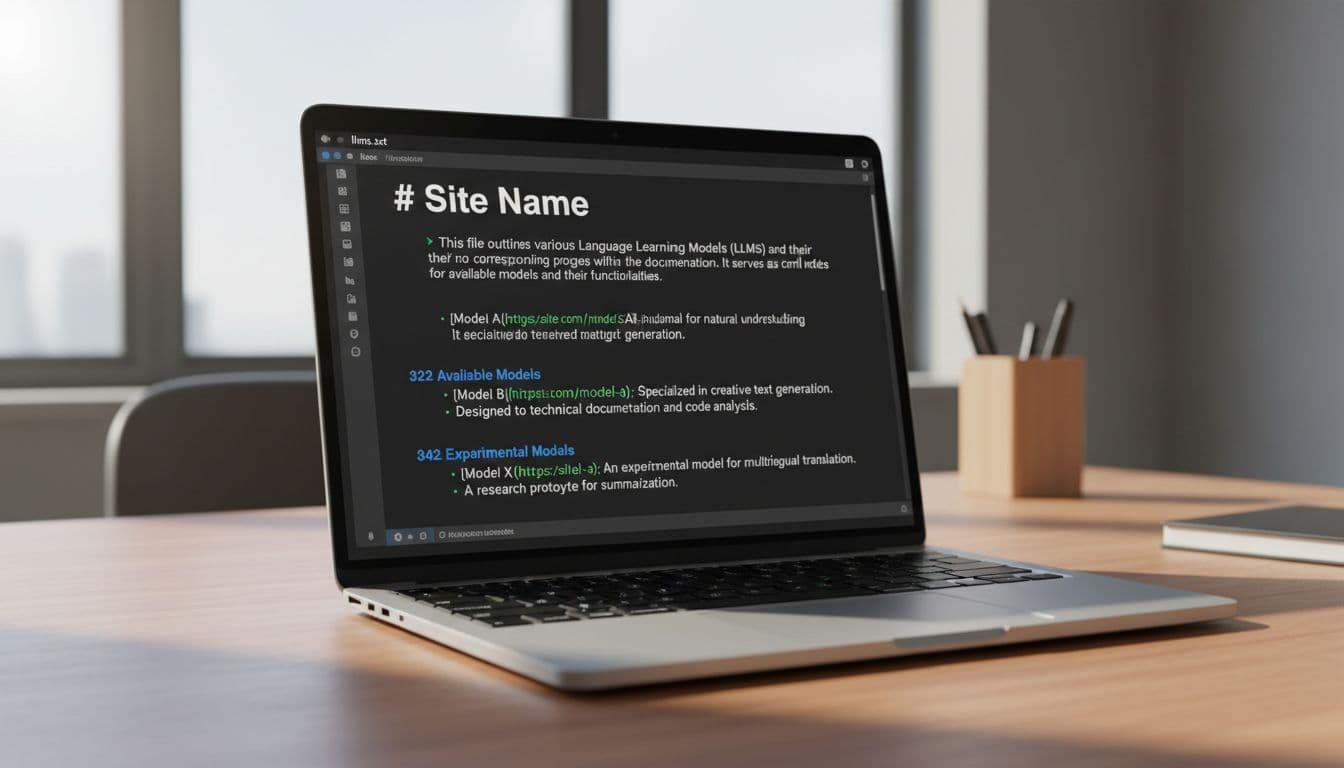
An llms.txt file is a plain Markdown document, usually published at /llms.txt, that gives large language models a cleaner map of your website. Instead of making an AI system sort through menus, scripts, sidebars, and repeated template code, you point it toward the pages that matter most.
The idea was proposed by Jeremy Howard in September 2024. Since then, it has picked up interest as AI search and answer engines have grown. As of April 2026, llms.txt is still an unofficial proposal, not a formal web standard. Still, adoption is moving up. One March 2026 study found llms.txt on 7.4% of Fortune 500 sites and about 10.13% of 300,000 checked domains. Several tech companies and documentation-heavy sites already use it.
Why AI tools need a simpler version of your website
Modern websites are busy. They include navigation bars, pop-ups, tracking code, repeated footer links, tabs, and dynamic elements. Humans can ignore that clutter. AI systems often have a harder time.
A curated file cuts through the noise. It tells the model, “Start here, these are the pages worth reading.” That can help AI tools build cleaner summaries, pull better citations, and describe your business with fewer mistakes.
This matters most when your site has a lot of pages. Without guidance, an AI system might focus on old posts, thin pages, or low-value archives instead of your strongest content.
How llms.txt is different from robots.txt and sitemap.xml
These three files serve different jobs. They work better together than alone.
Here’s the simplest way to compare them:
| File | Main purpose | Who it helps most |
|---|---|---|
robots.txt | Tells crawlers what they can or can’t access | Search engine and bot crawlers |
sitemap.xml | Lists URLs you want search engines to know about | Search engines |
llms.txt | Highlights your best pages and adds context for AI systems | AI answer tools and LLMs |
robots.txt is about access. sitemap.xml is about discovery. llms.txt is about guidance.
llms.txt is a guide, not a gatekeeper. It doesn’t replace robots.txt, and it doesn’t force AI tools to obey it.
Why your website may need llms.txt now
If your site publishes useful content, llms.txt is worth paying attention to now. That includes service pages, product pages, help docs, knowledge bases, category pages, and original articles. Those are the assets AI tools often summarize, cite, or use to build answers.
This is where llms.txt connects with AI SEO, GEO, and AEO. The names differ, but the goal is similar: help machines understand your content well enough to mention it correctly. If you want a broader view of those shifts, this guide on GEO vs SEO vs AEO lays out how each one fits.
The business value is simple. You’re not trying to stuff more pages into an AI system. You’re trying to steer attention toward your current, high-value pages instead of the weak ones.
It can improve how AI answers describe your brand
When AI tools can quickly find your core pages, they have a better shot at describing your company accurately. That may lead to stronger summaries, cleaner citations, and fewer strange mismatches between what you do and what the AI says you do.
That doesn’t mean guaranteed traffic or rankings. Results are still mixed, and some AI providers may ignore the file. A February 2026 test from OtterlyAI found no major crawler behavior change. Still, giving AI a clearer path is better than leaving it to guess.
This is also why brands are paying more attention to AI Overviews SEO for service businesses. AI answers often shape the first impression before a user ever clicks a website.
It helps you highlight your best pages, not your whole site
The strength of llms.txt is that it’s selective. Think of it like handing someone a short reading list instead of your whole library.
That means you should include your top service pages, best product pages, strongest blog posts, useful guides, documentation, and key trust pages. Skip thin tag pages, duplicate URLs, expired promos, and low-value archives.
This is especially useful for growing websites. Once a site has dozens or hundreds of URLs, the best pages can get buried. llms.txt helps bring them back to the front.
How to create an llms.txt file without overcomplicating it
The common format is simple. Start with an H1 for your site name. Add a short blockquote or summary that explains what the site is about. Then organize your key pages under H2 section headings, with bullet links and short descriptions.
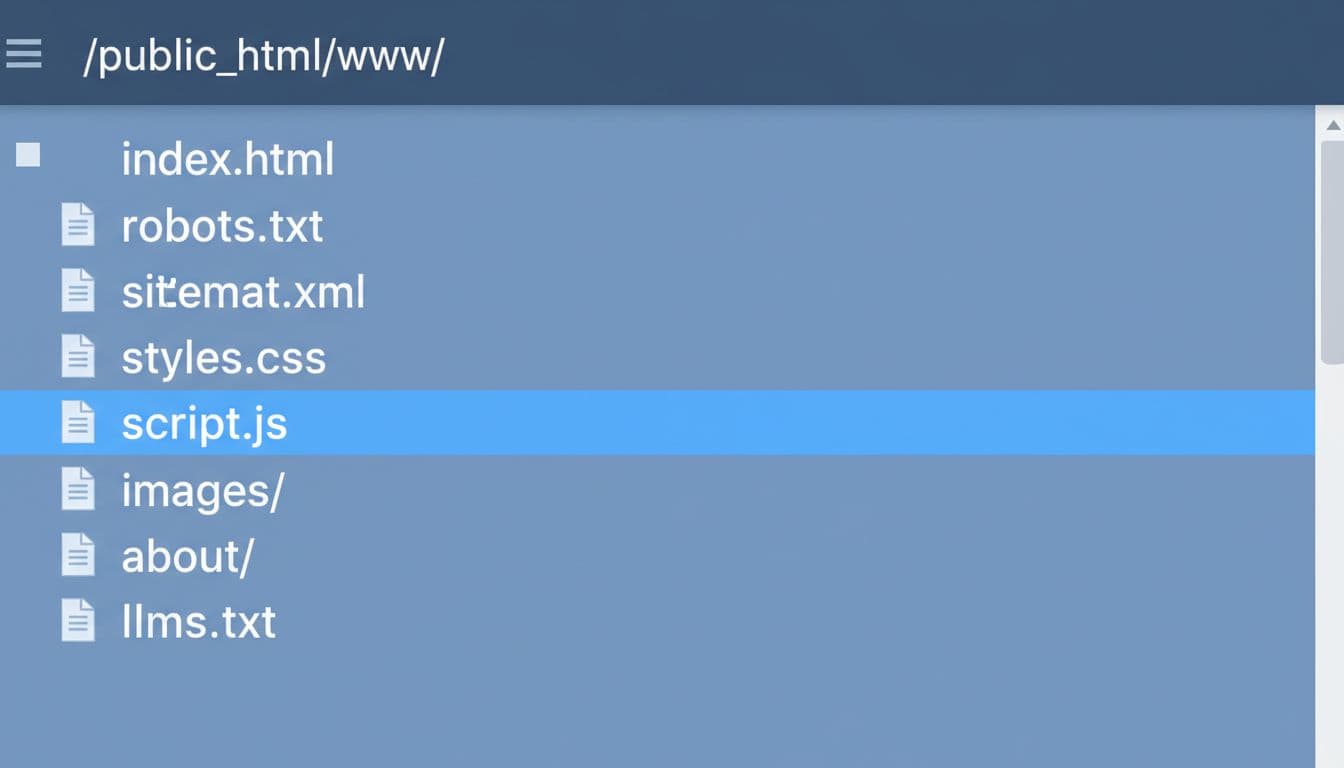
Most sites write the file in Markdown and upload it to the root of the domain so it loads at yourdomain.com/llms.txt. If you can, serve it with a normal 200 OK response and plain text output. Some sites also publish llms-full.txt or clean Markdown versions of important pages, but those are optional extras, not the starting point.
What to include in the file
Keep it tight and useful. Most sites only need a small set of strong links.
- A short homepage summary that explains what the business does
- Core service or product pages
- Important guides, tutorials, or blog posts
- Key category pages or collections
- Documentation, help center, or knowledge base pages
- Contact, about, or trust pages when they add context
Each listed page should be live, helpful, and worth sending an AI system to. Use clear labels and one short description per link. If the wording sounds like ad copy, trim it.
Common mistakes to avoid when building llms.txt
A lot of websites miss the point by turning llms.txt into a second sitemap. That weakens the file.
Avoid these common mistakes:
- Listing too many pages
- Using vague descriptions like “Learn more” or “Read this”
- Linking to old, thin, or outdated content
- Forgetting to update the file as pages change
- Stuffing keywords into every line
- Treating it like a tool that blocks AI access
The goal is clarity. If a page isn’t one of your best sources, leave it out.
Best practices, limits, and whether llms.txt is worth it for your site
llms.txt is easy to create, easy to maintain, and low risk. That makes it attractive. Still, it isn’t magic. It won’t control every AI tool, and it won’t fix weak content.
Use it alongside strong SEO basics: a clear site structure, fresh content, internal linking, and schema where it helps. If your core pages are messy or thin, fix those first. A clean file can point AI toward good content, but it can’t turn bad content into good answers. This is why your broader SEO strategy for top rankings still matters.
Who should add it first
The best early candidates are content-rich websites. That includes SaaS companies, agencies, publishers, ecommerce brands with strong guides, support centers, product docs, startups, and service businesses that want better visibility in AI-generated answers.
On the other hand, a tiny site with five simple pages may see less value right away. It can still add llms.txt, but the upside is usually bigger for sites with more content and more room for AI confusion.
A simple rule for deciding if it is worth your time
Use this test: if your site has pages you want AI tools to understand and cite correctly, llms.txt is worth adding.
If your content is thin, old, or unclear, improve that first. Then publish the file. In other words, llms.txt supports content quality, it doesn’t replace it.
AI answers are becoming part of how people choose brands. A simple guide file helps you shape that process instead of leaving it to chance.
llms.txt is not a silver bullet, but it is a smart housekeeping move. It points AI systems to your best content, reduces confusion, and fits the way online discovery is shifting.
For most content-rich websites, adding it now makes sense. It’s simple to implement, easy to update, and well aligned with a web where AI often speaks before your homepage does.