

Cheap leads can look great in Ads Manager, then fall apart on the phone. That’s why meta lead ads versus landing pages is still one of the biggest choices a service business can make in 2026.
For most owners, the real test isn’t cost per lead. It’s booked jobs, show-up rates, and revenue after follow-up. If you’re sending paid social traffic from Facebook or Instagram, the destination matters as much as the ad.
Why the traffic destination changes lead quality
Meta Lead Ads keep people inside Facebook or Instagram. A prospect taps the ad, sees a short form, and Meta often pre-fills contact details. Friction drops, so lead volume usually goes up.
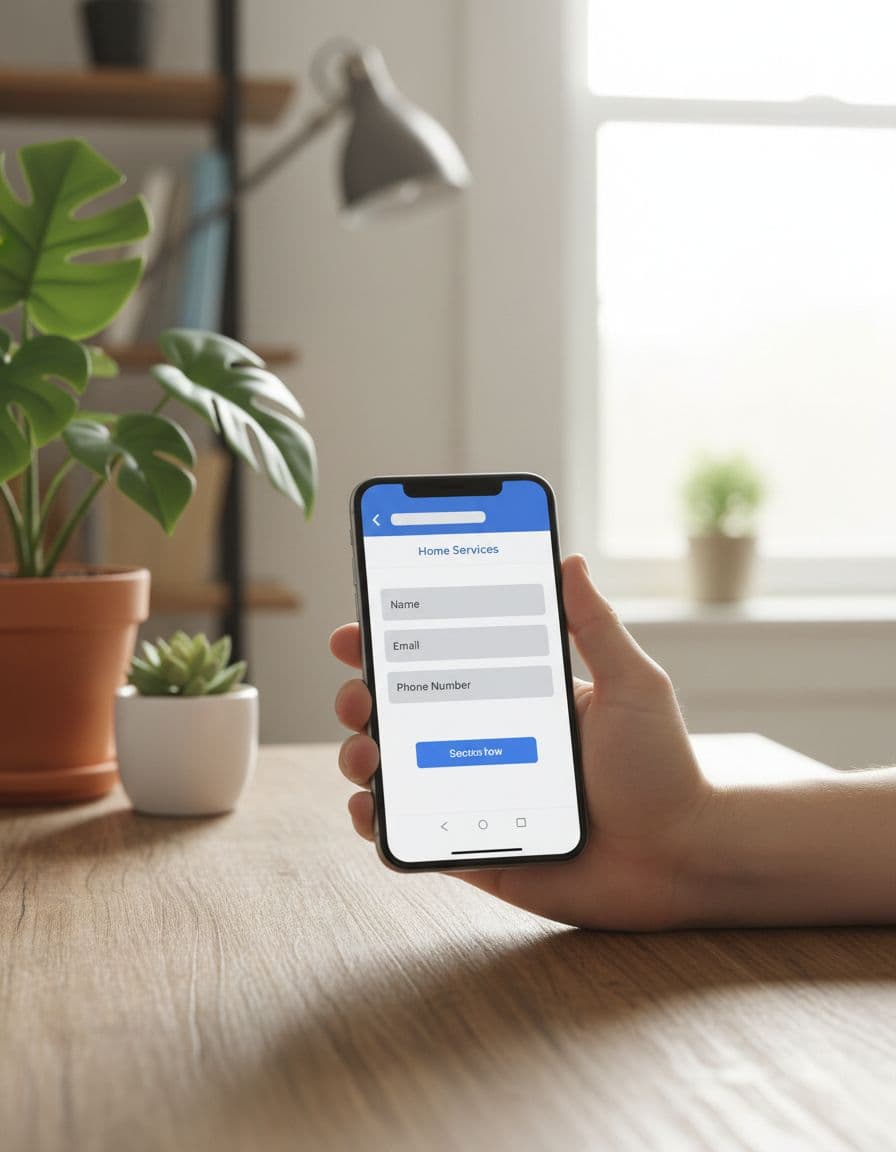
That speed helps when timing matters. A home services company running AC repair ads during a heat wave can win by capturing demand fast. The same goes for a coaching offer tied to a webinar or limited-time consultation.
Landing pages ask for more from the user. They leave the app, wait for the page to load, read the offer, and then fill out a form. That extra step filters out casual clicks. Fewer people convert, but the ones who do often want the service more.
This side-by-side view shows the tradeoff:
| Factor | Meta Lead Ads | Landing Pages |
|---|---|---|
| Form completion rate | Usually higher | Usually lower |
| Lead intent | Lower to medium | Medium to high |
| Qualification control | Limited | Strong |
| Pixel tracking | Partial | Better |
| Retargeting depth | Limited | Strong |
| Best fit | Speed and volume | Quality and bookings |
That pattern matches what many 2026 advertisers are seeing. In Barham Marketing’s 2026 comparison, native forms tend to win on raw lead count, while landing pages often do better once sales quality enters the picture.
Booking rates and show-up rates tell the real story
A lead is only the first domino. If it never turns into an appointment, it’s noise.
Cheap leads get expensive when your team spends hours calling people who never meant to book.
For higher-ticket services, landing pages often pull ahead after the first conversion. A med spa, family law firm, executive coach, or B2B services company usually needs space to explain price, trust, process, and next steps. A page can do that before the form even appears.

Take a med spa selling injectables. A Meta form may collect plenty of names. A landing page can pre-qualify by treatment interest, budget, location, and availability. That usually means fewer leads, but more bookings and fewer no-shows.
Legal and B2B campaigns show the same pattern. If someone is hiring a lawyer or a consultant, they want proof before they talk. Reviews, FAQs, case studies, and a stronger offer on-page help warm the lead before sales gets involved. Indeeleads’ breakdown of Meta lead funnels makes a similar point, website paths tend to work better when intent matters more than sheer volume.
Still, Meta Lead Ads can outperform when urgency is high. A roofer after storm damage or a cleaning company with same-week slots may care more about fast contact than long-form education.
What changed in 2026, and why old advice falls short
Meta’s automation is stronger now. Broad targeting often works better than tight audience stacks, and automated creative systems can test hundreds of combinations quickly. That helps Social Media Marketing teams move faster, but it also creates a catch. Meta will optimize for the easiest form fills unless you feed it better sales data.
That’s where attribution breaks down. With lead ads, the user stays in-app, so your site pixel sees less of the journey. You get weaker page-level behavior data and fewer retargeting signals. Landing pages still matter because they give Performance Marketing teams better tracking, deeper remarketing pools, and cleaner ties to Website Development improvements.
Privacy changes make this more important. Lookalikes aren’t what they were a few years ago, so first-party data matters more. Lead ads can sync instantly into a CRM, which is great for speed. Some brands now add extra questions or OTP-style verification to filter junk. Even so, landing pages still offer better routing by zip code, service type, budget, or urgency before a lead reaches sales.
AI-assisted follow-up also changes the math. A missed call no longer kills the lead if AI texts, emails, and books fast. Lead ads benefit from that speed. Yet landing pages often give AI more context, because you can pass page behavior and detailed form answers into your CRM. That matters across DIgital Marketing, especially when paid social supports local SEO services for businesses or broader comprehensive digital marketing services.
When to use Meta Lead Ads, landing pages, or both
Use Meta Lead Ads when speed matters, the offer is simple, and your team responds fast. They fit emergency home services, low-friction promotions, short coaching funnels, and mobile-first audiences that won’t wait.
Choose landing pages when the service is expensive, trust-heavy, or regulated. Legal services, med spas, consulting, and most B2B offers usually need more context before a lead is ready to book.
Combine both when you want scale without giving up quality. Send colder audiences to Meta Lead Ads, then retarget opens, non-bookers, and warmer prospects to a landing page. KHC Group’s guide to Meta ads for service businesses points in the same direction, the funnel matters more than the format alone.
The cheaper lead isn’t always the better customer. In 2026, the winning path is the one that improves booked revenue, not the one that makes your dashboard look busy.
If you want help mapping the right funnel for your business, Get In Touch With Us.