


A/B testing landing pages can raise form submissions, but a flawed setup can also create duplicate leads, missing campaign sources, and misleading winners.
For a small business in Kolkata, reliable lead generation matters because every qualified enquiry counts. If the test changes conversion tracking or breaks the CRM handoff, higher dashboard numbers may hide weaker sales results.
A sound experiment improves the page while keeping the measurement path stable.
A/B Testing Landing Pages: Protect the Data Before Chasing a Lift

A/B testing compares a control version against one changed version. Randomly divide eligible unique visitors between the page variations, then measure the same primary outcome for both groups.
The goal isn’t a prettier page or higher click through rates. Conversion rate optimization focuses on conversion rate and lead generation, not clicks alone. It should produce more real leads your team can contact, qualify, and connect to revenue.
Count qualified leads, not every form action

A page variation may generate more submissions but attract spam, incomplete enquiries, or poor-fit prospects. Track the initial generate_lead event, then compare booked calls, sales-qualified leads, and closed deals in the CRM.
This matters for marketing campaigns and SEO alike. A service page that produces fewer but better enquiries can outperform a high-volume page.
Change one decision at a time

Start with test hypotheses grounded in visible issues. For example, a shorter form may increase confirmed submissions because visitors abandon the phone-number field.
Test the form length, not a new headline, visual, offer, and button at once. One controlled change makes the result easier to interpret. Test headlines, call to action wording, social proof, form fields, and layout order in separate rounds.
Build Measurement Before You Create Variants

Tracking should exist before traffic reaches either page variation. Write down the conversion definition, event names, attribution fields, CRM fields, sample size, and integration owner for every connection.
A useful baseline is a GA4 lead tracking checklist that separates meaningful lead events from soft engagement signals, including the confirmed lead-generation outcome you’re measuring.
Keep IDs and event schemas consistent

Pass an experiment_id, variant_id, landing_page, and form_id with the same event schema on both variants. Don’t rename events on Version B or create a separate GA4 conversion for it.
Use stable anonymous IDs to assign unique visitors, then attach the CRM’s lead ID after successful submission. Keep personal details out of analytics events. Clear GA4 event naming conventions make later analysis far less error-prone.
Validate a confirmed success event

A thank-you page can support follow-up messaging, but it shouldn’t be the only proof of a conversion. Reloads, direct visits, and bot traffic can inflate page-based counts.
Fire the primary conversion only after the form passes validation and the lead record or booking is confirmed.
Use GA4 DebugView, Tag Manager Preview, and a CRM test record as testing tools before launch. Before releasing traffic, validate consent status, stable IDs, event schemas, CRM lead IDs, deduplication logic, and fields needed for historical reporting. Event tracking versus thank-you pages explains why confirmed actions give cleaner lead attribution.
| Check | Expected result |
|---|---|
| Page load | One page view per load |
| Form submit | Event fires only after success |
| Variant field | Control or variation is present |
| CRM handoff | One lead record receives the same ID |
| Attribution | UTMs and click IDs persist |
Choose the Right Experiment Delivery Method

A/B tests and split testing both compare alternatives. Teams often use separate page URLs for split testing, while an A/B test may change page variations on the same URL. Multivariate testing evaluates combinations of several changes, so it needs more traffic and disciplined analysis.
Keep traffic distribution consistent among eligible unique visitors. Persist assignment across the session and relevant return visits, so each group receives its intended landing page variants.
Client-side tests are quick, but watch performance

Client-side testing tools load the original page, then modify the browser DOM after delivery. This can be practical for copy, buttons, and small layout changes.
However, delayed scripts can cause a brief visual flicker or slow page speed, affecting the user experience. Test on mobile networks and check that both variants load the same form, consent controls, and tracking tags.
Server-side tests give tighter control

Server-side testing assigns a variation before the page renders. It suits major page changes, logged-in experiences, pricing logic, or cases where performance matters.
The setup usually needs developer support. In return, it can record the assigned variant in backend logs and send a more consistent page response. Google documents how a third-party experiment integration can connect with GA4.
Plan Traffic, Minimum Detectable Effect, and Test Duration

Traffic alone doesn’t decide whether a test is reliable. Sample size depends on baseline conversion rate, the lift worth detecting, traffic distribution, and the uncertainty you can accept.
Set the test duration, sample size, and decision rule before launch. Otherwise, it’s tempting to stop when test results briefly look positive.
Define the smallest useful improvement

Your minimum detectable effect is the smallest conversion-rate change that would justify the effort or risk. A small uplift may not cover additional ad spend or sales follow-up, while a large target may demand more traffic than the campaign can supply.
Record the baseline, planned sample, decision rule, start date, and expected sales lag. A disciplined A/B test tracking approach keeps these details visible. Refer back to the minimum detectable effect threshold when evaluating the outcome.
Low-traffic sites should test less often

There is no universal monthly visitor threshold. Traffic estimates should reflect eligible unique visitors, not raw page loads. With limited traffic, focus on high-intent campaigns, run one test longer, and avoid multivariate testing.
Include normal weekday and weekend behaviour where relevant. A seven-day run can reduce calendar bias, but it doesn’t guarantee statistical significance. Wait for the planned sample and inspect lead quality before choosing a winner.
Preserve Attribution Through the CRM Handoff
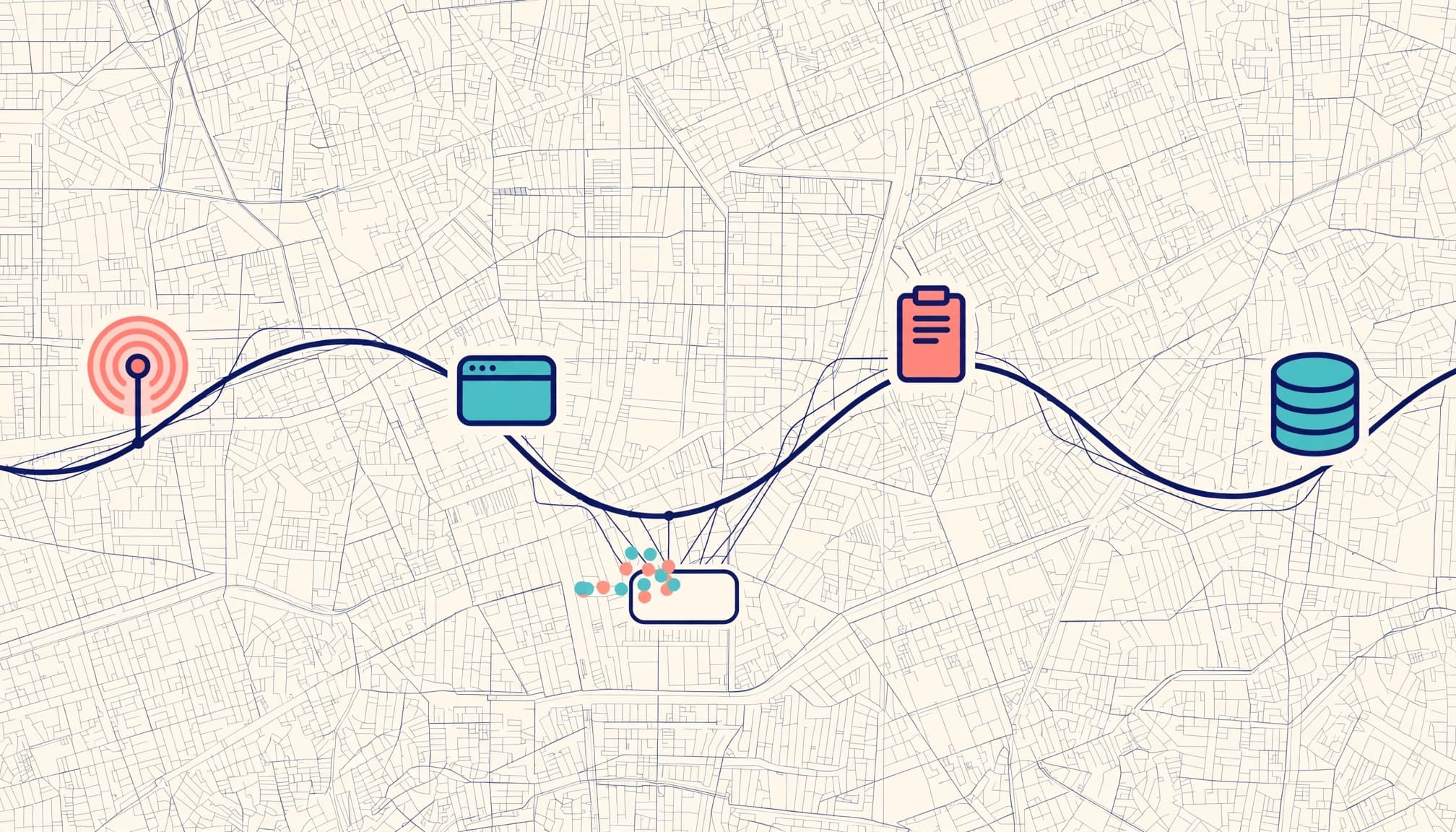
Visitors rarely convert on their first page during lead generation. They may arrive through Google Ads or other marketing campaigns, browse service pages, return through branded search, then submit a form several days later.
Capture attribution on entry and preserve it across visits and channels until the CRM receives the lead.
Store source data and prevent duplicates

With appropriate consent, store UTM parameters and click identifiers such as GCLID, WBRAID, and GBRAID in first-party storage. Then repopulate approved hidden inputs if the visitor moves between pages.
Pass first-touch source, latest source, landing page, referrer, experiment ID, variant ID, and a conversion timestamp into the CRM. Use a unique submission or lead ID to deduplicate repeat submits, confirmation-page reloads, and double-fired tags.
Reconcile web reports with sales outcomes

GA4 is useful for landing-page performance and channel patterns. Your CRM should remain the source for lead status, opportunities, revenue, and closed sales.
Review both reports on a fixed schedule. Compare web test results with CRM lead status, opportunity, revenue, and closed-sale outcomes. Compare lead IDs, variant assignment, source fields, and date ranges. The process in this GA4 CRM reconciliation guide helps expose missing handoffs and inflated web conversions.
Browser blockers, consent choices, private browsing, embedded schedulers, and cross-domain journeys can all create gaps. Server-side tracking may improve first-party control, but it can’t replace consent or reconstruct every journey.
Read Results Carefully and Pick Tools That Fit

Test results can be inconclusive because statistical significance isn’t automatic. The proposed change may be too small, the page may need more traffic, or the test may have run during an unusual promotion.
Review the planned sample size, unique visitors, traffic split, test duration, technical QA, conversion rate, and downstream lead quality. Keep denominator and segment definitions consistent. Segment carefully by device and channel, because a mobile form issue can disappear inside an overall average user experience. GA4 funnel explorations can reveal where each variant loses visitors.
A landing page builder can help non-technical teams create page variations and landing page variants. Before choosing testing tools, confirm current pricing, experiment allocation, GA4 integration, CRM support, page-speed impact, access controls, and support for conversion rate optimization. Keep an experiment log even when the tool offers automated reporting.
If form submissions rise but qualified leads fall, don’t treat the higher count as a winning variation. Retain the control because lead generation quality matters. If tracking disagrees across platforms, pause further changes and Get In Touch With Us before scaling spend.
Key Takeaways

- Treat a confirmed lead action, not a page view or button click, as the primary conversion.
- Keep IDs, event names, attribution fields, and CRM mappings identical across control and variation.
- Decide sample size, duration, and the minimum useful lift before traffic enters the experiment.
- Judge a winning variation by qualified pipeline, not form fills alone.
Frequently Asked Questions

How much traffic does a landing-page A/B test need? It depends on your baseline conversion rate, required sample size, and the change you need to detect. Low-traffic businesses should assess available unique visitors, run fewer tests, focus on larger page changes, and use CRM outcomes. A traffic estimate alone doesn’t guarantee a reliable result.
How long should a test run? Run until the planned sample arrives and the test covers ordinary business patterns. Don’t call a winner early because a dashboard spikes for a day.
What should you test first? Start with the largest source of friction: an unclear offer, weak messaging, poor message match, or an overly demanding form. Analytics and customer feedback should guide the hypothesis.
Can conversion data be trusted when privacy limits tracking? It can still guide decisions when teams respect consent, validate confirmed events, preserve first-party identifiers where permitted, and reconcile web data with CRM records.
Clean Data Makes A/B Tests Worth Running

A landing-page experiment is only as useful as the conversion record behind it. Stable tracking, preserved attribution, and CRM reconciliation make the test results trustworthy.
The strongest tests produce a winning variation that improves lead quality, preserves attribution, and leaves a clear audit trail from the first click through the sales outcome.