

Your best prospects often search a competitor before they search you. That's why google ads competitor campaigns can still work in 2026, especially for local, high-ticket services.
A law firm, HVAC company, med spa, or B2B agency doesn't need a flood of cheap clicks. You need a small number of the right people, at the right moment, with a better reason to call or fill out a form.
The catch is simple: this tactic can waste budget fast if the setup is loose. It also has policy and trademark risks if your ads cross the line.
Why competitor campaigns still make sense for service businesses

Competitor searches carry strong buying intent. When someone types a rival's brand plus “reviews,” “pricing,” or “near me,” they're often close to a decision.
That matters more in services than in ecommerce. A homeowner comparing plumbers, or a business comparing payroll providers, may contact only two or three companies. If your ad appears at that moment, you enter the shortlist.
Still, this is not a volume play. Click-through rates are often lower, and cost per click can be higher. The win comes from selective targeting, strong offer fit, and tight lead handling.
Think of it like placing a sign outside a rival's storefront, but only when a buyer is already walking in. For more ways to study the auction before you spend, this competitor analysis guide gives a useful overview of keyword, ad, and landing-page research.
How to build the campaign without bleeding budget
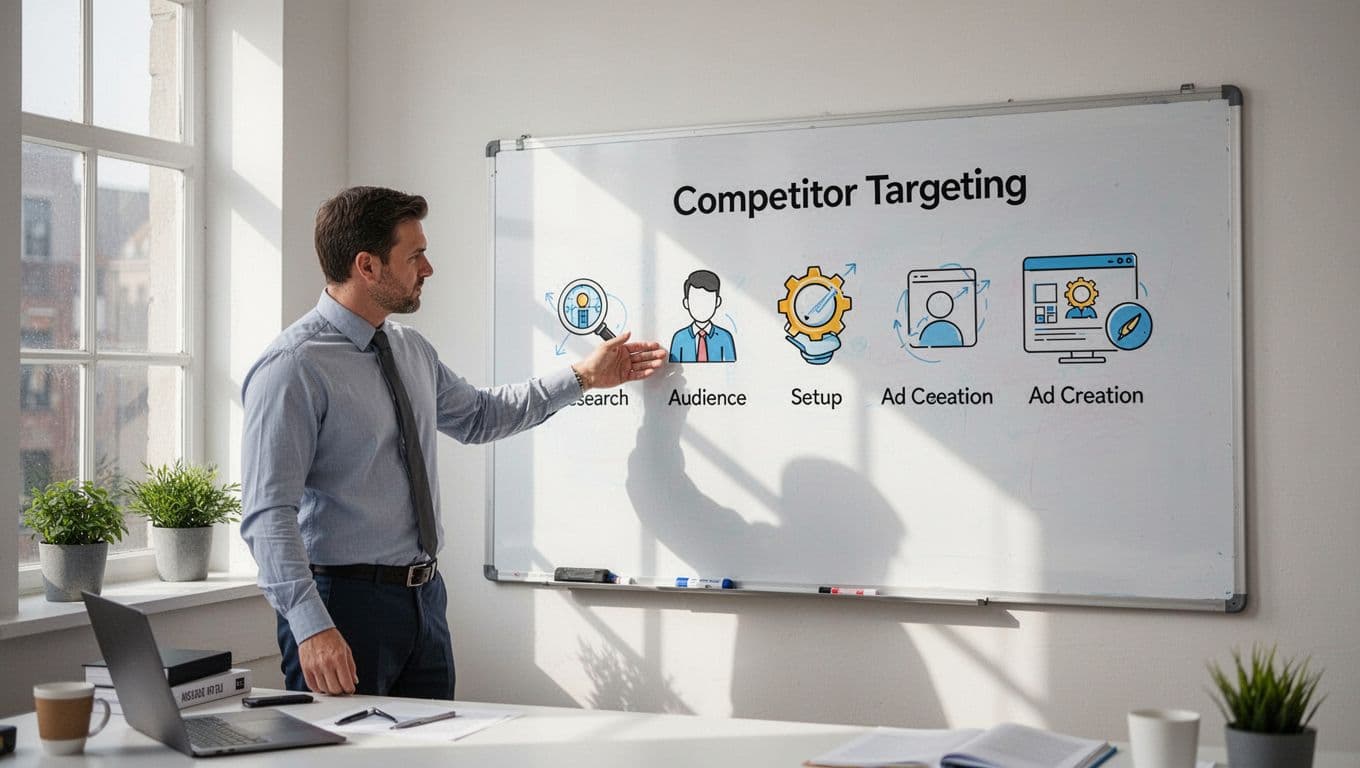
Keep competitor traffic in its own search campaign. Don't mix it with brand or general non-brand terms. That separation makes budgets, bids, and lead quality much easier to read. A solid foundation helps, and this guide on Google Ads campaign structure for qualified leads fits that approach well.
Start tight. Use exact match and carefully selected phrase match around competitor brand terms. Add local modifiers if you serve a clear area, such as “Dallas HVAC competitor name” or “family lawyer competitor name Chicago.”
A few settings matter more than most:
- Limit geography to real service areas.
- Run during hours when calls can be answered fast.
- Send traffic to a focused landing page, not your homepage.
- Use form and call tracking from day one.
In 2026, that last point matters even more because new call-only ads are gone, and existing ones stop serving in February 2027. Use Responsive Search Ads with call assets instead. You'll keep phone leads in play without building around a format that's on the way out.
If you want a practical look at how others structure this tactic, this walkthrough of competitor campaigns offers a good outside reference.
Ethical keyword and ad copy rules that matter in 2026
Bidding on competitor brand terms is often allowed. Using a competitor's trademark in ad copy is a different issue, and restrictions can apply. That's where many service advertisers get sloppy.
The safe approach is simple. Target the search, but don't pretend to be the competitor. Skip headlines that name the rival unless you have clear legal grounds and have checked the policy risk in your market. Also avoid vague claims like “best” or “cheapest” unless you can back them up.
Instead, write to the buyer's real concern. Try angles like faster response time, direct owner access, financing, emergency availability, stronger proof, or a more specialized service.
Bid on competitor searches if it helps the searcher. Don't make the ad look like the competitor's ad.
This is where testing pays off. A med spa may win with “Doctor-led consultations.” An HVAC company may win with “Same-day repair.” A law firm may win with “Speak to an attorney today.” Then sharpen those messages with a Google Ads copy testing framework.
Bidding, budgets, and AI control in 2026
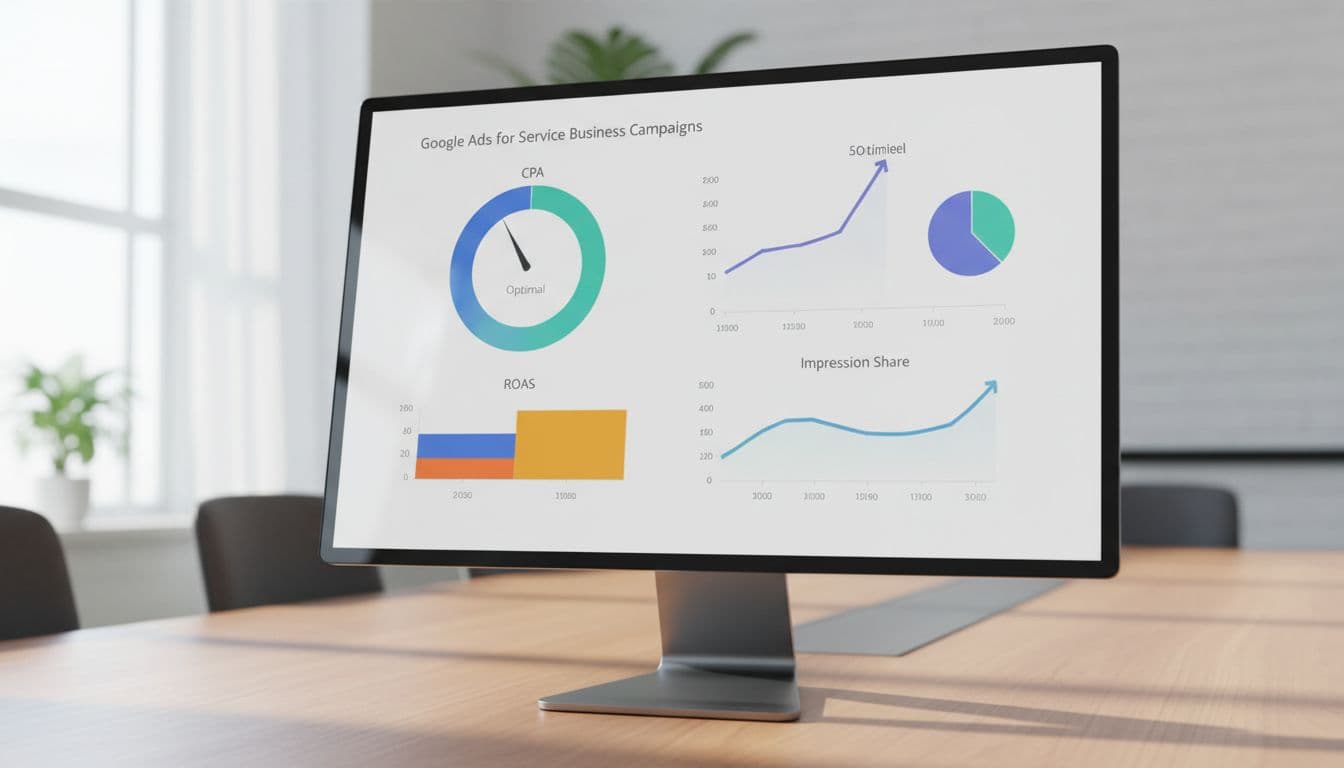
Google Ads keeps pushing more automation in 2026, and that can help if your conversion data is clean. It can also waste money if Google treats every form fill the same.
For most service businesses, competitor campaigns work best when you start with a modest budget and tight conversion tracking. Don't let smart bidding chase junk leads. Feed it qualified calls, booked consults, or sales-ready forms, not raw submissions.
Separate budgets are important here. Competitor campaigns often have weaker click signals than branded search, so they shouldn't steal spend from your core lead engine. Watch impression share, search terms, and assisted conversions. Also use negative keywords aggressively, especially if AI-driven matching starts widening too far.
If you want a quick way to review live ads and auction patterns, this guide to Google Ads competitor analysis shows how marketers use Auction Insights and related research tools.
Track calls, forms, and closed revenue before you scale

A competitor click is expensive, so your tracking can't stop at “lead received.” Tie calls to source. Score forms by quality. Import offline results when possible.
This is where service businesses often miss profit. A personal injury firm may get fewer leads from competitor terms, but signed cases may be worth far more. A plumber may see higher click costs, yet booked jobs still beat general search because the buyer was ready to switch. The same pattern shows up in B2B, where one qualified demo can pay for a month of testing.
After the campaign runs for a few weeks, review the actual queries. Trim weak terms, add negatives, and keep only the brands and variants that bring real sales conversations. This process gets easier when you use search terms mining for Google Ads.
The click is not the win. The closed deal is.
Competitor campaigns work best when you treat them like a precision tool, not a broad reach tactic. Keep the targeting tight, respect trademark boundaries, and feed Google better conversion data than your competitors do.
If your current campaign only reports clicks and form fills, fix that first. Once you can see which competitor searches turn into revenue, scaling gets a lot less risky.