

Too many service businesses tell Google Ads that every form fill matters the same. Then they wonder why the leads look cheap on paper but weak in real life.
A smart google ads conversion strategy fixes that. When you split primary and secondary conversions the right way, Google stops chasing noise and starts chasing better prospects.
What primary conversions should do in Google Ads
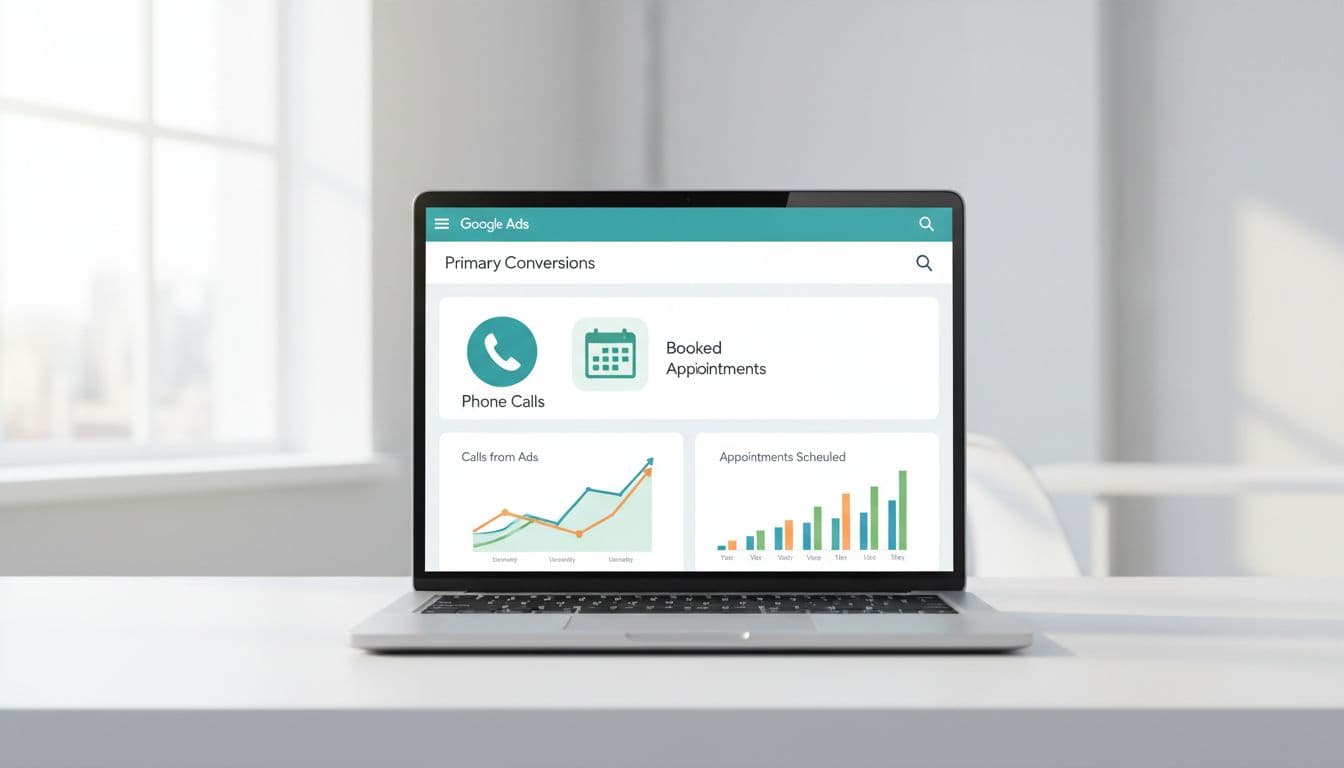
Primary conversions should point Google toward actions that are close to revenue. For most service businesses, that means qualified phone calls, booked consultations, scheduled estimates, case intakes, or signed jobs.
If you run a law firm, a booked case review is stronger than a generic contact form. If you own an HVAC or plumbing company, a new inbound call from a service area ZIP code often matters more than a page view. For a med spa, a consultation request with treatment interest beats a newsletter signup every time.
This is where many accounts go off track. They count soft actions as if they were sales-ready leads. Google then learns to find more of those soft actions.
Here is a simple way to sort actions:
| Action | Usually Primary | Usually Secondary |
|---|---|---|
| New lead phone call | Yes | No |
| Consultation booked | Yes | No |
| Service request form with qualifying fields | Yes | Sometimes |
| Basic contact form | Sometimes | Yes |
| Chat started | Rarely | Yes |
| PDF or guide download | No | Yes |
The takeaway is simple. A primary conversion should show clear buying intent and give your bidding strategy a reliable target.
In 2026, this matters even more because Google responds better to value-based signals. If a booked consultation is worth more than a short form fill, assign a higher value. If your sales team marks leads as qualified later, import that result back into Google Ads. That is how automation learns what a good lead looks like.
Good structure matters too. A messy account can muddy conversion signals, so clean Google Ads campaign structure for qualified leads helps the data do its job.
Why secondary conversions still matter

Secondary conversions are not useless. They are your supporting cast. They show interest, reveal friction, and help you spot patterns before a lead becomes sales-ready.
For example, a home services company may track chat starts, financing-page visits, and coupon downloads. A med spa may track treatment-guide downloads or gallery clicks. An agency may track a pricing-page visit or a short lead magnet form. These actions can tell you whether traffic is engaged, even if it is not ready to buy today.
Still, most of these should stay out of bidding. If Google optimizes for chat opens, it may flood you with curious browsers. If it optimizes for low-friction forms, it may find people who never answer the phone.
If you count weak intent as a main success signal, Google will buy more weak intent.
Secondary conversions work best in three ways. First, they help diagnose landing page issues. Second, they show where visitors stall in the funnel. Third, they give context when primary volume is low.
This is especially useful for smaller accounts. If you get fewer than 15 to 30 strong leads per month, you may need time to build history. During that phase, track secondary actions for insight, but keep your main bidding focused on the best signals you have. Once you reach steadier volume, often 30 to 80 monthly primaries, you can shift harder into automated bidding. When quality data and values are strong, higher-volume accounts can move toward Target CPA or value-based bidding.
How to pick primary vs secondary conversions for your business
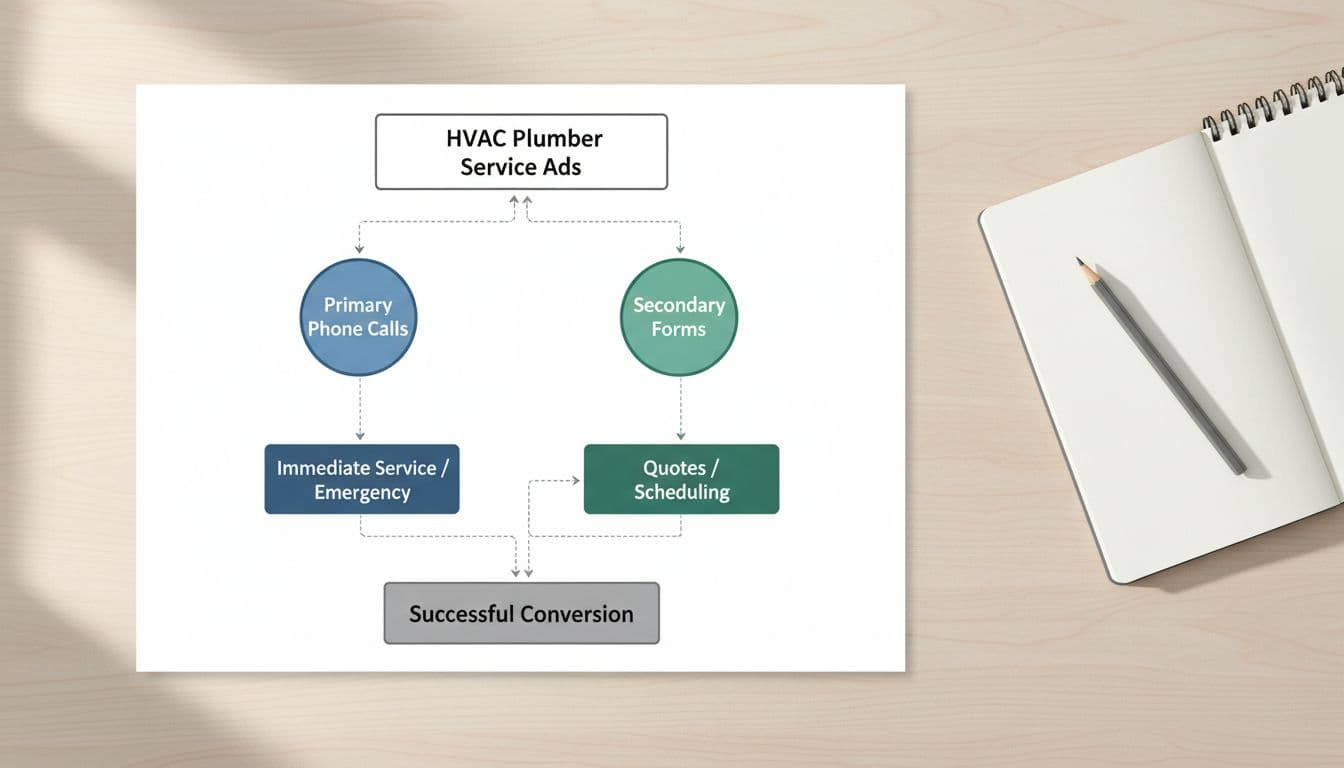
Use this filter for every action you track.
First, ask how close the action is to revenue. A signed retainer, booked visit, or scheduled estimate belongs near the top. Next, ask how much intent it shows. A call lasting 60 seconds from a new prospect is stronger than a two-field form. Then ask whether you can verify lead quality later in your CRM.
That leads to a practical setup:
- Track 1 to 3 primary conversions that reflect real sales intent.
- Track secondary actions for reporting, not as main bid targets.
- Assign values based on average business impact.
- Import offline results such as qualified lead, show-up, or closed deal.
Here is what that looks like in real businesses.
A law firm can set “qualified new caller” and “consultation booked” as primary. A general contact form can stay secondary unless it asks case type, location, and urgency.
An HVAC or plumbing company should usually make phone calls and completed service-request forms primary. A coupon click or financing-page visit should stay secondary.
A med spa can treat booked consultations as primary. An email signup for a skincare offer belongs in secondary tracking.
Agencies often need tighter filters. A strategy call booked is primary. A contact form only becomes primary if it includes budget, service need, and timeline.
Your tracking framework should cover both lead volume and lead quality. Volume tells you how many chances you created. Quality tells you whether those chances were worth the spend.
Use volume metrics such as primary leads, cost per primary lead, call count, and booked appointments. Then add quality metrics such as qualified lead rate, show rate, close rate, and revenue per lead. That mix keeps your reporting honest.
Google Ads also does not work alone. Landing pages, DIgital Marketing, SEO, Performance Marketing, Social Media Marketing, and Website Development all shape lead quality. A slow page or weak form can waste great traffic, which is why fast professional web development services often improve paid results more than bid changes do.
If you want help choosing the right conversion mix for your account, Get In Touch With Us.
Conclusion
Primary conversions should tell Google where money comes from. Secondary conversions should help you read the journey without distracting the bidding.
When service businesses track both volume and lead quality, campaigns get sharper. That is when Google Ads starts acting less like a guessing machine and more like a growth channel.