

A strong business proposal can still disappear into an inbox when the next step feels vague. High-ticket buyers are balancing budgets, internal opinions, deadlines, and competing priorities.
A clear proposal follow-up sequence creates clarity, not pressure. It shows when to reach out, personalizes each message, addresses concerns, keeps your CRM updated, and guides the buyer toward a clear next step.
Key Takeaways
- Agree on the reviewers, decision criteria, and reconnection date before sending a high-ticket business proposal.
- Build a multi-touch proposal follow-up sequence that confirms receipt, adds relevant value, addresses risk, and guides the buyer toward a clear decision.
- Match the follow-up pace to buying intent, deal size, stated deadlines, and meaningful engagement rather than relying on opens alone.
- Keep follow-ups personal and buyer-focused, while using CRM automation for reminders, tracking, and timely task management.
- Measure movement through proposal acceptance, sales cycle length, qualified opportunities, objections, and closed revenue—not vanity metrics alone.
Why premium service proposals go silent
Silence rarely means the prospect disliked the business proposal. More often, they haven’t reviewed it with a partner, don’t know how to compare options, or feel unsure about the cost of delay.
A buyer considering an SEO retainer, paid media campaign, social media marketing support, or website development may need to involve a founder, finance lead, or operations manager. Your follow-up needs to help them carry the case forward.
Agree on the next step before sending
Don’t send the proposal and hope for a reply. During the sales call, agree on who will review it, which criteria matter, and when you’ll reconnect.
Agreeing on reviewers, decision criteria, and a reconnection date reveals whether the opportunity has a defined sales process.
Try a direct close before ending the call:
“I’ll send the proposal today. Could we reserve 20 minutes on Thursday to review questions and decide whether the scope fits?”
That meeting changes your follow-up from a chase into a promised conversation. It gives each reviewer a clear opportunity to raise concerns.
Treat the business proposal as a decision document
A high-ticket proposal should state the buyer’s problem, recommended work, commercial terms, timeline, responsibilities, and measurable business outcome. Together, these elements make the value proposition easier to understand and approve.
Make the first page easy to scan because a busy decision-maker may never read every detail.
For example, an SEO, paid media, social media marketing, or website development proposal should connect the recommended work to a concrete outcome, such as 30 qualified leads per month, a lower cost per lead, or more completed inquiries. Avoid vague promises about awareness when the buyer needs a credible path to growth.
Build a proposal follow-up sequence before you send
Most B2B deals need a proposal follow-up sequence with more than one contact. A 2026 sales follow-up statistics roundup from ZoomInfo reports that 80% of deals require at least five contacts, while 44% of salespeople stop after one attempt.
Persistence only works when the messages have purpose. Map your touchpoints in the CRM before the business proposal leaves your outbox.
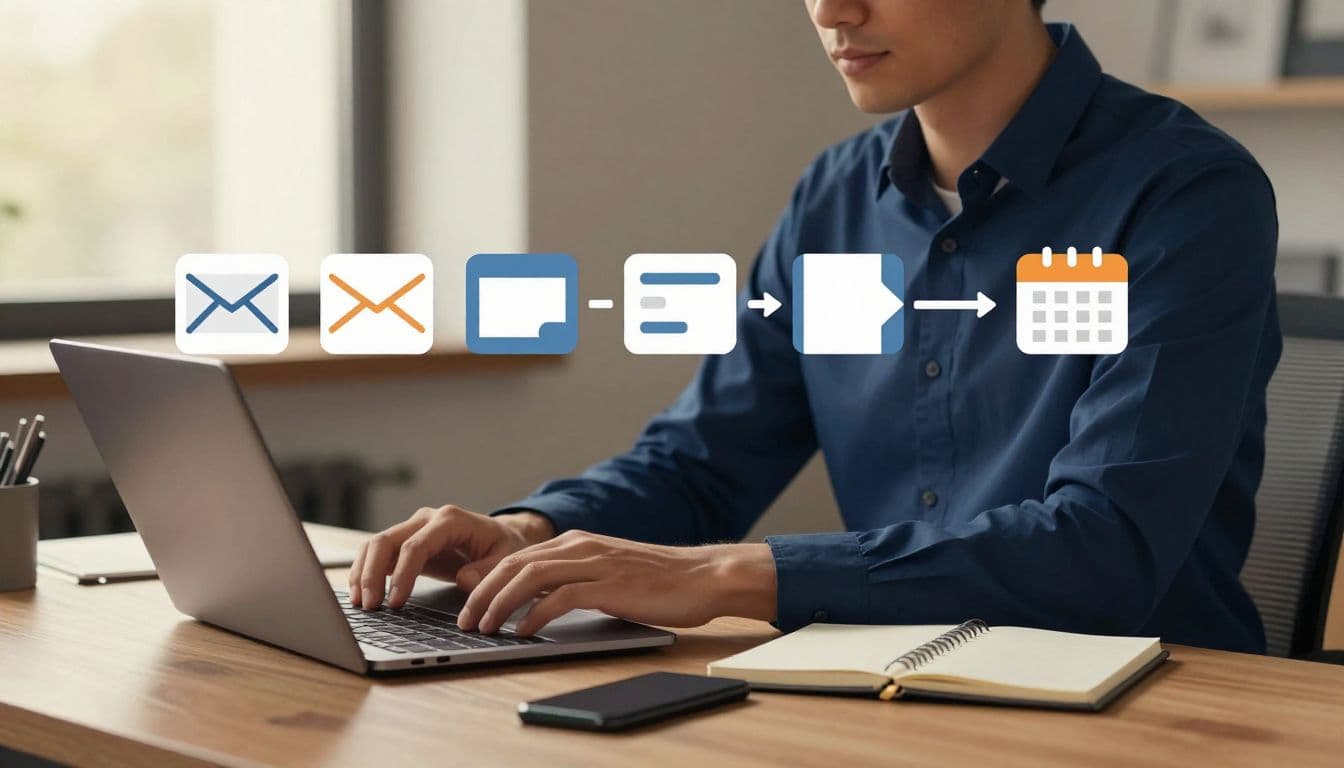
A practical 21-day follow-up cadence
Use this schedule as a starting point, then adjust it for the deal size, stated deadline, and buying cycle.
| Timing | Primary goal | Best channel |
|---|---|---|
| Day 0 | Send proposal and confirm review date | |
| Day 2 or 3 | Confirm receipt and invite questions | Reply to original email |
| Day 7 | Share proof tied to their goal | Email or LinkedIn |
| Day 14 | Address likely risk or objection | Email, then phone |
| Day 21 | Ask for a decision or permission to close |
The first contact should usually occur within two or three business days. Waiting a week gives a busy lead more time to let the proposal slip down the list. Guidance from Cirrus Insight on follow-up timing also recommends a 24 to 48-hour window for early follow-up activity.
Match pace to buying intent
A trigger event, such as a stated launch deadline, new budget approval, or proposal review meeting, can set the pace. A campaign launching next month needs faster contact than a quarterly initiative, while a lead who opens the proposal twice and visits your pricing page merits a personal call. Match cadence speed to the sales cycle, deal size, and buying urgency.
Unlike a cold email, a proposal follow-up builds on an existing conversation and agreed need. Still, don’t treat every open as a buying signal; open rates and repeat visits are directional, not conclusive. Someone may forward the proposal, preview it on a phone, or reopen it while comparing vendors. Use engagement data to support a better question and improve the timing of closing the deal, not to prove buyer readiness.
Give every follow-up a reason to reply
Once a business proposal is sent, each touch should reduce uncertainty. The buyer should gain a useful detail, a clearer choice, or a simpler route to approval.
Each message should clarify the buyer’s priority or reinforce one part of your value proposition. Generic messages such as “Did you get a chance to look?” create work for the recipient. Instead, refer to their stated goal and offer one relevant next step.

Use social proof that matches the prospect
A SaaS founder evaluating B2B SEO services may care about sales-qualified leads and long buying cycles. A local contractor may care more about booked calls, cost per lead, and response speed.
Send a short case study that matches the prospect’s industry, business model, buying cycle, or success metric. If confidentiality prevents sharing names, describe the starting problem, work completed, measurement method, and result without overstating it. A one-page scope comparison or implementation timeline can also help the buyer explain your recommendation internally.
Plan objection handling for price and timing concerns
Price resistance often means the buyer can’t see the cost of inaction or doesn’t trust the scope. Reframe the discussion around priorities rather than defending every line item.
For example, offer a phased engagement: begin with technical fixes and a conversion-focused landing page, then add paid acquisition after the tracking foundation is sound. This reduces scope or sequencing risk, rather than disguising the price. It works well for a business considering SEO alongside Performance Marketing that is hesitant to fund both immediately.
If timing is the concern, spell out what your team needs from the client, who owns approvals, and what could delay launch. A realistic timeline builds more trust than an aggressive promise.
Keep the thread, but vary the channel
Reply to the original business proposal email for most follow-ups. The complete context stays visible, and the buyer doesn’t need to search for attachments or terms.
Start a new thread only when the message contains a different asset, such as a tailored audit, a revised scope, or a client example. Use an email subject line that names the material, rather than a vague “following up.”
Add a human channel with restraint
A brief LinkedIn message can work after an email, particularly when your contact is active there. Mention that you sent a useful resource, then keep the message short. Don’t turn it into a second cold email or duplicate the full pitch.
Phone calls fit best after you agree on a review date. They also make sense when the deal has a genuine deadline or strong proposal engagement. Leave a concise voicemail if needed, then send an email that gives them an easy reply option.
Together, email, LinkedIn, and phone form a multi-channel sequence. Each touch should add context, not duplicate the pitch.
Bring in stakeholders without going around people
Ask your main contact to identify the decision-maker and anyone else who must approve the purchase. Offer a short walkthrough for that group, focusing on their concerns: finance may need payback logic, while operations may need a delivery plan.
Don’t bypass your champion by contacting an executive without permission. That move can make them feel exposed. Instead, give them a forwardable summary with scope, expected outcome, timeline, and approval request.
Proposal follow-up email templates that sound human
Templates should provide structure, not replace thought. Each sales follow-up email should include the prospect’s goal, their words from the sales call, and one business proposal detail.
Use the examples below as a starting point for a sales follow-up email. Give each message one simple call to action, such as confirming receipt, choosing a review time, or saying the project isn’t active. Keep the email subject line clear about its purpose, without sounding urgent. Compare response rate by message type and segment, rather than treating it as a guaranteed result.
The receipt confirmation
Subject: Quick question about the proposal
Hi [Name], I wanted to confirm the proposal reached you and opens correctly on your side.
You mentioned [goal or deadline] was the priority. As you review, is there any part of the scope or timeline you’d like me to clarify before our [day] conversation?
Best,
[Your name]
The value-add follow-up
Subject: A relevant example for [Company]
Hi [Name], after our conversation, I thought this short case study might help. We helped a [similar business type] improve [relevant outcome] by fixing [relevant issue] before expanding the campaign.
Your proposal takes a similar approach, starting with [first phase]. Would a 15-minute review on [two time options] help you decide whether the plan fits?
Best,
[Your name]
For additional phrasing ideas, Pipedrive’s follow-up email examples show how a clear call to action keeps the conversation moving.
The break-up email / close-the-file message
Subject: Should I close this out for now?
Hi [Name], I haven’t heard back after sending the proposal for [project]. I know priorities change, so I don’t want to fill your inbox if this is no longer active.
Should I close the file for now, or would it be useful to revisit the plan after [relevant date or event]?
Best,
[Your name]
A break-up email isn’t a pressure tactic or a cold email. The recipient already knows you and the context. It gives the lead permission to be honest, protects your time, and can prompt a response from people who meant to reply.
A respectful close-the-file message is useful when closing the deal isn’t the immediate objective.
Track movement, not vanity metrics
Proposal views and open rates can guide timing, but neither measures sales quality. A lead may visit a proposal microsite several times and still lack budget approval.
Log email tracking alongside the source channel, proposal date, next action, stakeholder roles, estimated value, objections, and outcome in your CRM. Then compare results by service line and source.
Connect marketing attribution to sales outcomes
Don’t credit the last click for every win. A buyer may discover your company through organic search, see a retargeting ad, read reviews, then return through a branded Google search before booking a call. A return to a pricing page, a review, a new budget, or a booked call can be a trigger event, but it informs investigation rather than proving causation.
Review channel-level performance alongside qualified opportunities, proposal acceptance rate, cycle length, and closed revenue. These ROI metrics should be read within the broader sales process, not judged by the last click alone.
For agencies, that may reveal that digital marketing services generate more enquiries, while B2B SEO services produce fewer but higher-value opportunities over time.
Watch the stages where deals slow down
A healthy pipeline is more than a total revenue figure. Good pipeline management means monitoring how long leads remain in discovery, proposal review, negotiation, and contract stages, while tracking the sales cycle.
If proposals regularly stall after Day 7, check your qualification process and proposal clarity. If they stall at contract stage, review payment terms, procurement requirements, or stakeholder access. A follow-up process works best when it exposes these patterns instead of hiding them.
Automate the reminders, keep the message personal
Sales automation helps prevent missed tasks and forgotten leads. CRM sequences should support the sales process with reminders and drafts, not replace judgment or send identical messages to high-value prospects.
HubSpot’s sequence settings documentation allows teams to control send windows and timing, which can also support email deliverability. Whatever platform you use, pause automation after a trigger event, such as a reply, meeting booking, request for more time, or another meaningful buyer action. Respecting that signal protects the customer relationship and leaves room for a personal response.
Use AI to prepare, not impersonate
AI can turn call notes into a first draft, identify likely objections, or suggest a relevant example to share. Give it real inputs: the prospect’s industry, stated goal, concern, decision date, and agreed next step. Without that context, it may sound like a generic cold email.
Read every draft before sending. Remove generic claims, check facts, and add one human observation from the conversation. A polished message matters when a single engagement could be worth months of revenue.
If your agency needs help tightening its lead journey, tracking, and proposal follow-up process, Get In Touch With Us for a practical review.
Frequently Asked Questions
How many times should I follow up after sending a proposal?
Use more than one purposeful contact instead of stopping after a single attempt. A practical starting point is follow-up on Day 2 or 3, Day 7, Day 14, and Day 21, adjusted for the buyer’s timeline and level of engagement.
What should I say in a proposal follow-up email?
Each message should connect to the prospect’s stated goal and add one useful detail, such as a relevant case study, scope clarification, or risk explanation. End with one simple call to action, such as confirming receipt, choosing a review time, or saying the project is not active.
Should I use email, LinkedIn, or phone for proposal follow-up?
Reply to the original email for most follow-ups so the proposal context remains easy to find. Add LinkedIn or a phone call selectively after an agreed review date, a genuine deadline, or strong engagement, and make sure each channel adds context rather than repeating the pitch.
What should I do if the prospect stops responding?
Send a respectful close-the-file message that gives the prospect permission to say whether the project is still active. If the timing is not right, ask whether it would be useful to revisit the plan after a relevant date or event.
Can proposal follow-up be automated?
CRM automation can handle reminders, send windows, and draft sequences, but high-value prospects still need personal judgment. Pause automation when the buyer replies, books a meeting, requests more time, or takes another meaningful action.
Turn follow-up into a buyer-friendly process
High-ticket prospects don’t need more reminders. A high-value business proposal must give them confidence in your team’s delivery, communication, and likely outcomes.
A disciplined proposal follow-up sequence sets a clear follow-up cadence, with every contact assigned a job: confirm, clarify, prove, resolve risk, or secure a decision. When the CRM records real buyer behavior and messages add value, persistence feels professional rather than pushy. It supports closing the deal when the buyer is ready, rather than forcing a decision.