

Build a search intent brief by identifying the reader’s task, reviewing Google’s search results, and turning those findings into writing decisions. Keep it to one page so your writer can see the audience, answer, structure, and next step together.
For a small business in Kolkata, the priority is customer usefulness, not publishing more articles. Start by deciding which customer question deserves a blog post.

Start With the Reader and the Business Goal

Choose a question your business can answer from genuine product or service knowledge. Customer calls, WhatsApp enquiries, sales conversations, and product questions are useful starting points.
Then describe the reader’s situation to clarify the search intent behind their question. Include what they already know, what decision they face, and what information would help.
For Kolkata businesses, language matters too. English, Bengali, and transliterated searches can produce different results. Choose the language your intended reader uses rather than mixing keywords into awkward sentences.
Finally, set one business goal. An educational article might lead readers to a care guide or relevant collection. A comparison article might support an enquiry.
Google’s people-first content guidance encourages useful information for an intended audience. Your brief should make that audience unmistakable before the writer starts.
Separate Query Wording From SERP Intent

Keyword intent is your first interpretation of a phrase. SERP intent is what the search engine results page suggests people expect. Together, they help identify the search intent the brief needs to address.
For example, “best” often suggests comparison. However, the results might favour product collections rather than editorial reviews. Phrase wording alone doesn’t determine SERP intent or the expected page type.
Review search engine results pages for the chosen location and language to see what the search results suggest. Record those settings and the date so later comparisons have context.
Also group related searches by the task they share. Similar wording doesn’t always mean the same intent, while different phrases can belong in one article.
Our local keyword research template helps connect services and locations to suitable pages before you commission content.
Classify Search Intent Without Overthinking It

Use the four categories to choose a destination, then refine that search intent by checking SERP intent in the results.
The Four Intent Types in Practice

These categories describe what the searcher wants to accomplish.
| Intent | Searcher’s task | Usually suitable content |
|---|---|---|
| Informational intent | Learn or solve a problem | Guide, explanation, tutorial |
| Commercial investigation | Compare options before choosing | Comparison, buying guide, review |
| Transactional intent | Buy, book, or request a service | Product, category, booking, or service page |
| Navigational intent | Reach a known business or website | Homepage, login, contact, or branded page |
“How to wash cotton sarees” has informational intent. “Best cotton sarees for summer” suggests commercial investigation.
Commercial intent is a useful broader shorthand for comparison-oriented research, but it doesn’t always mean the searcher is ready to buy.
Educational and comparison queries often suit blog posts. However, a buying query shouldn’t become an article merely because your publishing calendar needs another entry. Assign it to the page that helps someone act.
When Local Searches Carry More Than One Intent

Local searches can combine several needs. Someone seeking a nearby provider may want availability, pricing, directions, and reassurance before contacting them.
Name the primary intent in your brief. Include secondary needs only when they help complete the same task.
If results mix guides and service pages, don’t force both into one oversized article. A guide can answer the research question and link to a service page for booking.
Also remember that “near me” indicates local relevance, not automatically navigational intent. Navigational searches usually seek a known destination.
Read the SERP Before Choosing a Format

Review several relevant search results on search engine results pages (SERPs), opening the pages rather than judging titles alone. A spreadsheet is enough for this research.
Look for Repeated Formats and SERP Features

Record each page’s type, format, main promise, questions answered, and relevant SERP features. Count recurring patterns such as tutorials, comparisons, cost explanations, or product collections.
Keep advertisements separate from organic results. Featured snippets and People Also Ask questions suggest answer needs. Shopping results suggest purchase activity, while map results indicate a local business need.
Treat these patterns as evidence of SERP intent, not automatic rules. An AI Overview can reveal useful subquestions, but it doesn’t mean every paragraph belongs in your article.
Google’s guidance on AI search features provides context for those experiences. Your brief still needs a clear reader task and reliable supporting information.
Check Whether the Intent Stays Stable

For an unclear query, compare dated result snapshots to assess search intent. Use the same location and language, then look for changes in page types and dominant topics.
If you already use Ahrefs, its SERP position history can help reveal whether leading pages remain stable. You don’t need a paid subscription for every brief, though.
Ranking movement alone doesn’t prove intent changed. New competitors and updated pages can also move positions.
Record whether the results change purpose, not merely whether individual URLs change position.
When competing meanings persist, choose a narrower query that states the customer’s task more clearly.
Turn Findings Into a Search Intent Brief
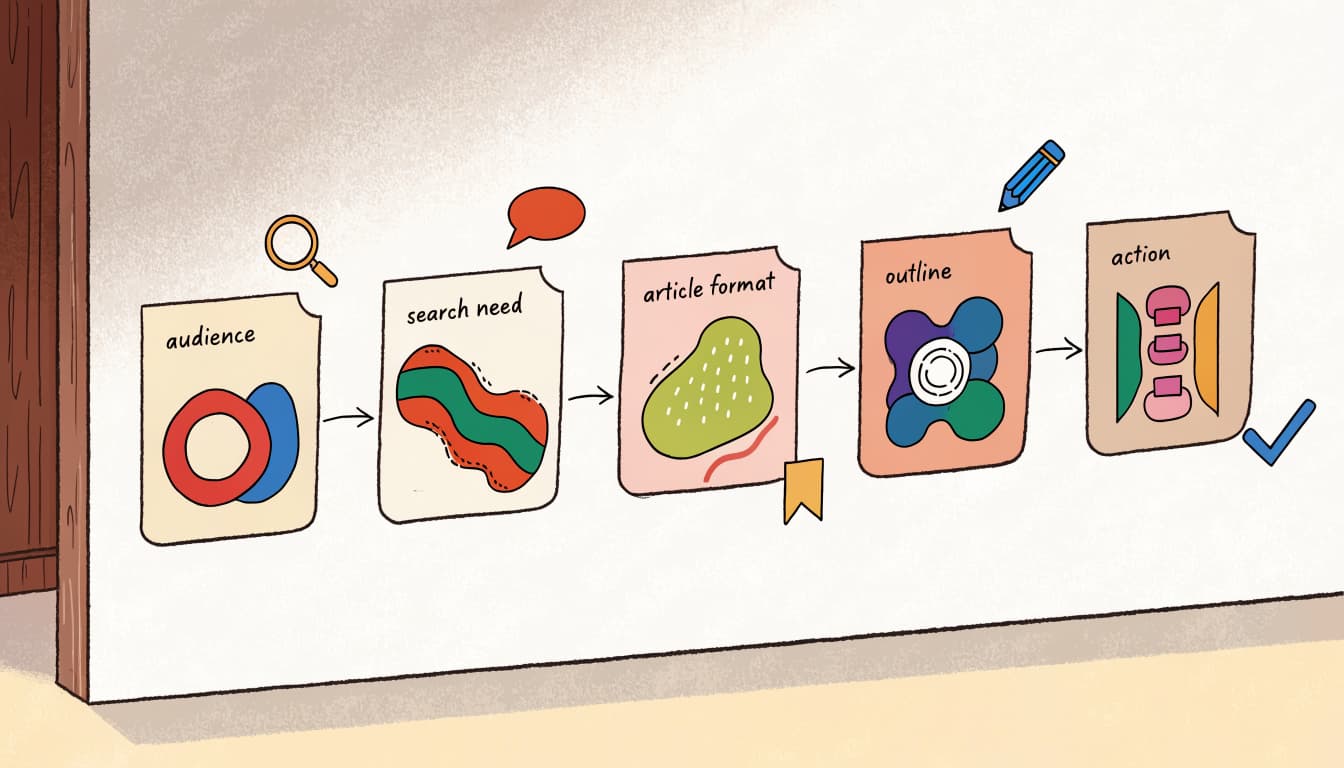
Turn observations into clear decisions. Writers need useful instructions and evidence, not a folder of competitor links.
Choose the Type, Format, and Angle

The three C’s give your brief a practical structure.
Content type is the destination, such as a blog post, product page, or service page. Format is the presentation, such as a tutorial, comparison, list, or explanation. Angle is the reader-focused promise, such as beginner-friendly instructions or a budget-focused comparison.
For cotton-saree care, the educational task points to a guide. Use the business’s product knowledge to shape the care advice.
Add one sentence explaining why the approach fits. Don’t copy a common title if you can’t deliver its promise.
Shape the Outline Around the Reader’s Task

Use this compact structure for the writing handoff.
| Brief field | What to record |
|---|---|
| Reader and task | Who needs help and what they must accomplish |
| Target query | Main phrase and closely related questions |
| Context | Language, location, research date, and dominant intent |
| SERP evidence | Relevant URLs and recurring page patterns |
| Content decision | Type, format, angle, and direct opening answer |
| Outline | Headings ordered around the reader’s task |
| Evidence | Product knowledge, authoritative sources, and approved visuals |
| Boundaries | Topics excluded and claims requiring support |
| Next step | Relevant internal destination and reader action |
For cotton-saree care, a filled-in brief might look like this:
| Brief field | Example |
|---|---|
| Reader and task | A saree owner who needs to wash and store a cotton saree |
| Target query | How to wash a cotton saree |
| Intent | Learn how to clean and care for the fabric |
| Page type and format | Blog guide with step-by-step instructions |
| Evidence | Product care guidance and SERP pages covering washing, drying, and storage |
| Next step | Link to the relevant cotton-saree collection |
Set the article length based on the task, not a competitor’s word count. Give the answer early, then cover the steps or decisions the reader needs.
If the goal is enquiries, connect the topic to your lead-focused keyword research. Explain the conversion path without turning every paragraph into a sales pitch.
Before handing off the brief, check that the target query matches the reader’s task, SERP evidence supports the chosen format, the answer appears early, claims have support, and the next step is relevant.
Measure Fit, Not Just Rankings

After publication, use Google Search Console to review the queries bringing impressions and clicks to the article.
Apply a page filter, then check its query mix. Are people finding the article through the questions the brief was meant to answer? Separate branded searches from new-customer discovery.
Next, review the planned action in your analytics or enquiry records. For informational posts, visits to a relevant product or service page can be useful. For commercial content, qualified enquiries may matter more.
Don’t treat every weak result as an intent problem. A page might also struggle because it isn’t indexed, lacks useful detail, or faces stronger competition.
Matching intent supports a sound SEO approach, but it doesn’t guarantee rankings or more traffic. Revise the brief when the evidence points to a mismatch.
Key Takeaways

- Define one reader task before choosing keywords or headings.
- Use search results to decide whether the query needs a blog, comparison, product, or service page.
- Give the writer a compact brief with evidence, boundaries, and a relevant next step.
Keep the process repeatable. A shared document and a small spreadsheet are enough to begin.
Frequently Asked Questions

Is search intent the same as user intent?
People often use the terms interchangeably in SEO. Search intent concerns the purpose behind a query. User intent can also describe someone’s broader goal while using a website or app. For a blog brief, focus on the task that brought someone to search and the answer they need next.
Can one blog post target several keywords?
Yes, when those searches share a task and suit the same page type. Grouping care-related questions can make one guide more useful. However, combining care instructions, product shopping, and business contact searches usually creates a confusing page. Use separate destinations when readers need different actions, then connect them with helpful internal links.
Build Briefs That Give Readers a Clear Answer

A useful brief gives the writer a clear task and the evidence needed to answer it. Keep the reader’s question, suitable format, and next step visible throughout the document.
Start with one customer question and apply the same process to your next post. If you need help connecting blog topics to business enquiries, Get In Touch With Us to discuss your content priorities.