

Two service companies can buy the same click and get very different leads. That’s why Google Ads copy testing matters more in 2026. AI now mixes assets fast, so weak messaging burns budget sooner.
The goal isn’t prettier ads. It’s more qualified calls, better estimates, and more closed jobs. This framework shows what to test, how to run clean experiments, and how to judge winners like an owner, not just a media buyer.
Why Test Ad Copy in Google Ads
In 2026, Google gives you more ways to test, from Search Experiments to early Performance Max asset-set A/B tests. Still, automation doesn’t fix bland copy. It only exposes it faster.
For service businesses, a few words can change lead quality. “Free estimate” attracts one click. “Emergency plumber in Dallas” attracts another. “Commercial only” filters out the wrong jobs.
Think of your ad as the first line of your front-desk script. Kaomi’s guide to ad copy testing makes the same point: change one variable at a time. Also, keep campaigns clean with a solid Google Ads campaign structure for qualified leads.
Your Step-by-Step Testing Framework
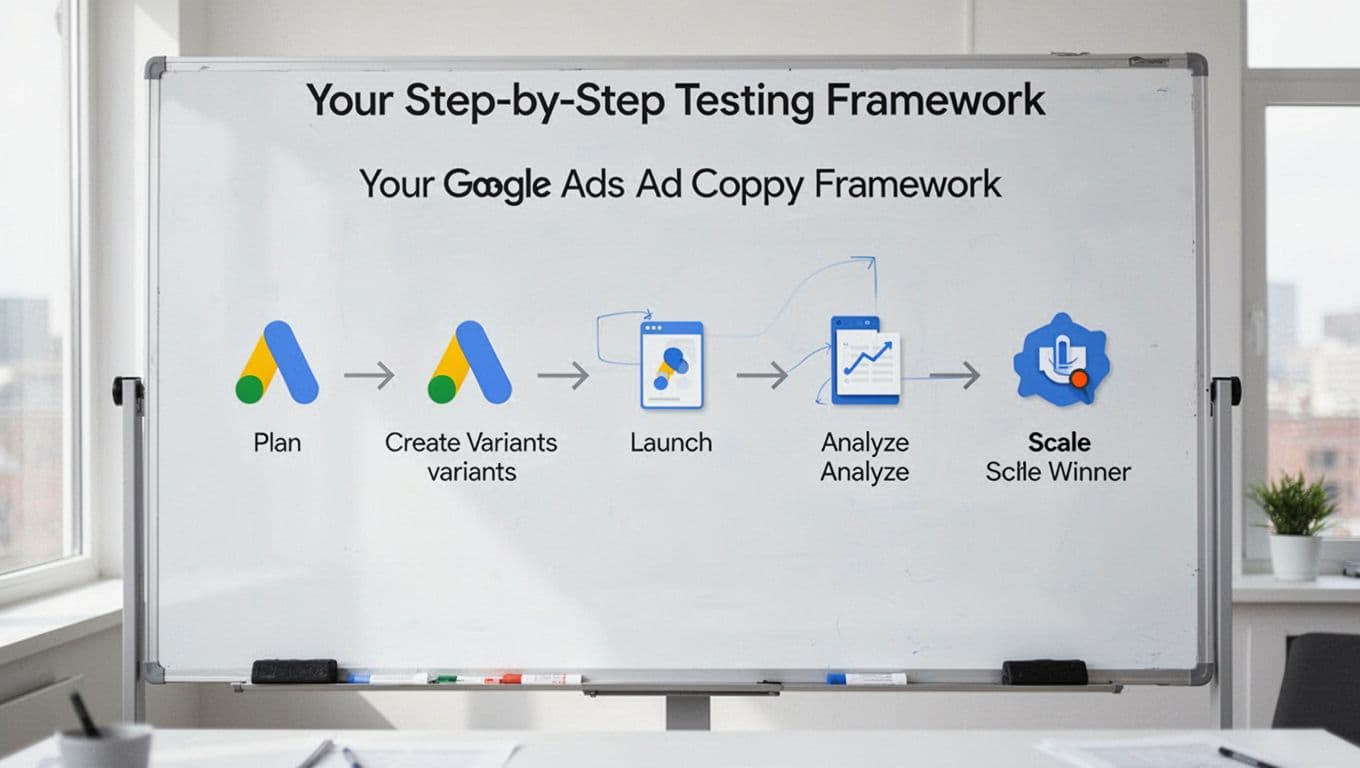
Here is a simple framework that works for most local service accounts.
- Pick one goal: higher CTR, lower CPL, or better lead quality. Choose one main win condition.
- Write one hypothesis: for example, “Adding ‘licensed and insured’ will improve conversion rate.”
- Control the variable: test one angle at a time. In responsive search ads, pin the assets you want to compare.
- Split traffic cleanly: use Experiments in Search. In Performance Max, use asset-set tests if volume allows.
- Wait long enough: most service accounts need 2 to 4 weeks. If possible, get around 50 conversions per version.
- Log the lesson: record dates, audience, landing page, and the result.
Test one promise at a time, or you won’t know what caused the lift.
Low-volume accounts can use CTR as an early clue. Still, final decisions need conversion and sales data. Your bidding model shapes results too, so align tests with your Google Ads bid strategy for services and keep the process as clean as CausalFunnel’s 2026 playbook recommends.
Key Ad Elements to Test
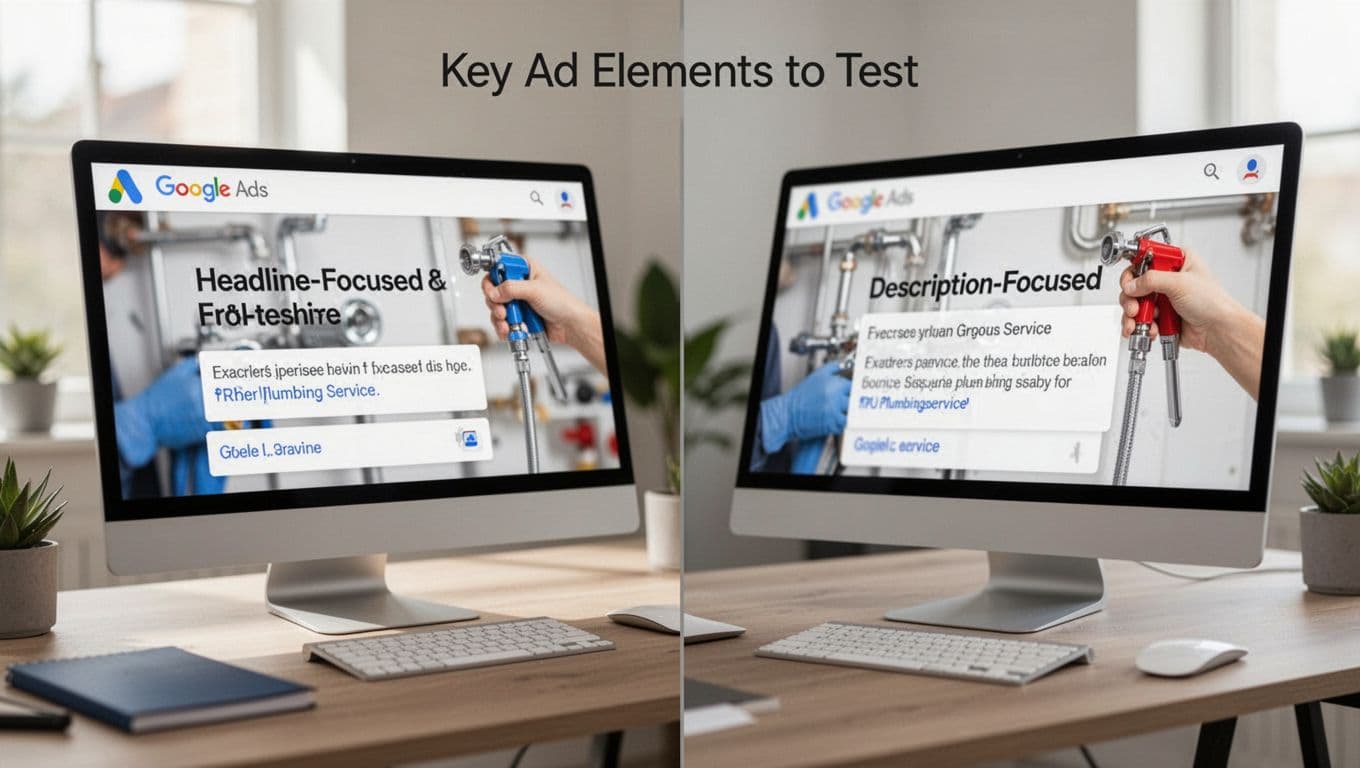
The best tests compare one message angle against another, not random rewrites.
- Headlines: problem-led versus benefit-led. Example, “No Hot Water Today?” against “Same-Day Water Heater Repair.”
- Descriptions: test reassurance and next step. “Book online in minutes” versus “Call now, licensed tech dispatched today.”
- Offers: compare free estimate, fixed-fee inspection, financing, or same-day appointment.
- Trust signals: try “licensed and insured”, review count, years in business, or warranty language.
- Urgency: use real timing, like “24/7 response” or “appointments this week.”
- Location modifiers: add city, suburb, or neighborhood names that match the search and landing page.
- Qualification messaging: phrases like “commercial HVAC only” or “minimum project $2,000” can cut junk leads.
If you want more copy ideas, SmartSites’ guide to writing better Google ad copy is a useful reference. If you’re testing across channels, keep the same angle inside a tight Performance Max setup for service leads.
Metrics That Define Winners
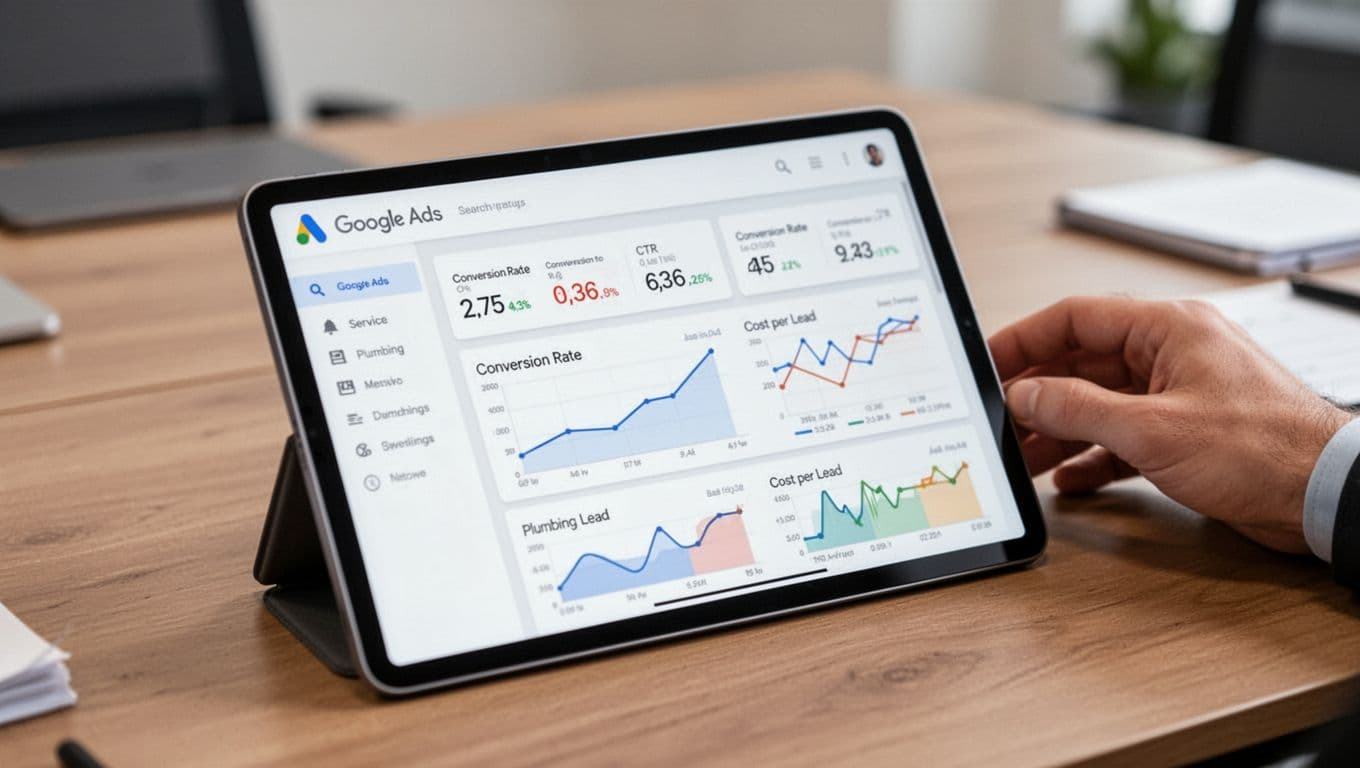
Use this scorecard when you review a test.
| Metric | What it really tells you |
|---|---|
| CTR | Does the message stand out and match intent? |
| Conversion rate | Did the click turn into a call or form? |
| Cost per lead | Are you buying leads efficiently? |
| Lead quality | Do leads fit area, budget, and job type? |
| Downstream sales impact | Did those leads book and close? |
The first three metrics arrive fast. The last two protect profit. Feed call outcomes or CRM stages back into Google when you can. Then compare “qualified lead”, “estimate booked”, and “job won” by ad version.
Don’t pick winners on CTR alone. PPC Growth Studio’s 2026 testing guide also warns against that shortcut.
Real Examples and Pitfalls to Avoid
Here is a quick HVAC example.
Control: “Affordable HVAC Repair. Call Now.”
Variant: “No AC Tonight? Same-Day HVAC Repair in Phoenix, Licensed Techs, Financing Available.”
The second ad adds pain, place, trust, and a stronger offer. It may get fewer clicks, yet better calls.
A roofer can do the same with qualification. Test “Free Roof Inspection” against “Insurance Claim Roof Inspection.” CTR may fall. Lead quality may rise.
Common mistakes stay the same. Teams change too many things at once. They test on tiny budgets. They change the landing page mid-test. Or they stop after three days.
A quick wrap-up
Good Google Ads copy testing is simple. Test one idea, keep traffic clean, wait for enough data, and judge results by revenue, not vanity. If an ad filters better leads, keep it, even when CTR slips.