

A signed contract rarely comes from one click. For a Kolkata consulting firm, agency, IT provider, or specialist service business, a long sales cycle may take a buyer through a customer journey that starts with an SEO article, continues through an event, and includes a consultation, proposal review, and several conversations before agreement.
Revenue attribution connects those touchpoints to qualified opportunities, won deals, and eventually collected revenue. It gives marketing, sales, and finance a shared basis for deciding where to spend, without claiming that every customer journey can be measured perfectly or that attribution proves causation.
Key Takeaways: Revenue Attribution for Service Businesses

- Conversion tracking records an action, such as a submitted form or booked call. Revenue attribution follows the outcome through qualification, proposal, closed-won revenue, and payment.
- First-touch and last-touch reports are useful reference points. However, long B2B sales cycles usually need multi-touch attribution because several touchpoints influence the buyer.
- Your CRM should hold the sales truth. It needs dependable lifecycle stages, opportunity values, close dates, service lines, and clear source fields.
- Add advertising cost data to evaluate more than lead volume. Compare spend with qualified leads, opportunities, revenue, gross margin, and customer acquisition cost.
- Treat attribution as decision support, not proof of causation. A channel receiving credit may have assisted a deal without being the sole reason it closed.
Why Long Sales Cycles Need More Than Lead Tracking
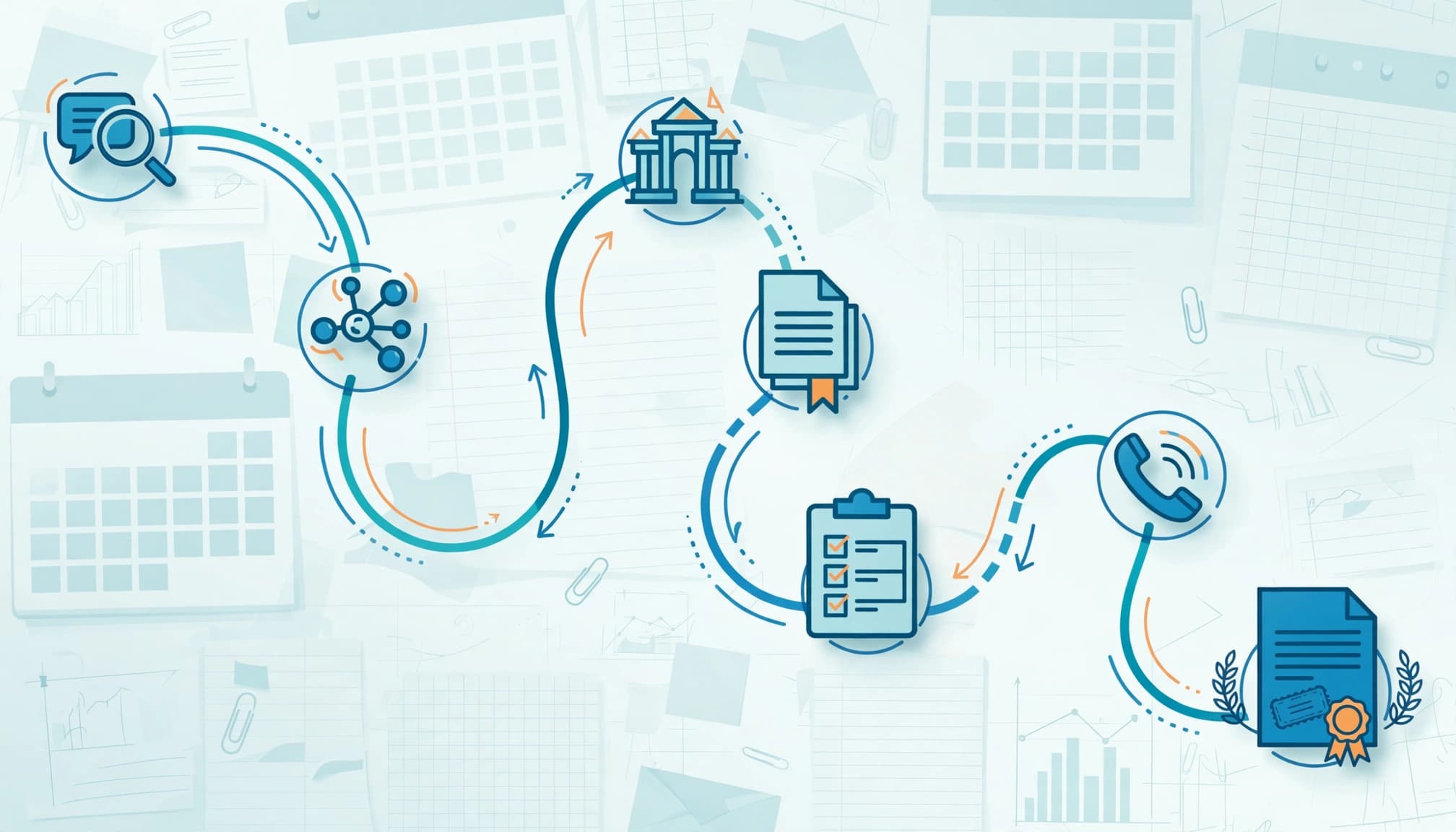
Service purchases involve risk, comparison, and human trust. A prospect might read a case study after an organic search, receive a referral, meet your team at a trade event, then return through branded Google Ads before booking a consultation.
A basic lead report often awards the conversion to that final search or form submission. That view helps optimize a page, but it doesn’t describe the full commercial journey.
Conversion tracking and marketing attribution stop earlier
Conversion tracking answers whether someone completed a measurable action. Marketing attribution assigns credit for that action to a campaign or channel. Marketing automation can pass campaign, form, and nurture events into the CRM, but it doesn’t establish revenue by itself.
Full revenue attribution goes further. It links a lead to CRM stages such as qualified, opportunity, proposal sent, closed won, and invoice paid. Salesforce’s marketing attribution overview also stresses the value of linking multi-touch data to the sales system.
For example, a whitepaper download is not revenue. Lead attribution can identify the source of that initial contact. Revenue attribution requires later qualification, opportunity, and payment outcomes before the interaction becomes evidence of commercial impact.
Offline conversations belong in the journey
Long sales cycles contain important touchpoints that website analytics may never see. Include referral introductions, consultation calls, WhatsApp conversations, workshop attendance, proposal revisions, and sales meetings when your team can record them consistently.
Multi-touch attribution considers how several online and offline interactions may influence a long deal. AppsFlyer’s multi-touch attribution guide describes the method this way. Still, no platform can reconstruct every private conversation, device switch, or consent-limited session.
A documented unknown source is more honest than forcing every closed deal into paid search, social media, or organic traffic.
Choosing Revenue Attribution Models for Complex Deals
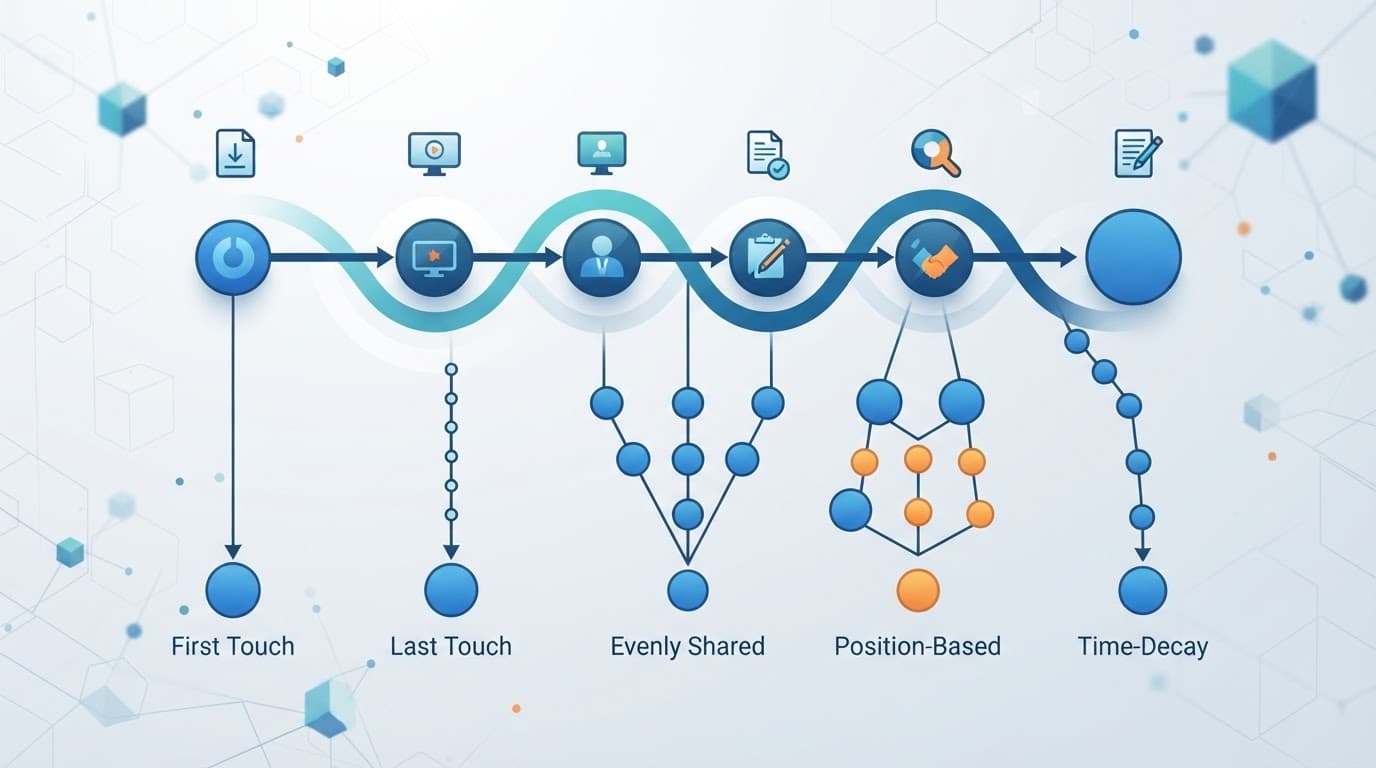
Attribution models distribute analytical credit according to a rule. Multi-touch attribution spreads credit across recorded interactions, but it doesn’t prove that every interaction caused the deal. The best model depends on the decision you need to make, not on which report produces the most attractive return on investment.
Choose an attribution window that fits your sales cycle and data-retention limits. A window that’s too short can exclude trust-building activity from earlier stages.
First-touch, last-touch, and linear models
First-touch attribution gives full credit to the first recorded interaction. Use it to understand which channels create initial demand. It can highlight the value of SEO content, webinars, referrals, and awareness campaigns.
Last-touch attribution gives full credit to the final recorded interaction. It helps improve conversion paths, but it often favors branded search, retargeting, and direct visits that capture demand already created elsewhere.
Linear attribution divides credit equally across all recorded touchpoints. This prevents one channel from taking everything, although an initial referral and a routine email reminder may not deserve equal weight.
Keep first-touch values fixed after a person becomes known. Store later interactions separately. A clear CRM lead source naming convention prevents sales edits or automation from rewriting the origin story.
Position-based, time-decay, and account-based views
Position-based or U-shaped attribution gives extra credit to the first interaction and the lead-creation event. It works when you want to value demand creation and the moment a prospect raises their hand.
W-shaped attribution adds extra weight to the first touch, lead-creation event, and opportunity-creation event. It’s a useful heuristic, but it may not reflect each stakeholder’s actual influence in a complex service purchase.
Time-decay attribution gives more weight to recent touches. It can help evaluate late-stage proposal emails, sales calls, remarketing, and demo follow-up. However, it may undervalue content or events that built trust months earlier.
Account-based attribution groups interactions across stakeholders at one company. This suits services sold to buying committees, where a founder attends an event, a manager downloads content, and finance joins the proposal review. It requires disciplined account matching, so start with a manageable set of target accounts.
Build the Data Foundation Before Modeling

Attribution breaks when teams use different definitions. A dependable setup joins web analytics, marketing automation, advertising platforms, the CRM, proposal software, and finance records through shared IDs and agreed rules.
Capture the handoff into sales
Use UTMs for tagged campaigns, retain click IDs where available, and match campaign cost data alongside those identifiers. Pass first-touch and latest-touch details into the CRM when a form, call, or scheduler booking creates a lead. A practical UTM governance template can help teams standardize source, medium, campaign, and naming rules.
Connect web, phone, scheduler, referral, and offline touchpoints to a stable person or account ID.
Track confirmed events, not simple button clicks or thank-you-page loads. A thank-you page can support follow-up messaging, but a validated submission event is stronger evidence that a lead exists.
GA4 can show website behavior, while the CRM should record deduplicated people, deal stages, owners, and revenue. HubSpot’s attribution report definitions describe deal-create reporting, though teams should confirm which features match their subscription and reporting setup.
Resolve identity and financial records carefully
A Customer Data Platform can consolidate consented customer identifiers from different sources. Smaller businesses may not need one immediately. A stable CRM contact or account ID, clear deduplication, and consented GA4 User-ID tracking for lead attribution often provide a practical foundation.
CPQ software also matters when pricing changes during negotiations. Map proposal amount, approved discount, service line, contract date, invoice value, and finance-validated cost data separately. The initial proposal may not match realized revenue.
For international service businesses, record the invoice currency and a documented conversion rule. Finance should own the reporting currency and treatment of refunds, credit notes, tax, commissions, and recurring retainers. A clear audit trail improves data transparency and prevents channel comparisons from mixing proposal values with revenue that was never collected.
A Practical Revenue Attribution Implementation Plan

A useful attribution process starts small. Trying to connect every tool and every historical touchpoint at once usually creates unreliable reporting.
Define stages, fields, and ownership
Agree on the stages that matter, such as new enquiry, qualified lead, sales-qualified lead, opportunity, proposal sent, closed won, and collected revenue. Sales should own stage updates and deal values. Marketing should own campaign tagging, event definitions, and source capture. Finance should validate revenue, margin, and cost data, including channel and campaign costs.
Then establish controlled CRM dropdown values for lead source, referral type, service line, location, and loss reason. Document the source and identity rules that determine the original lead source for lead attribution. Free-text fields create duplicates such as “Linkedin,” “LinkedIn Ads,” and “LI.”
Test, reconcile, and review
Begin with a small set of high-value actions: consultation bookings, contact forms, qualified phone calls, and proposal requests. Test submissions on mobile and desktop, including cross-domain booking journeys and offline touchpoints.
Reconcile CRM leads and outcomes against GA4 events and cost data from advertising, event, content, or agency records each month. Also review whether sales pipeline progression from qualified lead to opportunity and proposal is captured consistently. Differences can come from duplicate removal, consent choices, delayed sales updates, and different attribution rules. They don’t always indicate a broken setup, but unexplained gaps need investigation.
Run first-touch, last-touch, and one multi-touch attribution view side by side for a reporting cycle. Compare conclusions before changing budget. If the data flow needs repair, Get In Touch With Us for a practical review of tracking, CRM handoffs, and reporting rules.
Turn Attribution Into Better Budget and Team Decisions

Attribution should change decisions, not create a larger dashboard. Review performance across meaningful marketing channels, campaign groups, service lines, buyer types, and locations. Only compare segments with enough volume to make the results meaningful.
Bring cost data from Google Ads, LinkedIn, Meta, events, content production, and agency fees into the same view. Use standardized cost data across paid media, events, content, and agency fees. Then compare customer acquisition cost, cost per qualified lead, cost per opportunity, pipeline value, revenue per lead, and gross margin. A campaign that produces fewer enquiries may still be stronger if its deals close more often or retain longer.
Separate new business from repeat and expansion revenue. Evaluate retention and renewals through customer lifetime value, rather than comparing them directly with first-time acquisition. A client renewal email shouldn’t compete with a first-time demand-generation campaign under the same acquisition target.
Teams should also challenge suspicious findings. If retargeting receives most last-touch credit, test whether pausing or reducing spend changes qualified pipeline. Attribution identifies patterns, but controlled experiments and sales feedback help judge whether a channel created incremental demand. This supports better resource allocation across budgets and team capacity.
Revenue Attribution FAQ
Do small service businesses need multi-touch attribution?
Yes, but the process can remain simple. Start by preserving first-touch source, latest-touch source, lead date, qualification status, opportunity value, closed revenue, and key offline interactions. A spreadsheet linked to clean CRM exports can be more useful than an expensive platform filled with incomplete data.
How should referrals be credited?
Create a referral source category and record the referring partner, client, or contact when known. Keep the referral visible alongside later marketing touches. A referred prospect may still rely on proposal content, calls, and remarketing before buying.
Can SEO revenue be measured accurately?
SEO can be connected to qualified leads and revenue when organic source data reaches the CRM. Yet search impressions, rankings, and traffic alone do not prove commercial value. Compare organic lead quality, opportunity rate, sales cycle length, and realized revenue with other channels.
Make Revenue Attribution Useful, Not Perfect
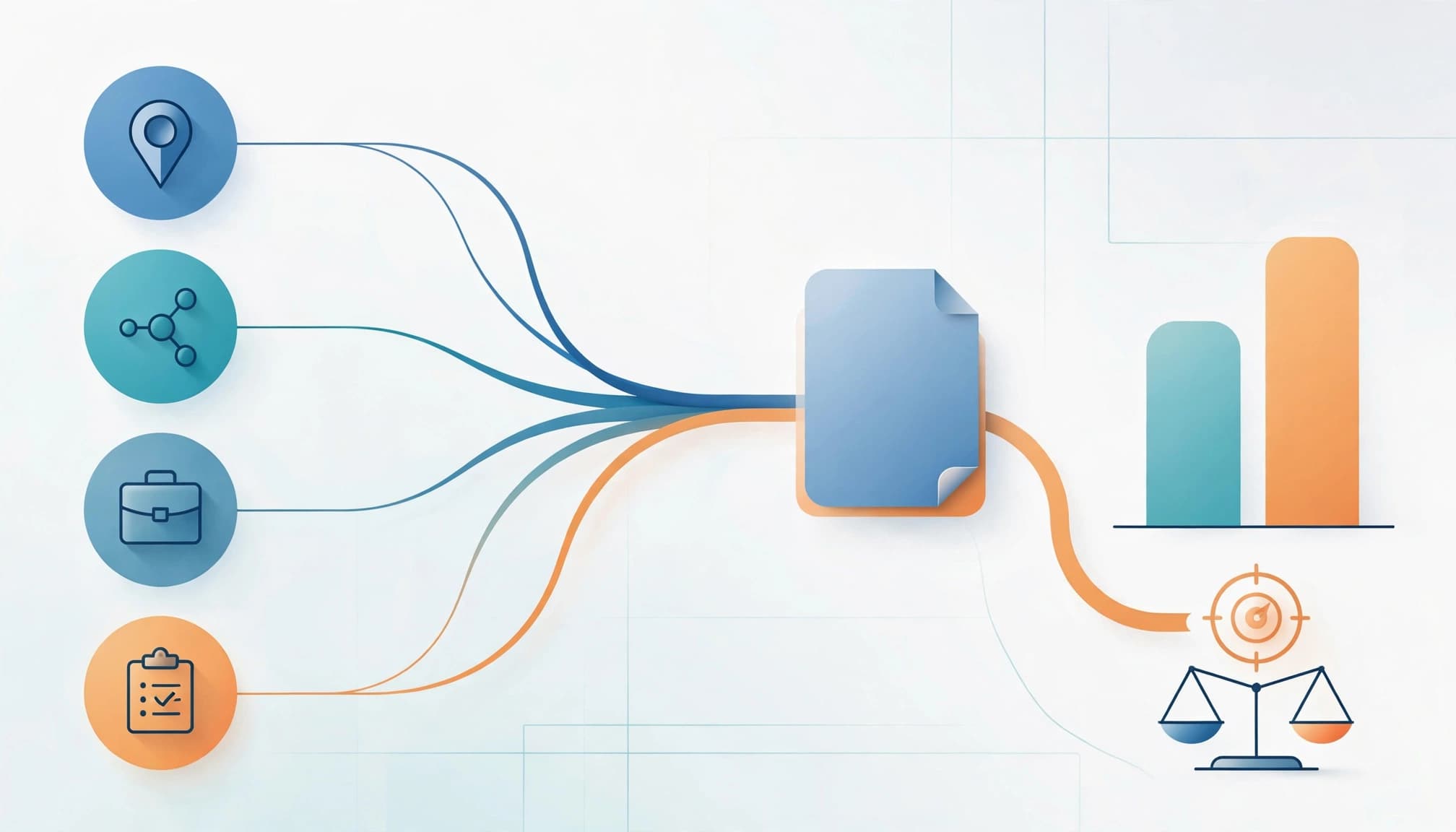
Long sales cycles reward teams that preserve the complete buying path, including important touchpoints from first discovery through consultations, proposals, closed deals, and expansion revenue. Clean CRM data and stable attribution rules matter more than a complicated model.
The strongest reports make uncertainty visible while still pointing to better budget, sales, and marketing decisions. Revenue attribution earns trust when it reflects how customers actually buy.