Google Business Profile Optimization Guide for Local Leads in 2026

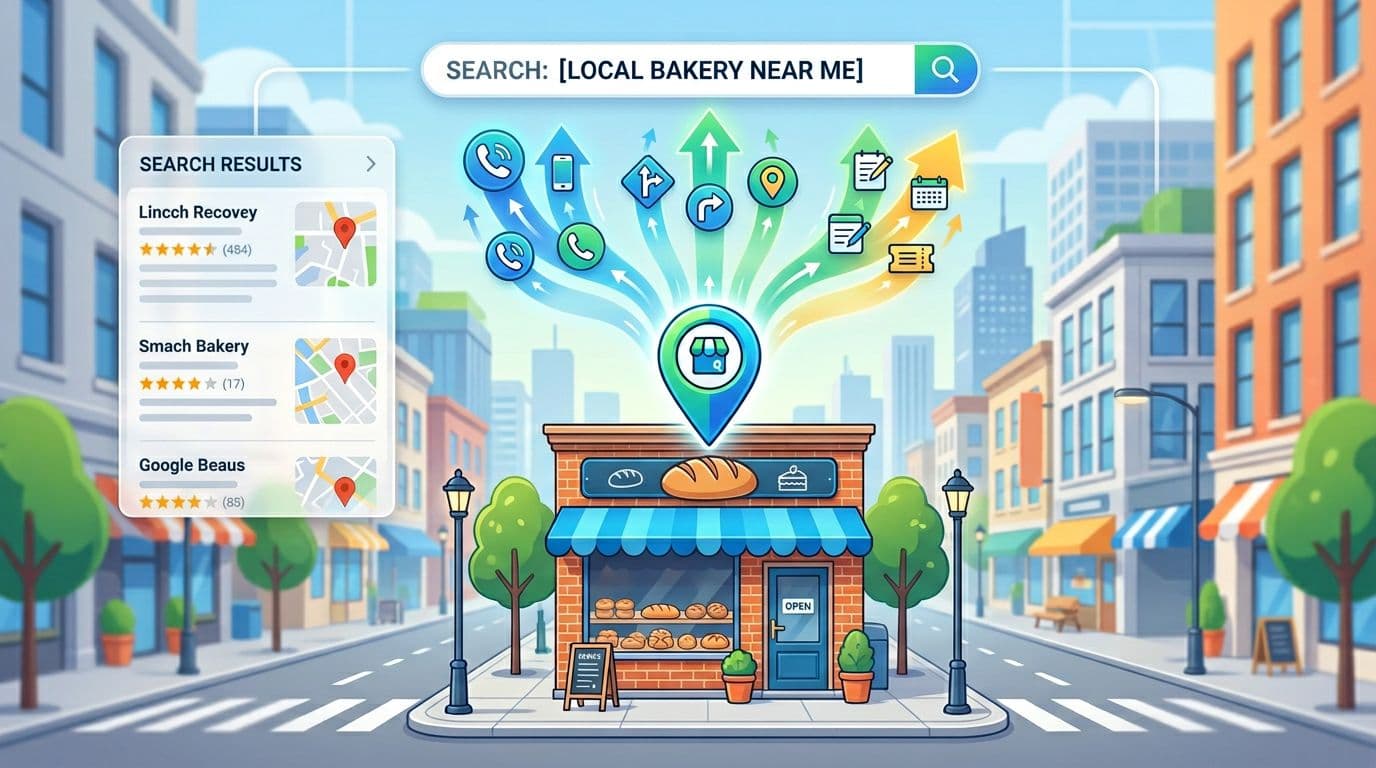
Illustration of a city street storefront highlighted by a glowing map pin, with upward arrows showing phone calls, directions, and bookings from a search bar in an urban background.
Your Google Business Profile (formerly known as Google My Business) acts like a digital storefront on Google Maps, turning local searches into calls, direction requests, and bookings through local SEO (created with AI).

AI image prompt: Local storefront with a map pin and lead actions flowing from search.

If your Google Business Profile feels “fine,” it might still be leaking leads. In 2026, a profile can look complete but still fail to trigger calls, messages, and bookings.

That's why google business profile optimization is less about filling boxes and more about removing friction. Your goal is simple: when someone finds you on Google Maps, they should know you're the right choice, and they should have one clear next step to improve local search results and boost your local ranking.

Google also leans harder on on-profile content now. March 2026 updates highlight AI-assisted Q&A, stronger review tools, easier booking connections, and multi-location post scheduling. In other words, your profile isn't a directory listing anymore, it's a mini sales page.

Claim, verify, and protect your Google Business Profile from sudden shutdowns

A laptop on a modern desk shows a blurred screen with profile verification process, highlighted by green checkmark icons and a map pin confirming location, with a business card nearby. Clean, professional illustration focusing on verification success elements.
Verification and ownership steps keep your Google Business Profile stable and editable when you need it most (created with AI).

AI image prompt: Laptop scene showing verification success with a checkmark and map pin.

First, lock down ownership. Use one Google account for admin access, then add staff as managers. That way, you won't lose control when someone leaves.

Next, verify and double-check your business information and contact information, because 2026's AI-powered Q&A can pull answers from your Google Business Profile and reviews. Bad inputs create bad answers. Maintaining a verified Google Business Profile is critical for appearing in local search results and avoiding revenue-impacting suspensions.

Avoid the fastest way to get suspended: changing your business name to include extra locations or services. Keep the name exactly like your signage and legal brand.

A suspended Google Business Profile isn't an SEO issue, it's a revenue issue. Treat edits like you'd treat a change to your bank account.

If you want a second set of eyes, compare your setup to a current checklist like this Google Business Profile optimization checklist for 2026.

Field-by-field setup that drives calls, messages, and bookings

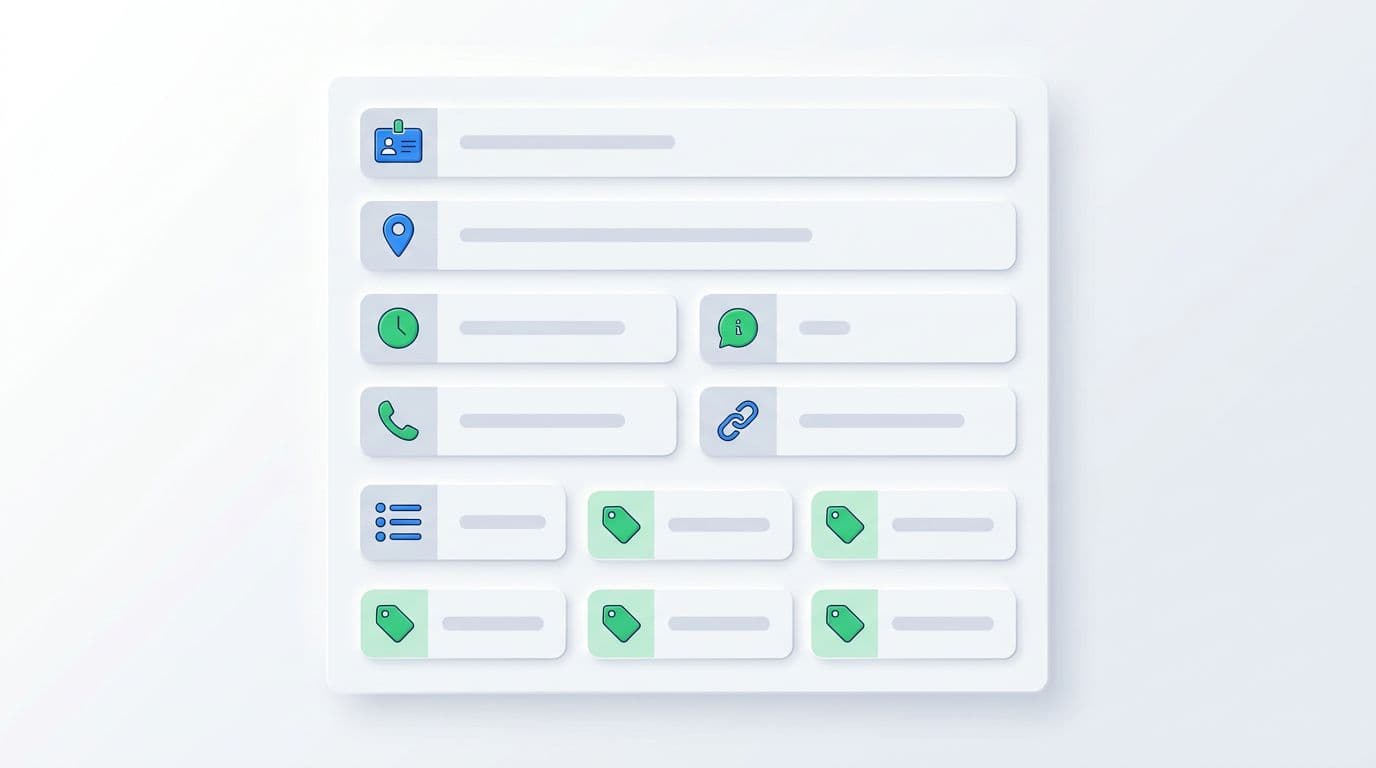
Clean modern illustration of an organized business profile dashboard with icons for name badge, address pin, clock hours, phone, website link, service list, and category tags neatly arranged on a complete info panel. Features subtle flat UI elements with slight 3D depth in a bright professional palette of white, light gray, blue, and green accents.
A well-filled profile helps Google match you to high-intent local searches (created with AI).

AI image prompt: Organized profile fields dashboard with icons for categories, services, and contact info.

Think of each field as a shelf label in a store. When labels are clear, shoppers buy faster. When fields are vague, they wander to a competitor.

Use this field-by-field checklist:

  • Primary category: Choose what you are, not what you sell sometimes (for example, “Plumber,” not “Home Services”).
  • Secondary categories: Add only true services you deliver daily.
  • Services: Create service items that match how customers ask (examples: “Emergency drain cleaning,” “AC installation,” “Same-day pest control”).
  • Business description (lead-gen text field): Lead with location + core outcome + proof (years, warranty, licensing), then end with a direct CTA.
  • Appointment / booking link: Point to a page that loads fast and has one action.
  • Attributes: Add payment types, accessibility, and service options (on-site, online estimates, same-day).
  • Service areas (if relevant): Use real coverage zones, not a huge radius “just in case.”

Relevance (from matching categories and services), proximity (from location and service areas), and business information (from complete fields) influence your position in the map pack on Google Maps. Optimize your Google Business Profile with this checklist for top local visibility.

For a practical example of how local demand translates into real leads, skim this pet grooming local SEO case study.

Photos and Videos, Google Posts, and 2026 Features that Lift Click-Through Rate

A camera device uploads photos to a transforming profile card featuring images, videos, update post bubbles, and CTA button icons, with a rising visibility graph emphasizing content boost. Clean modern SEO marketing illustration with subtle media UI elements, flat design, slight 3D depth, and bright professional palette.
Fresh visuals and short updates make your profile feel active, trustworthy, and worth contacting (created with AI).

AI image prompt: Camera uploading media to a profile card with post bubbles and an upward graph.

In 2026, “activity signals” matter more because many searches end without a website click. Your photos and videos and Google posts do the selling in the results page. Active Google Business Profiles appear more often in discovery searches and Google Maps, which directly lifts your local ranking.

Start with photos and videos that answer buyer questions quickly: exterior (day and night), interior, team at work, before-and-after, and your most popular service in action. Add short videos too, even simple walk-throughs.

Use Google posts weekly. Google guidance shared in March 2026 notes that posts expire after 7 days, so silence looks like neglect. For franchises, multi-location scheduling is a key 2026 feature that makes weekly updates realistic across every branch.

Also watch for newer options you can turn on when available for your category:

  • Smart menu management (great for restaurants and service lists shown as menus)
  • AR store tours (helpful when your space is part of the decision)
  • Direct booking and shopping connections (reduce steps to purchase)

For extra ideas, see these Google Business Profile optimization best practices.

Reviews, Q&A, and messaging that turn map views into leads

Stack of golden star ratings with positive speech bubbles and resolved Q&A checkmarks surrounding a prominent business profile card trust badge. Clean modern SEO marketing illustration focusing on review and feedback UI elements.
Customer reviews and helpful answers remove doubt fast, which improves lead volume and quality (created with AI).

AI image prompt: Star ratings, Q&A checkmarks, and trust elements around a profile card.

Customer reviews are your loudest social proof in the local pack. Ask at the moment of success, not days later. A simple SMS or email works best, and you should route it to the exact customer review link for that location.

Reply to every customer review. Keep it short, mention the service, and invite the next step (call, message, or booking). For negative reviews, acknowledge, clarify, then move it offline. High-quality customer reviews also build prominence in the local pack on Google Maps.

March 2026 updates also mention stronger review moderation tools, so report fake or off-topic reviews from the Google Business Profile dashboard instead of starting an endless public argument.

Finally, don't ignore Q&A section and messaging. With AI-assisted Q&A rolling out, you should seed your own questions and answer them using your real policies:

  • Pricing ranges (when possible)
  • Service area and response times
  • Booking rules and deposits
  • Warranty, refunds, or rework policy

If you want another checklist angle, this 2026 optimization checklist has a solid rundown of engagement areas (posts, reviews, and Q&A).

Tracking local leads: UTMs, conversions, KPIs, and a monthly workflow

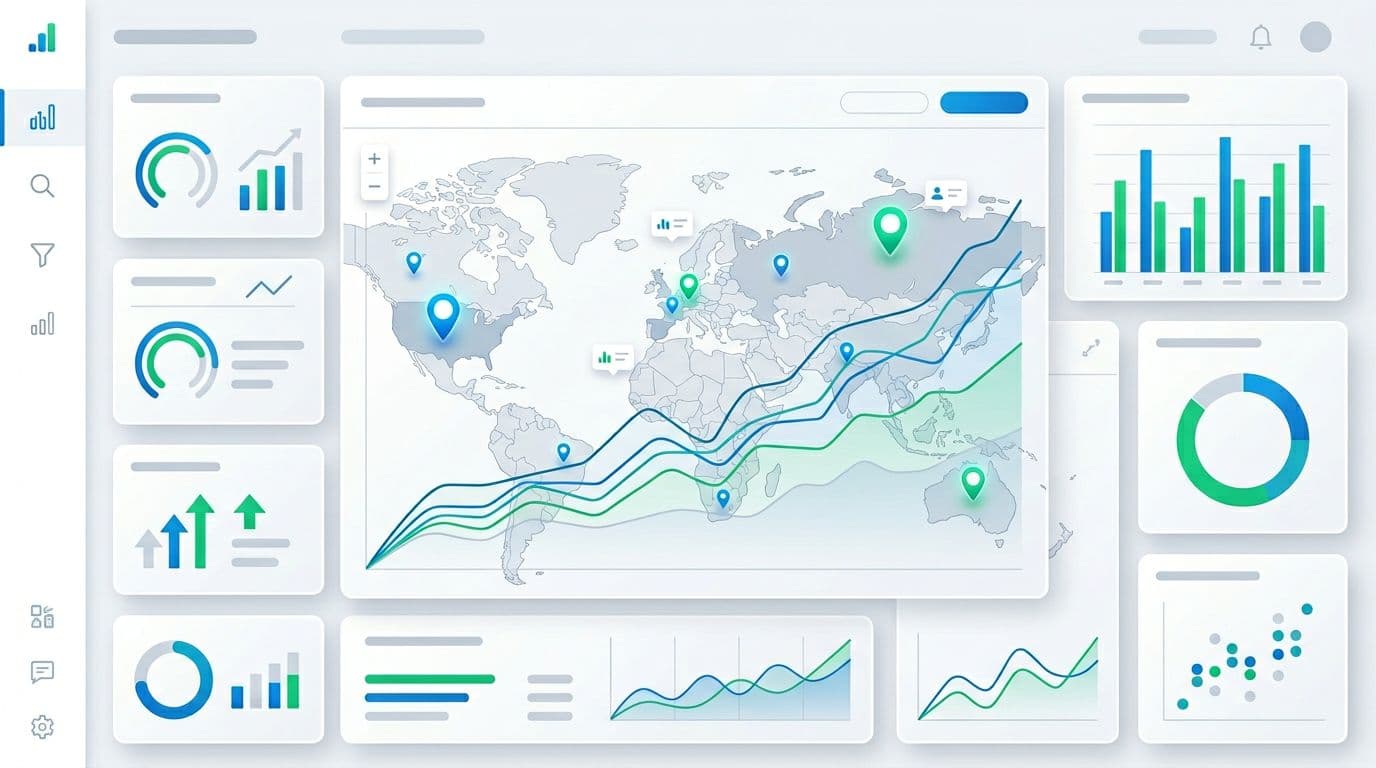
Clean modern illustration of an analytics dashboard featuring line charts, bar graphs, KPIs, performance metrics, and a map overlay with active pins for SEO marketing. Professional visualization with subtle UI elements in a bright palette of white, light gray, blue, and green accents.
Simple tracking turns “more views” into leads with better conversion rates you can improve month after month (created with AI).

AI image prompt: Local SEO analytics dashboard with KPIs, charts, and map pins.

If you can't measure leads, you'll end up chasing vanity metrics. Implement UTM tracking on every profile link you control (website, appointment, menu, order). Keep the template consistent, for example:
?utm_source=google&utm_medium=organic&utm_campaign=gbp&utm_content=website

For conversion tracking, aim for signals that match real leads:

  • Call clicks from mobile (plus call tracking numbers if you use them)
  • Form submits on your booking page
  • Clicks to chat or message (if your platform supports event tracking)
  • Direction requests as a proxy for visits (especially for retail)

Use this KPI table as your monthly scorecard for local SEO and local ranking:

KPIWhere to checkWhy it matters
CallsGBP performance, call logsHighest-intent lead type
MessagesGBP messagingCaptures “not ready to call” leads
Website clicksGBP + analytics UTMsShows branded search demand and offer fit
Direction requestsGBP performanceStrong visit intent
Review volume and ratingGBP reviewsImpacts trust, conversion, and local ranking
Top queriesGBP performanceTells you what to emphasize

Run this monthly workflow to keep momentum without living inside GBP (formerly Google My Business):

  1. Review performance trends and local ranking, compare to last month.
  2. Add 5 to 10 new photos and videos, remove outdated ones.
  3. Publish 4 posts (1 per week), reuse the best offer.
  4. Request customer reviews from the past month's happy customers.
  5. Update services, hours, attributes, business description, and contact information for seasonality.
  6. Audit Q&A, approve or edit AI-suggested answers.

If your site also needs to convert that traffic better, pair GBP work with on-site improvements through focused SEO services.

Strong google business profile optimization isn't complicated, it's consistent. Make the profile accurate, make it active, make it easy to contact you, then measure leads like a business owner. When your listing does the talking, your phone rings even when you're busy doing the work.

Google Business Profile Optimization Checklist for 2026

Your google business profile, a key component of local SEO that helps you appear in the local pack, is often your real homepage. It shows before your site, before your ads, and sometimes before your competitors even load.

In 2026, google business profile optimization isn't about filling boxes once and forgetting it. Google rewards profiles that stay accurate, active, and easy for real people to trust fast.

Use this checklist to audit, fix, and maintain your profile, whether you previously used google my business or are starting fresh, with priorities, examples, and mistakes to avoid. Consistent updates improve visibility on google maps. Since features and policies can change, verify anything new against official GBP documentation before rolling it out across locations.

1) Run a 15-minute Google Business Profile audit first (Highest impact)

Diverse business owner holding clipboard with checkmarks beside map pins and profile icons on an office desk with laptop showing Google Maps. Clean modern flat-vector illustration with Google color palette, high contrast, and soft shadows.
An at-a-glance profile audit checklist scene, created with AI.

This is your “does it pass the sniff test?” moment. If a customer has 10 seconds, can they tell what you do, where you are, and how to contact you?

Start with this quick audit table, then fix every “High” item before anything else. If you want a second checklist to cross-check your work, compare against a 2026-focused guide like Dyad's GBP checklist.

Audit itemRecommended setting (2026)PriorityCommon mistake
Ownership and verificationCorrect owner account, verified statusHighEx-employee owns the profile
Business nameAccurate business information, no extra keywordsHighAdding services or city names
Primary categoryMost accurate core serviceHighPicking a “bigger” category for volume
Address and map pinMatches signage and mail addressHighPin placed on a nearby road
Hours (regular + special)Holiday and event updates addedHighForgetting special hours
Phone and websiteAccurate contact information, correct landing pageHighCall center number for every location
Description and attributesClear services, updated attributesMediumMarketing fluff, missing key attributes
Photos and logo/coverFresh, real photos, updated coverMediumOld photos, stock images
Products/servicesKey offers listed and maintainedMediumLeaving outdated pricing or items

If you only fix three things today: primary category, hours (including special hours), and the main landing page link.

2) Fix NAP, service areas, and location trust signals (Highest impact)

Storefront building in street view with consistent NAP signs and floating directory icons, clean modern flat-vector style using Google colors, high contrast professional vibe with subtle 3D depth and soft shadows.
Storefront and directory consistency concept, created with AI.

NAP means name, address, phone. NAP consistency is vital for local ranking and appearing in local search results. In practice, it means “can Google trust you?” and “can customers reach you?” Keep your GBP NAP identical to your website header/footer, contact page, and key directories.

For service-area businesses, be strict about boundaries and service areas. Proximity to the user affects visibility, so recent 2026 updates have pushed tighter limits (often around a 2-hour drive range). Don't stretch it. A too-large radius can trigger edits, suspensions, or lead quality problems.

Also, update what “in-person” means for your model. In 2026, online-only listings are more likely to be rejected, so make sure your profile reflects a real, eligible customer experience (at your place, at theirs, or both).

If you manage a multi-location brand, standardize NAP formatting in a shared doc (suite rules, landmark hints, and phone formatting). High relevance across directories builds trust. The difference shows up in rankings over time, as seen in local wins like this local SEO case study for a pet grooming store.

3) Choose categories, services, and products like a customer would (High to Medium impact)

Clean modern flat-vector illustration of retail store interior shelves tagged with category labels, services icons, and product items, featuring one diverse business owner browsing in Google blue-red-yellow-green palette with neutral grays and white background.
Category and service organization concept, created with AI.

Category choice is still one of the strongest levers, especially for discovery searches. Pick a primary category that matches your main revenue line, then add relevant secondary categories only when you truly offer them.

A practical example:

  • If you do mostly emergency pipe repair, “Plumber” usually beats “Handyman.”
  • If you mainly do installations and remodel work, a different primary may fit better.

Next, build out Services with plain names and short descriptions. Keep the business description clear and customer-focused, writing like your front desk talks, not like your brochure. For instance: “Water heater repair (same-day in most cases)” is clearer than “Comprehensive water heater solutions.”

Add Products if you sell items people search for, like “Brake pads,” “Facial serum,” or “Dog grooming package.” Keep them current, because stale menus and outdated offers can hurt trust. For more ideas on what to include this year, scan what to include in a 2026 GBP.

Mistakes to avoid: stuffing services into the business name, picking categories you “might” do, and listing every neighborhood as a service. A well-organized google business profile attracts more clicks.

4) Upgrade photos and videos for 2026 search behavior (Medium impact)

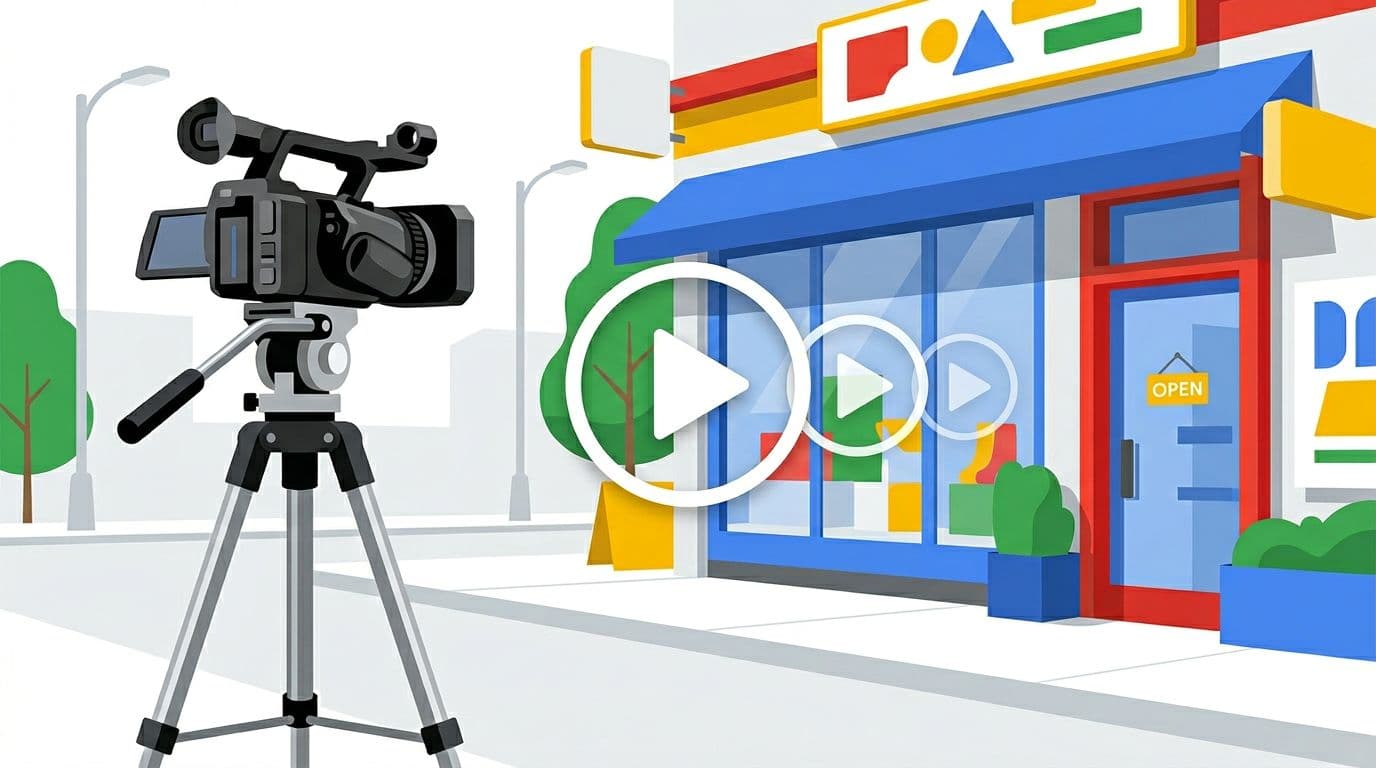
A camera on a tripod photographs a vibrant storefront exterior in a daytime urban street setting, overlaid with video play icons. Features clean modern flat-vector style with subtle 3D depth, Google brand colors, high contrast, soft shadows, and white background.
A storefront photo and video capture scene, created with AI.

In 2026, visuals do more than “look good.” Google's systems read what's in them and connect that to searches, so fresh, real photos and videos can help you match intent.

Aim for: exterior, interior, team at work, best-selling items, and “proof” shots (parking, entrance, accessibility). High-quality photos and videos also help with the conversion rate once a user finds you on Google Maps. Add short videos too, like a 10-second walk-in view or a quick service demo.

A simple weekly habit works: upload 2 to 5 new photos and videos per location. Rotate seasonal shots and remove anything that's misleading.

Common mistakes: stock photos, heavy filters, outdated storefront shots (old signage), images that don't match the category (for example, a “dentist” profile with only building photos and no clinic shots), and not visually confirming attributes like accessibility in your gallery.

For a broader look at how AI is affecting GBP visibility, see Agency Jet's 2026 GBP AI evolution guide.

5) Customer Reviews and “Ask Maps” answers: control what you can (Highest impact)

Clean modern flat-vector illustration featuring a diverse business owner at a desk with coffee mug, examining a phone screen surrounded by chat bubbles with star ratings and speech icons. Wide composition in Google colors on white background with high contrast, soft shadows, and subtle 3D depth.
Review and customer conversation signals concept, created with AI.

Some markets have seen the classic QA section de-emphasized in favor of AI-style answers (often surfaced as “Ask Maps”). That means your customer reviews, photos, attributes, and services quietly become your FAQ, influencing your local ranking.

Request reviews right after a win moment (job done, appointment complete). Keep it simple, and never “gate” reviews by only asking happy customers.

Use response templates to stay fast, or leverage the messaging feature to respond to inquiries quickly:

  • Positive: “Thanks, [Name]. Glad we could help with [service]. Your customer review means a lot. If you need [related service], call anytime.”
  • Negative: “Sorry this happened, [Name]. Please contact [method] so we can fix it. We take this seriously.”

Also, seed your own “answers” by writing service descriptions that cover common questions: pricing ranges, parking, turnaround time, and warranty basics.

Need proof that steady review work supports local visibility? This beauty pros visibility case study shows how consistent local signals add up.

6) Use Google Posts to look active (Medium impact)

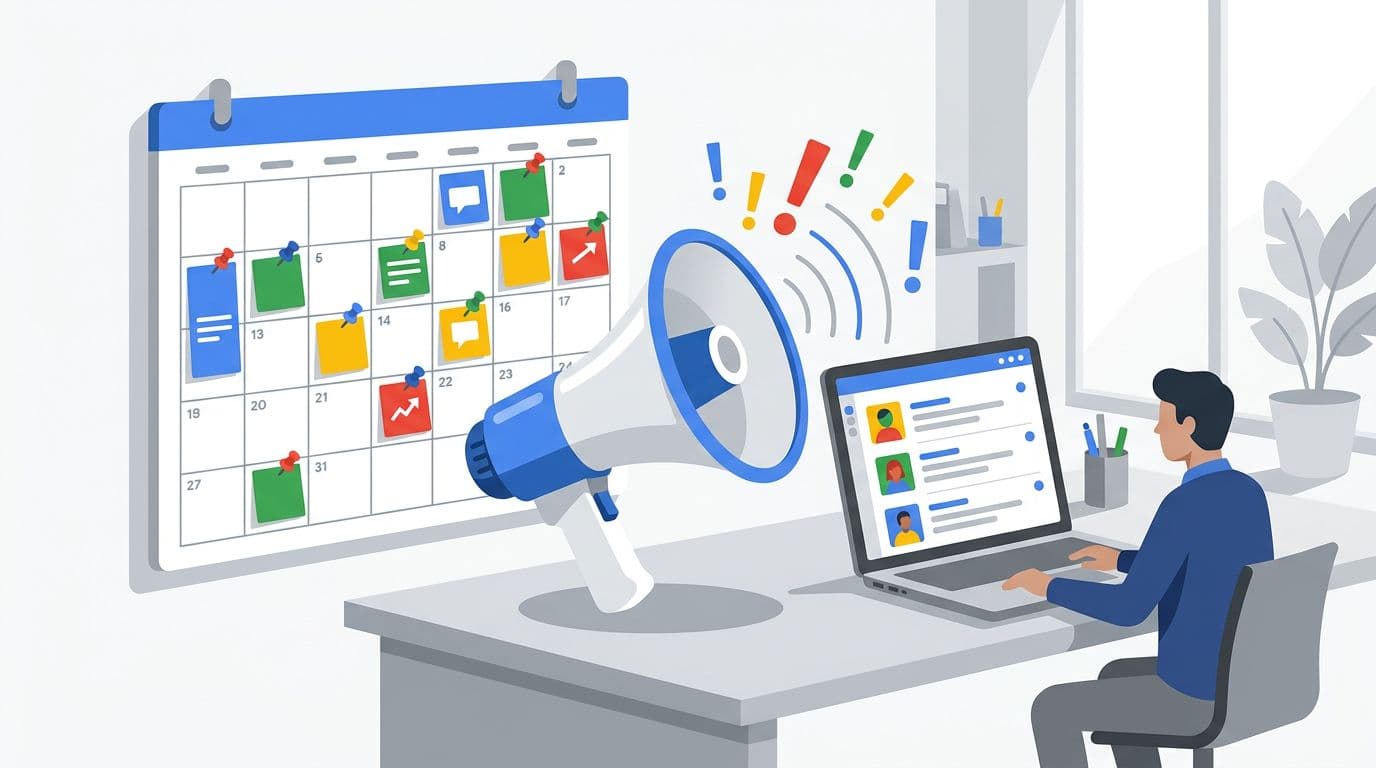
Modern office scene with a calendar featuring pinned posts, a megaphone announcing updates, and a laptop displaying a social media feed, in clean flat-vector style with Google colors, high contrast, and subtle 3D depth, featuring exactly one person.
Posting cadence and updates planning scene, created with AI.

In 2026, Google posts can show near the top of your profile, especially on mobile. Even one post per week signals that you're open, current, and worth a click. Active Google posts help increase your prominence in the local area.

Keep posts tight:

  • One offer or update per post (sale, new service, event, limited slots).
  • One clear action (Call, Book, Order, Learn more).
  • One supporting photo that matches the message.

Avoid posting things you can't honor. Expired deals and unclear terms drive bad reviews. Also, don't recycle the same copy across every location. Swap local context, team photos, and service specifics.

If you want another checklist to compare posting and content choices, this GBP optimization checklist guide is a helpful reference. A well-maintained Google business profile signals a healthy business.

7) Track performance with UTMs, then maintain on a schedule (High impact)

Clean modern flat-vector illustration of an analytics dashboard with line charts, link icons, and UTM tags on a computer screen at a desk with notebook and one diverse marketer, using Google color palette on neutral background with high contrast and soft shadows.
Tracking and measurement workflow concept, created with AI.

Without UTM tracking, you'll argue about opinions. With UTM tracking, you'll make clean calls while distinguishing branded search from generic clicks.

Add UTMs to the Website and Appointment links so you can see GBP traffic in analytics. Example UTM: ?utm_source=google&utm_medium=organic&utm_campaign=gbp&utm_content=website_link

Use a simple KPI tracker like this:

KPIWhere to checkTargetNote
CallsGBP performanceUp month-over-monthWatch missed-call hours
Website clicksGBP performance + analyticsUp with stable conversionUTMs required
Direction requestsGBP performanceStable or risingGreat for retail; Google Maps interactions are a key metric
Photo viewsGBP performanceCompetitive in your areaUpload weekly

Finally, run maintenance like a gym routine, not a one-time project. These local SEO efforts help you dominate the map pack and improve overall local search results:

TaskFrequencyPriorityOwner
Special hoursMonthly, plus holidaysHighManager
New photosWeeklyMediumStaff lead
Customer reviews2 to 5 times/weekHighSupport
Services/products refreshMonthlyMediumMarketing
Category checkQuarterlyHighSEO lead

Conclusion

A great profile feels like a well-run storefront: clear sign, correct hours, helpful staff, and fresh proof you're active. Start with the high-impact fixes, then keep a simple weekly rhythm. These steps succeed old google my business tactics. In 2026, google business profile optimization rewards consistency more than clever tricks, leading to better placement in the local pack and google maps. Set your schedule today, and next month's results will be easier to explain and repeat.

Landing Page Copy Template for High-Intent Lead Gen in 2026

Illustration of one professional in a sleek modern office viewing a laptop screen angled to show prominent headline area and glowing CTA button prop, with relaxed hands on desk beside coffee mug. Wide landscape composition with clean futuristic SaaS B2B aesthetic using crisp vector 3D hybrid style, soft gradients in white charcoal and electric blue.
Hero-style landing page scene showing a focused CTA moment, created with AI.

High-intent clicks are expensive, and they're impatient. If your landing page copy feels vague, visitors bounce, even when they want what you sell.

This landing page copy template is built for your target audience of 2026 buyers, who move through various stages of awareness, self-educate fast, scan on mobile, and expect proof plus privacy clarity before they hand over an email.

Use it like a fill-in-the-blanks page script. Keep what fits, delete the rest, and make every line earn its spot by converting purchase intent.

The 2026 high-converting landing page structure (and the rules that make it work)

Abstract 3D icons of rising revenue charts, time-saving clocks, and cost reduction symbols in a structured bullet list layout on a clean digital canvas with soft glows and futuristic professional aesthetic.
Value-focused icons that match how benefits should scan on a landing page, created with AI.

Think of the page like a good sales call that clearly defines the value proposition. First, name the outcome. Next, prove you can deliver. Then, make “yes” feel easy.

Here's the simple wireframe to follow:

This structure leverages visual hierarchy so users can scan the page quickly and intuitively.

Block A (Hero): Outcome headline, short subhead, 1 primary call to action, micro-proof line
Block B (Proof bar): Logos, ratings, counters, or one hard stat
Block C (Benefits): 3 to 5 benefits, tied to pain points like time, money, risk
Block D (How it works): 3 steps, plain language
Block E (Objections): 3 quick answers, no drama
Block F (Form): Small ask, clear next step, privacy reassurance

Two rules keep this landing page copy template “high-intent” instead of “high-traffic”:

If your hero doesn't answer “What do I get?” in 7 seconds, it's not ready.

Before you pick words, match the copy to the unique selling proposition at the core of your offer. This table helps you stay tight.

Offer typeBest promise angleBest “next step” framingWhat to avoid
Demo“See it working on your use case”“15-min live walkthrough”“Schedule a call” (too vague)
Consultation“Get a plan you can act on”“Bring your numbers, leave with next steps”Long forms
Quote“Clear price range fast”“2-minute request, same-day reply”“Contact us” CTA
Trial“Try the core value in minutes”“No card, cancel anytime”Over-explaining features

After launch, tighten the page using real behavior data from your marketing funnel. If you need a clean setup, use this guide to track website conversions in Google Analytics.

Plug-and-play landing page copy blocks (headlines, CTAs, microcopy, and error states)

Illustration of a mobile phone held in one relaxed hand displaying simple form fields and a prominent CTA button, positioned on a cafe table. Clean futuristic SaaS/B2B style with crisp vector/3D hybrid, soft gradients, and high contrast.
Mobile-first form moment showing the “small ask” principle, created with AI.

Use these blocks as swap-in parts to create skimmable content for mobile blocks and improve conversion rate. Keep the tone direct. Add numbers only when you can back them up.

Headlines (copywriting formulas – pick one, then fill the brackets)

#Headline formula
1Get [desired outcome] in [timeframe] without [big pain].
2[Role/team] use [product/service] to [measurable result].
3Stop [pain]. Start [outcome].
4The fastest way to [job-to-be-done], for [ICP].
5[Proof] for [ICP] who need [outcome] now.

Subheadlines (choose one style)

Option A (clarity): “Built for [industry], works with [tool/workflow], and shows value on day one.”
Option B (risk reduction): “See pricing, timeline, and what happens after you submit.”
Option C (proof-led): “Teams report fewer delays and faster handoffs after switching.”

Benefit bullets (write 3 to 5, keep each under 10 words)

Examples to model: “Fewer manual steps”, “Same-day visibility”, “Clear owner for every task”, “No long setup”, “Audit-ready logs”, “Addresses specific pain points”

Call to action buttons (use 1 primary, 1 secondary max)

Primary CTA (high intent)Secondary CTA (lower commitment)
Get a 15-min demoSee sample results
Start my free trialWatch a 2-minute walkthrough
Get pricing for my teamCompare plans
Request a quote todayAsk a question
Book my consultCheck availability

Form field labels (lead gen, high-intent)

Full name
Work email
Company
Role (dropdown)
Team size (dropdown)
What are you trying to improve? (short text)

Microcopy that reduces friction (paste near the form)

Click trigger reassurances
Next step: “You'll get a calendar link after submit.”
Time box: “Takes about 30 seconds.”
Fit check: “Best for teams with [X] active users/projects.”

Error states (be helpful, not snarky)

Email: “Please use a work email (no Gmail or Yahoo).”
Phone (if required): “Add country code, we'll only text if needed.”
Required field: “This helps us route you to the right specialist.”

Social proof and objection handling that don't feel like fluff

Illustration of one professional with relaxed hands scrolling client logos and star ratings on an angled laptop screen in a bright office desk setting. Wide landscape composition in clean futuristic-professional SaaS/B2B style with crisp vector/3D hybrid, soft gradients, high contrast, and subtle depth-of-field.
Social proof moment showing how trust should be visible early, created with AI.

In 2026, buyers expect receipts. A page can look great and still lose, because it doesn't feel safe to believe.

If you have one strong number, use it. Storylane reported a redesign that drove 36% more impressions and a 30% boost in conversion rate, even with the same core copy. Proof changes behavior.

Social proof patterns (choose 1 to 2, repeat lightly)

PatternCopy you can paste
Logo bar + qualifier“Trusted by teams in [industry] from [range] employees.”
Short testimonial or customer review + role“”[Result] in [time].” [Name], [Title], [Company type]”
Outcome stat + context“[X]% faster [process] after [change], based on [source].”
3D shield icons block incoming doubt clouds while checkmark approvals emerge, arranged as an FAQ or objection list on a digital panel in a secure digital environment.
Objection-handling visual that matches an FAQ section, created with AI.

Objection blocks (write like a calm expert addressing common pain points from the customer's point of view)

“Is this for companies like mine?”
“Yes, if you have [fit marker]. If not, we'll tell you quickly.”

“How fast can we start?”
“Most teams start in [timeframe]. Your timeline depends on [variable].”

“Do I need to talk to sales?”
“Not unless you want to. You can [self-serve step] first.”

Mobile-first copy and AI personalization that stays respectful

Illustration of a tablet device on a desk showing dynamic personalized content hints at an angle with no readable text, accompanied by one relaxed hand in a clean contemporary workspace.
Tablet-focused landing page scene reflecting personalization and mobile readability, created with AI.

Mobile rules the first impression, so write for thumbs first. Keep above the fold to one message, one CTA, one proof line.

AI personalization helps when it's subtle and earned. Swap the problem language by ad group, industry, or page path, not by guessing private details, while avoiding complex industry jargon. Also, personalize CTAs with a second-person point of view (“Get my…” often reads more direct than “Get your…”).

For teams that want AI-assisted workflows without losing trust, align your copy with a clear data stance and consistent messaging, similar to an AI-driven digital marketing agency approach.

Example: B2B SaaS demo page (paste-ready)

These examples clearly communicate the value proposition to the target audience.
Headline: “See pipeline gaps in 15 minutes, not 15 tabs.”
Subhead: “A live demo using your funnel stages, so you can spot leaks fast.”
CTA: “Get a 15-min demo”
Micro-proof: “No deck first, we go straight to the workflow.”

Example: Local professional service (quote request)

Headline: “Get a same-day estimate for [service], with clear next steps.”
Subhead: “Tell us the basics, we'll reply with a price range and timeline.”
CTA: “Request a quote today”
Micro-proof: “No spam, no pushy calls.”

If organic traffic feeds your high-intent pages, ensure message match across ads and landing pages. For SaaS teams, SaaS SEO services can support those bottom-of-funnel visits.

Privacy and compliance microcopy for 2026 (clear, non-legal language)

Glowing lock icon and compliance badges float around a secure form in a protected vault-like digital space, featuring a clean futuristic SaaS aesthetic with soft gradients and high contrast.
Privacy-first visual that fits a form section and reassurance copy, created with AI.

People hesitate at the form because data feels permanent. Fix that with landing page copy in plain words, placed right under the button.

Privacy reassurance (short): “We'll only use your details to respond. We don't sell personal data.”
Consent hint (optional checkbox): “Yes, email me product updates (you can unsubscribe anytime).”
Data-minimization line: “Share only what's needed, we'll ask nothing extra.”
Retention line (if relevant): “We delete inquiry data after [X] months if you don't become a customer.”
Compliance comfort (general, non-legal): “We follow common privacy standards (GDPR-style rights: access, delete, opt out).”

Keep it honest. If you call, say you call. If you don't, say you don't.

A high-intent page is like a well-lit hallway. The visitor should see the door, the handle, and what's on the other side.

Build with this landing page copy template, then use A/B testing to refine it one change at a time based on performance. Tight copy plus real proof wins. These refinements are essential for capturing purchase intent and maintaining a high conversion rate. Clarity is still the fastest path to yes.

SEO Audit Checklist For Lead Gen Websites In 2026

If your website is a lead-gen machine, SEO isn't the paint job, it's the engine. A ranking bump means nothing if forms break, pages don't index, or GA4 can't tie organic visits to pipeline.

This seo audit checklist is built for 2026 realities: AI-powered search overviews, higher standards for brand trust, Core Web Vitals with INP as the responsiveness metric, and less tolerance for spammy patterns. Each check includes clear pass/fail criteria and how to verify it with tools your team already uses.

The 2026 SEO audit checklist (with pass/fail criteria)

Use this as your baseline. Then prioritize fixes by impact on indexing, conversions, and attribution.

Audit areaCheckPassFailHow to verify
CrawlabilityImportant pages accessibleService and lead pages return 200, not blocked4xx, 5xx, blocked by robots, soft 404Screaming Frog or Sitebulb crawl, GSC Pages report
Indexing controlIndexation matches intentMoney pages indexed, thank-you pages noindexLead pages not indexed, thank-you pages indexedGSC Pages, site: spot checks, Screaming Frog “Indexability”
CanonicalsCanonicals are consistentSelf-referential on clean URLsCanonicals point to wrong page or parameter URLScreaming Frog Canonicals report
Internal linkingMoney pages within 3 clicksService, location, comparison pages linked from hubsOrphan pages, deep pages, generic anchorsScreaming Frog “Crawl depth” + “Orphan URLs” (GSC integration)
CWV (INP focus)Responsive interactionsINP “Good” (aim under 200 ms)INP needs improvement or poorPageSpeed Insights, GSC Core Web Vitals
SpeedFast main pagesLCP “Good” on key templatesSlow LCP on service or location pagesPSI + Lighthouse on top landing pages
Mobile UXNo mobile frictionTaps, forms, menus work on mobileLayout shifts, sticky overlays, tiny tap targetsChrome DevTools mobile emulation + Lighthouse
FormsForms submit reliablyValidations work, no blocked requestsJS errors, blocked third-party endpointsChrome DevTools Console + Network, QA on real devices
AnalyticsOrganic-to-lead tracking worksForm submit and call events fire with sourceLeads show as “(direct)” or missingGA4 DebugView, Tag Manager Preview, GA4 conversions
Structured dataSchema valid and relevantNo errors, matches visible contentErrors, spammy FAQ, mismatchGSC Enhancements, Rich Results test, Schema validator

For deeper technical checklists to cross-reference, keep these handy: technical SEO audit checklist for lead-gen sites and technical SEO audit 2026 checklist.

If Google can't crawl and index your lead pages cleanly, everything else is just guessing.

Audit your lead-gen page templates (service, location, comparison, case study)

Lead-gen sites usually win or lose on a small set of templates. Audit by template first, not by URL count.

Service pages (money pages).
Pass when each service page targets one clear intent, loads fast, and has a single primary CTA above the fold. Fail when one page tries to rank for five services, or when the CTA sits below a wall of text. Verify with GA4 landing page reports (engagement rate, scroll, conversion rate) and GSC query patterns (are you attracting buyers, not students?).

Location pages (the duplicate-content trap).
Pass when each location page has real proof and local detail: service area boundaries, photos, reviews, case snippets, unique FAQs, and clear contact options. Fail when pages are near-copies with just city names swapped. Verify by running a Sitebulb duplicate-content report, then review the worst clusters manually.

If you need a reference for what strong local intent can look like, compare against a real outcome-driven example like this pet grooming local SEO case study.

Comparison pages (high intent, high scrutiny).
Pass when claims are sourced, language is precise, and the page shows who it's for. Fail when it reads like vendor bashing or makes unverifiable promises. Verify by checking SERP intent and making sure the page answers “Which should I pick?” quickly, then backs it up.

Case studies (trust builders that also rank).
Pass when each case study includes constraints, actions, and measurable outcomes, plus links to related services. Fail when it's a vague success story with no numbers or timeline. Verify with on-page content review and internal linking depth, then look for assisted conversions in GA4. A practical example is this SEO case study for business consultants.

Lead-gen tracking and attribution checks (organic to lead to pipeline)

In 2026, reporting “organic sessions are up” won't satisfy anyone. You need clean attribution from organic click to lead event, then to CRM if possible.

Start with the basics: one primary conversion per lead type (demo, contact, quote, call). Then confirm those events fire reliably across templates and devices.

Here's a quick mini-audit for attribution hygiene:

Tracking itemPassFailVerify
Form submission trackingGA4 event fires on successful submitFires on button click, or doesn't fireGA4 DebugView, Tag Manager Preview
Thank-you page handlingThank-you page is noindexThank-you page ranks or shows in GSCGSC Pages, robots meta checks
Call trackingCalls attributed to sourceCalls show as direct or unassignedCall tracking platform logs + GA4 events
Organic landing page mappingTop GSC pages mapped to CTAsHigh-traffic pages have weak CTAsGSC Landing pages + on-page review
Bot and spam filteringLead spam controlledGA4 polluted, CRM floodedServer logs, GA4 filters, reCAPTCHA or alternatives

One more practical tip: if forms fail only sometimes, check browser console errors and blocked requests in DevTools. Ad blockers and strict tracking settings can break form libraries and call widgets.

AI Overviews, entity trust, and spam risks you can actually audit

AI-powered results reward sites that are easy to interpret and hard to doubt. That doesn't mean writing for robots, it means writing like a specialist who expects scrutiny.

Pass when your site shows consistent brand details (name, address, phone, leadership, author bios where relevant), and content matches what your schema claims. Fail when content looks mass-produced, thin, or mismatched (for example, FAQ schema that isn't visible on the page).

Verify trust signals with a quick sweep:

  • In Screaming Frog, extract structured data and look for errors or irrelevant types.
  • In GSC, review Enhancements and manual actions.
  • In content, check if key claims have proof (case studies, testimonials, certifications).

If your team is adapting content for AI visibility, align your review process with what AI-focused audits check, for example this AI SEO audit checklist for 2026.

If you publish pages at scale, make sure each one earns its existence, otherwise spam policies can turn “more pages” into “more risk”.

Remediation roadmap (0 to 30 days, 31 to 90, 90+)

Fix the blockers first, then tighten relevance, then build trust and depth.

TimelineWhat to fix firstDeliverable
0 to 30 daysIndexing, robots, canonicals, 4xx and 5xx, broken forms, GA4 conversion eventsClean crawl, stable tracking, top templates passing CWV checks
31 to 90 daysTemplate improvements (service, location, comparison), internal linking to money pages, schema cleanupHigher conversion rate per landing page, fewer duplicates, stronger SERP alignment
90+ daysCase study pipeline, authority content, partnerships and quality links, ongoing CWV workCompounding growth in qualified leads and brand visibility

Conclusion

A lead-gen site doesn't need a perfect audit score, it needs fewer leaks and clearer proof. Run this seo audit checklist quarterly, and re-check after every template or tracking change. When you can connect crawlability, speed, intent, and attribution, you stop chasing rankings and start building predictable organic lead flow.

GA4 Setup Checklist for Lead Generation Websites in 2026

Leads from your lead generation efforts are only “trackable” in Google Analytics 4 until they aren't. One form change, one new subdomain, one consent banner update, and your numbers drift.

This GA4 setup checklist is built for lead-generation teams focused on B2B user acquisition in 2026 who need conversion tracking they can trust, even with tighter privacy rules. It's practical, it's opinionated, and it focuses on the events that actually move pipeline.

Property and stream basics that prevent dirty data

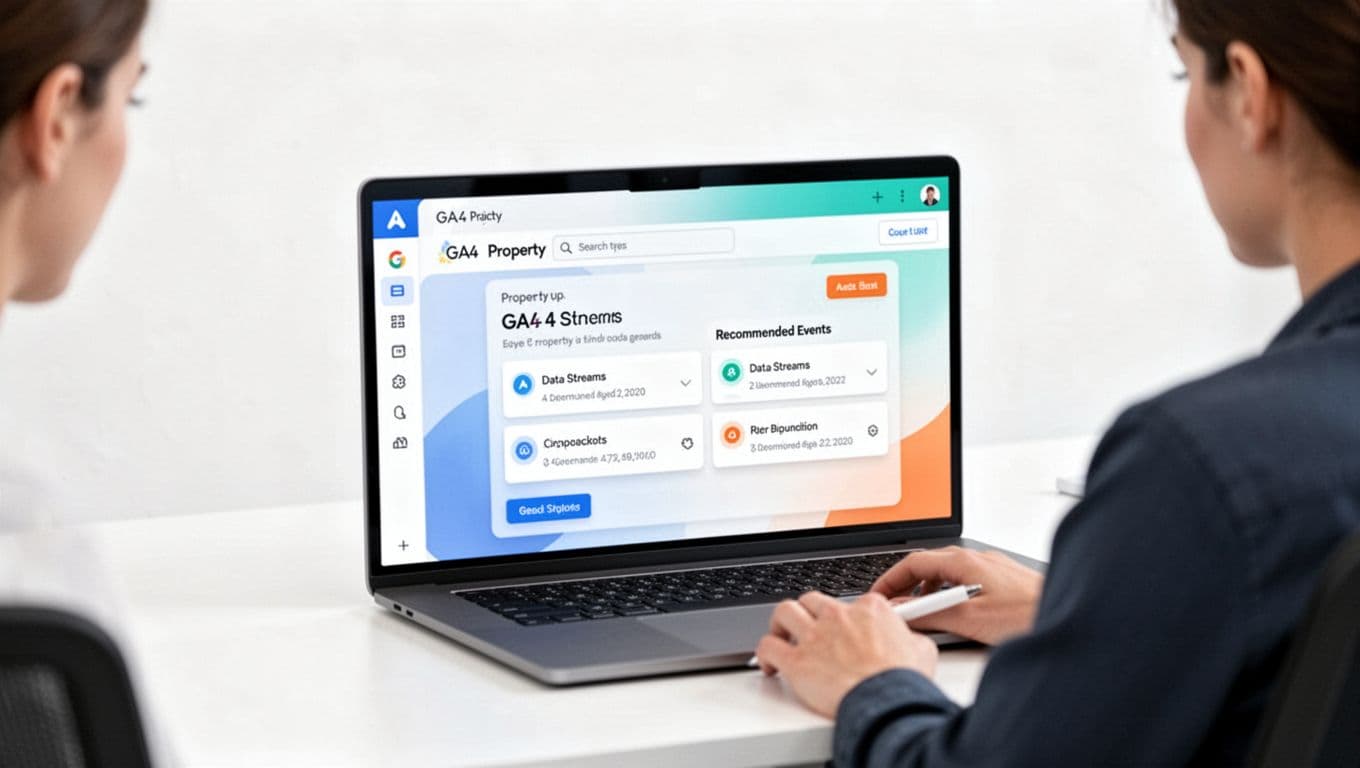
Clean technical illustration of GA4 property creation dashboard for lead gen site, shown on a laptop in an office desk setting with minimalist flat design, subtle 3D depth, and blue-teal-orange accents.
GA4 property and data stream setup for a lead-gen website, created with AI.

Before tags and events, set up your property in Google Analytics 4 to find your Measurement ID and lock the foundation. A messy property creates reporting debates later.

  • Check: Reporting time zone and currency. Default: match finance reporting (not “where your dev sits”). Why it matters: daily lead counts and CPL can shift across midnight.
  • Check: Data retention. Default: set to 14 months if available to you. Why it matters: longer lookbacks help with longer sales cycles and cohort review.
  • Check: Web data stream and Enhanced Measurement. Default: keep page views on, then selectively enable scroll, outbound clicks, and file downloads if they map to intent. Why it matters: fewer noisy events makes lead-path analysis easier.
  • Check: Unwanted referrals and cross-domain. Default: use referral exclusions for payment gateways, schedulers, and auth providers if they break sessions; add cross-domain tracking for your main site and booking domain. Why it matters: attribution often “falls” to the wrong referrer right before a lead submits.

If you want a broader implementation reference to compare against, Vital Design's GA4 best practice checklist is a useful second opinion.

GTM tagging defaults that won't double-fire

Technical illustration of Google Tag Manager interface configuring GA4 tags for lead forms, showing workspace preview with tags, triggers, and variables for form submissions in minimalist flat subtle 3D style with soft gradients on white background.
Google Tag Manager configured for GA4 lead tracking, created with AI.

For lead-gen sites, Google Tag Manager is usually the control room for Google Analytics 4. The goal is stable firing rules and clean parameters.

  • Check: One GA4 Configuration tag per site experience. Default: single config tag, fire on all pages, avoid duplicate installs (CMS plugin plus GTM). Why it matters: duplicate page_view inflates sessions and ruins funnels.
  • Check: Use a clear Data Layer contract. Default: push form metadata (form_id, form_name, lead_type) on interaction, not on page load. Why it matters: form tracking breaks less when layouts change.
  • Check: Form triggers that match reality. Default: prefer “success state” (thank-you page, success DOM event, fetch/XHR success) over generic “Form Submission” triggers, especially for tracking multi-step forms accurately. Why it matters: many forms “submit” even when validation fails.
  • Check: Linker and cross-domain settings. Default: handle in GA4 config, not scattered across tags. Why it matters: fewer places to forget when new domains launch.
  • Check: Naming. Default: GA4 | event | form_submit style, plus version notes in tag descriptions. Why it matters: faster audits during campaign launches.

Lead-gen event map (with names and parameters you can ship)

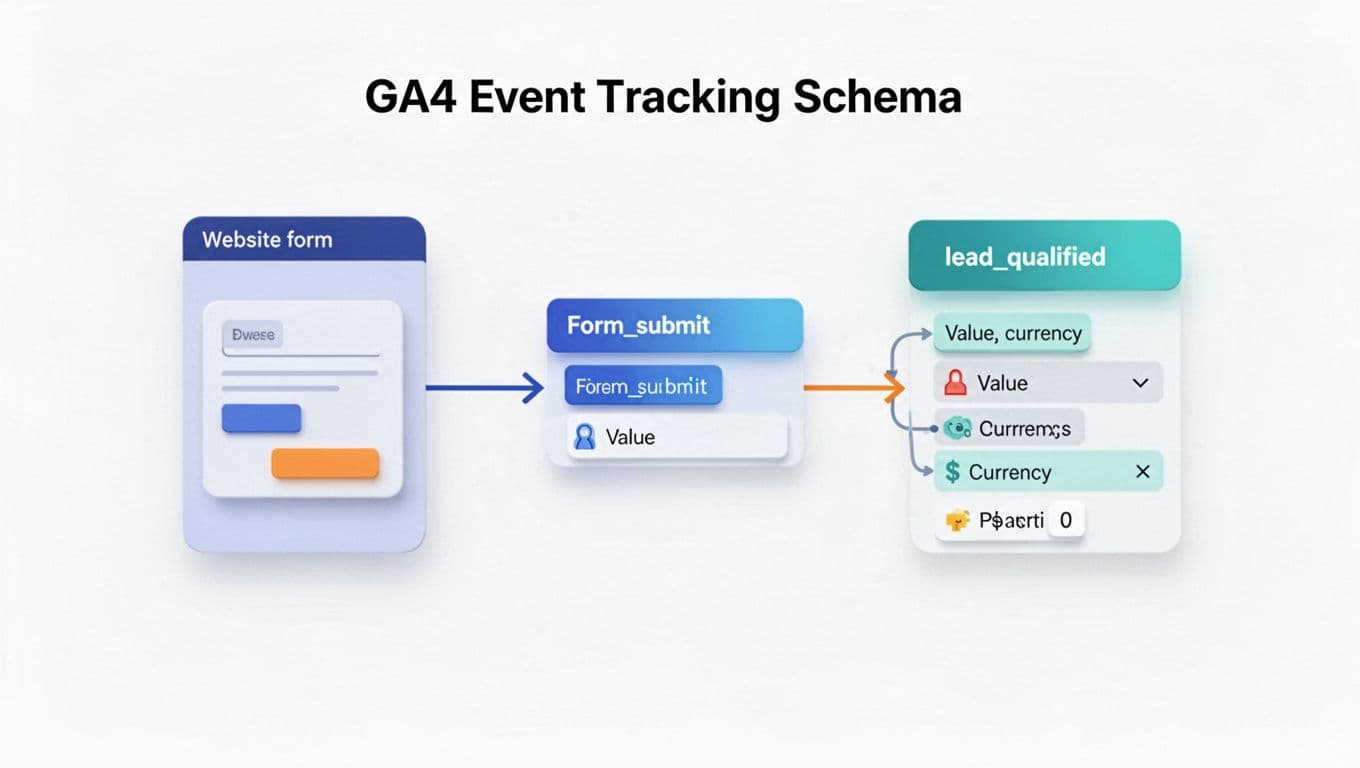
Illustration of GA4 event tracking schema for lead generation, featuring form_submit and lead_qualified events with parameters like value and currency. Flow diagram from website form to GA4 in minimalist flat 3D style with gradients on white background.
An event and parameter flow from form interaction to GA4 reporting, created with AI.

The event-based model of Google Analytics 4 lets you treat events like a funnel blueprint, mapping the form submission process effectively. If your events don't match decisions your team makes, they'll get ignored.

  • Check: Pick a small set of “decision” events. Default: 5 to 8 key events. Why it matters: GA4 gets noisy fast, and teams stop trusting it.
  • Check: Standardize event names. Default: use lowercase and underscores, avoid UI-specific names like button_click_red. Why it matters: you'll redesign the UI, but the funnel stage stays.
  • Check: Add parameters that explain lead quality, such as lead qualification. Default: keep 3 to 6 custom parameters per key event. Why it matters: it helps break down CPL by lead type without extra events.

Example event set for lead generation (with suggested parameters):

  • view_form (form_id, form_name, lead_type, page_location)
  • form_start (form_id, method, step_count)
  • form_submit (form_id, lead_type, value, currency, lead_id)
  • generate_lead (lead_type, value, currency, lead_id)
  • click_to_call (placement, business_unit) (avoid sending phone numbers)
  • lead_qualified (lead_stage, value, currency, lead_id) (send when CRM qualifies)

In 2026, GA4 reporting also leans more on engagement signals such as “time to first action,” so clean interaction events make on-site intent easier to read. For more practical do's and don'ts, Measure Marketing Pro's GA4 best practices for 2026 is worth skimming.

Privacy and consent in 2026 (Consent Mode v2 and server-side)

Minimalist flat subtle 3D illustration of a website mockup at an angle, featuring a cookie consent banner and privacy shield for GA4 on a lead gen site with server-side tagging motifs and lock icons. High contrast blues, teals, and orange accents on white gradient background, landscape orientation with content edge-to-edge.
Consent and privacy-first tracking for GA4, created with AI.

Privacy work isn't a legal box-tick anymore. Google Analytics 4 privacy settings are directly tied to whether your lead numbers match reality.

  • Check: Consent banner behavior. Default: block non-essential tags until consent, then fire tags based on consent state. Why it matters: it reduces compliance risk and avoids “ghost” tags.
  • Check: Consent Mode v2 configuration. Default: implement Consent Mode v2 through your CMP and GTM consent settings. Why it matters: GA4 can model gaps when users deny cookies, which helps stabilize trend lines.
  • Check: Server-side tagging plan. Default: start with server-side only for your highest-value conversion events. Why it matters: it can recover measurement lost to blockers, including for landing page performance, and improve data control.

2026 consideration: Consent Mode v2 plus server-side tagging is becoming the “default stack” for lead-gen measurement because it balances privacy with durable attribution.

If you're planning more advanced tracking, this guide on GA4 plus server-side tracking with UTM parameters can help you think through the moving parts. Also, tighten access and credential sharing around analytics and ad accounts, especially with agencies involved; ClickyOwl's protecting data with digital marketing partners is a solid baseline.

Conversions, attribution, CRM handoff, and a quick QA plan

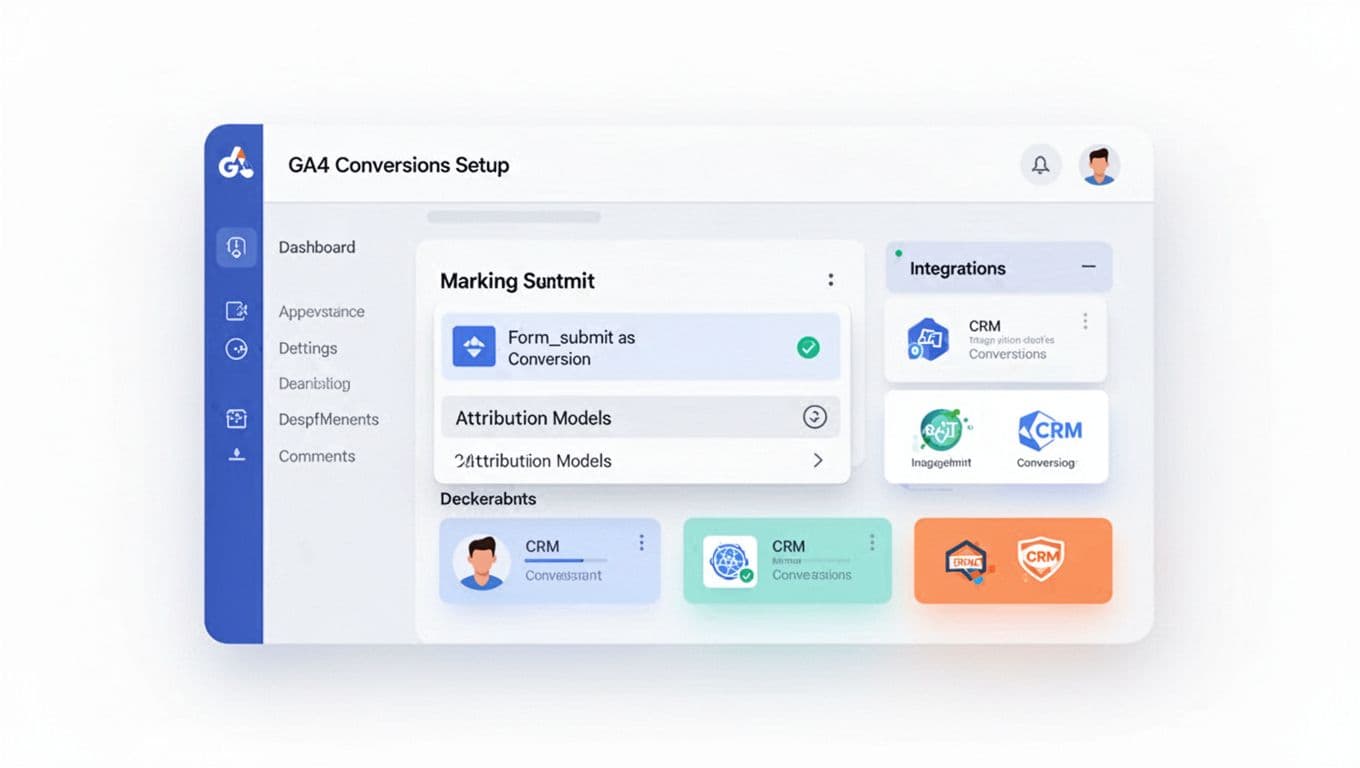
Illustration depicting GA4 conversions setup with form_submit marked as a conversion, attribution models dropdown, and CRM integrations icons on a minimalist dashboard view. Features flat 3D depth, soft gradients in blues, teals, and orange on a white background with crisp lines and ample whitespace.
Marking lead events as conversions and aligning them with attribution and CRM, created with AI.

In GA4 conversion tracking, a “conversion” should mean “someone you can follow up with,” not a random micro-click.

  • Check: Key events set. Default: mark only bottom-of-funnel events (form_submit, generate_lead, call connect if you can). Why it matters: ad optimizations get worse when you feed weak conversions.
  • Check: Conversion values. Default: send value and currency for leads, even if it's a model (example: by lead_type). Why it matters: it lets you compare channels beyond raw volume.
  • Check: CRM key (lead_id). Default: generate a lead_id on submit, store it in CRM, and send it in GA4 events. Why it matters: it's your glue for CRM integration, offline qualification and deduping.
  • Check: UTM parameters into the lead record. Default: store utm_source, utm_medium, utm_campaign, plus click IDs when available. Why it matters: GA4 attribution is useful, but CRM is where revenue lives.

In early 2026, GA4's cross-channel reporting has continued to improve, including more flexible attribution systems per conversion in some accounts. These attribution systems help provide user journey insights and support funnel exploration for analyzing landing page performance. Use that to separate “any lead” from “qualified lead” reporting.

Here's a lightweight QA table you can run before scaling spend:

What to testToolExpected result
Measurement ID in data streamGA4 Admin > Data StreamsCorrect Measurement ID shown
Page_view firing onceGTM PreviewOne GA4 config hit per page load
Form submission trackingGTM Preview + GA4 DebugViewEvent fires only on real success
Parameters capturedGA4 DebugViewform_id and lead_type populate correctly
Cross-domain session continuityGA4 realtime reportsNo self-referrals, same session continues
Consent behaviorBrowser dev tools + GTM PreviewTags respect consent state
CRM lead_id persistenceCRM record reviewSame lead_id appears in GA4 and CRM

Conclusion

If GA4 feels like a leaky bucket, it's usually one of three things: shaky triggers, unclear events, or missing consent logic. Troubleshoot your setup in Google Tag Manager to resolve lead generation discrepancies in Google Analytics 4. A strong conversion tracking strategy is vital for lead generation. Fix those, and your reporting stops being a debate. Start with the foundation, track a small lead-focused event set, then confirm everything with QA before pushing budget. Once the foundation is set, teams should explore predictive metrics for lead scoring and use Looker Studio to create custom reports or export data to BigQuery for deeper analysis. Which conversion in your funnel is most expensive to mis-measure right now?

Digital Marketing For Dentists in 2025: Proven Strategies for Growth and Patient Trust

Digital Marketing For Dentists in 2025: Proven Strategies for Growth and Patient Trust

Digital marketing for dentists in 2025 will look completely different from a few years ago. Dental practices will need to keep up with new technology, smarter tools, and rising patient expectations just to stay ahead. More clinics are entering the market every year, which means standing out is no longer optional.

From AI-powered appointment reminders to patient-focused content and targeted ads, success comes from knowing what works now and what’s ahead. In this post, you’ll find the latest trends and proven strategies to help attract more patients, build trust, and grow your dental practice in 2025.

The New Digital Patient Journey in 2025

The New Digital Patient Journey in 2025

The way people find and choose their dentist is changing faster than ever. Digital marketing for dentists in 2025 means looking at every step from the patient’s first online search to their ongoing care. Patients expect speed, personal attention, and trustworthy answers in seconds. Every digital interaction, review, and chat shapes their decision. Dental practices that truly understand this journey can turn clicks into loyal patients.

Omnichannel Communication and Virtual Consultations

Patients today want choice and convenience in how they interact, just like they expect from retail or financial services. Tele-dentistry isn’t just a buzzword anymore; it’s a reality. Video visits, online scheduling, and secure messaging are routine for many dental clinics. When a parent can consult with a dentist about their child’s toothache from home, that’s real value. These touchpoints build trust even before a patient steps into the office.

Chatbots answer quick questions, handle scheduling, and send automated reminders. They don’t replace your front desk, but they allow your team to focus on higher-level care. Smart practices meet patients where they are: on Facebook Messenger, their website, email, or even text. Bringing together these channels means patients don’t need to repeat their story every time. Their files, conversations, and treatment history are all connected.

What’s the key? Integration. Practices that link their online forms, chatbots, and scheduling tools with their practice management software stand out. Patients can book appointments online, confirm through a quick text, and have a virtual pre-visit—all smoothly. Practices should keep the experience friendly and accessible whether it’s digital or face-to-face.

Stay updated on new tools: AI-powered chat can handle more complex tasks every year. Explore how AI tools for digital marketing are helping clinics automate repetitive work, respond faster, and personalize recommendations.

Personalized Experiences and Trust-Building Online

Today’s digital marketing for dentists isn’t just about being visible online; it’s about making each patient feel seen. People expect relevant information. They also want to know that their provider understands their needs. Personalization shows patients you care before they ever set foot in your office.

Simple touches matter:

  • Using a patient’s name in emails or appointment reminders.
  • Showing tailored content based on age, dental needs, or past visits.
  • Recommending services that match their specific dental history.

Practices can use secure analytics tools to track what matters most to patients— from common questions to feedback from post-visit surveys. This makes every digital touchpoint more meaningful.

Trust is key, especially in healthcare. To build it:

  1. Offer patient reviews and clear credentials on your website. Peer stories carry more weight than ads.
  2. Use secure channels for communication so patients feel safe sharing sensitive information.
  3. Be upfront with pricing, treatment options, and expected outcomes. Short explainer videos or visual guides help patients understand and feel confident.

Every content touchpoint, from blog articles to FAQs, can boost trust and education. For practices ready to push forward, exploring faceless digital marketing strategies can let the quality of your content shine through, even when teams change. This approach can work in harmony with a warm, consistent patient experience, whether the interaction is online or in the chair.

By focusing on convenience, personalization, and transparency, practices not only attract new patients but also inspire trust and loyalty on every step of the digital journey.

Harnessing Next-Generation Technologies: AI, Automation, and Analytics

Harnessing Next-Generation Technologies: AI, Automation, and Analytics

Dentists can’t rely on reputation alone in 2025. The smartest practices use the newest technologies to set themselves apart. By embracing artificial intelligence, marketing automation, and deep data analytics, dental teams now work smarter, not harder. These powerful tools turn everyday marketing into something precise and highly responsive, giving clinics a clear edge. Here’s how digital marketing for dentists is being shaped by these next-generation advances.

AI for Patient Engagement and Communication

From the first contact on your website to ongoing follow-ups, AI-powered solutions are raising the bar for patient care and satisfaction. Chatbots and virtual assistants aren’t just for big brands anymore. Dental offices are using them to:

  • Answer common questions instantly, like hours, insurance accepted, or what to expect for a procedure.
  • Automate appointment booking so patients can schedule a visit anytime, not just during office hours.
  • Send intelligent reminders, reducing last-minute cancellations by keeping schedules full and patients informed.
  • Follow up after visits with personalized care tips, surveys, or offers.

AI-based chatbots can handle routine requests, freeing up staff time for quality in-person care. Virtual assistants integrated with patient management tools keep communication flowing smoothly. Imagine a patient asking about whitening options on your site at 10 pm and getting a clear, friendly answer—no waiting needed.

Forward-thinking clinics even use AI-driven content creation tools to generate social posts, blog articles, or custom email newsletters in minutes. This tech gives smaller practices a way to compete with larger groups, providing resourceful patient engagement that feels personal, even when it’s automated. To see how similar tools are driving change across industries, check out the AI Revolution in E-commerce and Digital Marketing 2024.

Data-Driven Decision Making in Dental Marketing

Guesswork has no place in modern dental marketing. Advanced analytics turn every patient interaction into a valuable insight. Instead of relying on gut feeling, top-performing dentists use data to:

  • Segment their patient base for highly targeted campaigns, like reaching busy parents with pediatric tips or promoting cosmetic services to adults.
  • Predict which services will be in demand based on season, trends, or historical booking patterns.
  • Monitor campaign performance in real time, allowing fast tweaks to Google or Facebook ads that aren’t delivering results.
  • Track patient behaviors across channels, so content and offers can be refined for each unique audience.

Predictive analytics streamline workflow by identifying patients most likely to book follow-ups or refer friends. Clinics can fine-tune recall campaigns or set automated marketing triggers, like an email reminder six months after a cleaning. Performance dashboards make ROI clear, making every dollar count.

With data at the center of every campaign, marketing becomes less of a shot in the dark and more of a calculated, dependable part of growing a practice. For dentists who want results that last, patience and steady improvements are key—learn more about the SEO effectiveness timeline to put your data to work smarter.

AI, automation, and analytics are more than buzzwords. They’re reshaping digital marketing for dentists into something more responsive, data-backed, and genuinely patient-focused. The practices that act now will be tomorrow’s leaders.

Modern Local SEO and Voice Search Optimization

Modern Local SEO and Voice Search Optimization

Dental marketing isn’t just about being found, it’s about being found first, and being found right where your patients need you. As digital marketing for dentists keeps evolving, local SEO and voice search give clinics the edge to stay in front of nearby patients who are ready to book. Practices that fine-tune their online presence now will reach more local families, show up in smart-home searches, and build stronger reputations—all while saving money on ads.

Optimizing for Local Search Visibility: Actionable Tips for Dentists

Standing out in local search results is more competitive than ever. Patients turn to Google Maps, review sites, and quick mobile searches to choose their next dentist. Here’s how to make sure your practice ranks high and stands out on every screen:

  • Claim and Optimize Your Google Business Profile: Fill out every section. Add up-to-date hours, crisp photos of your office, and service details. Keep your description clear and patient-focused.
  • Use Hyper-Local Keywords: Include not just your city but neighborhood names, nearby landmarks, and suburbs. Patients often search for a “dentist near [local school or park].” Find out how hyper-local keywords impact rankings in this SEO Tips for Small Business Owners guide.
  • Keep NAP Information Consistent: Your Name, Address, and Phone Number must be identical across your website, Google, dental directories, and social media. Even minor mismatches hurt your local SEO.
  • Encourage Reviews and Manage Reputation: Reviews influence both trust and rankings. Ask happy patients for reviews, respond to each one with a personal touch, and address negative feedback quickly and politely.
  • Local Listings Beyond Google: Claim and update your practice on healthcare directories and voice search platforms like Apple Maps, Yelp, and Bing Places. This increases visibility and helps you reach patients using varied devices.

Staying proactive with reputation management doesn’t just boost rankings, it brings in referrals and repeat visits. Dentists who invest in reviews and clear listings build a “digital word-of-mouth” that pays off for years.

Voice Search and Conversational Content Strategies

Voice assistants are now a staple in homes and pockets. Patients search for “best dentist near me,” “emergency dental office open now,” or “pediatric dentist that takes my insurance” while driving or multitasking. Optimizing for these voice-driven queries is essential for digital marketing for dentists in 2025.

Here’s how practices can future-proof their content and reach more voice-search users:

  • Write for Natural Language: Use simple, conversational phrases in your website copy, FAQs, and service pages. Answer common patient questions in a clear and friendly tone.
  • Target Long-Tail and Question-Based Keywords: Instead of focusing on “dentist,” include phrases like “who is the top-rated dentist for kids in [city]” or “how much does a dental cleaning cost near me?” Voice queries are longer and more specific.
  • Update Listings for Conversational Searches: Make sure hours, directions, and services are always current so voice assistants give accurate answers instantly.
  • Prioritize Mobile Readiness: Fast, mobile-friendly websites do best in voice search, since most voice queries happen on phones or smart speakers. Test your site speed and make sure buttons and forms are easy to use on any device. You can review the importance of adapting your site with a step-by-step Google SEO Ranking Plan.
  • Use Schema Markup: Add structured data to your website so search engines can easily find your hours, services, and reviews. This helps your practice answer voice queries directly and can earn you a “featured snippet.”

Leading clinics also adapt their blog content based on local conversational searches. Answering real patient questions in blog posts or quick tip videos helps you connect and rank higher for featured voice results.

Combining hyper-local strategies with mobile-ready, conversational content positions dental practices right where today’s patients are searching and speaking—whether it’s through a smart speaker or a quick chat on their phone.

Video, Social Media, and Reputation Management for Dentists

Video, Social Media, and Reputation Management for Dentists

Video marketing and social media give dental practices powerful tools to win trust and patient attention in 2025. Short-form video, live streaming, and reputation management aren't just for influencers and big brands—smart dentists use these platforms to connect with local families in ways that feel honest and real. Learning how to show your expertise, celebrate your team, and highlight real patient stories on platforms like Instagram and TikTok helps build the credibility and word-of-mouth every growing practice needs.

Short-Form Video and Real-Time Social Content

Short-form video content is now the fastest way to get patients to notice and remember your practice. With people scrolling through Instagram Reels, TikTok clips, and YouTube Shorts, dental offices have a unique chance to show their approach with a human touch. By giving helpful advice, showing behind-the-scenes moments, and making everyday procedures less scary, dentists become more relatable and trustworthy.

Best practices for engaging dental videos:

  • Keep videos between 15 and 60 seconds for maximum impact.
  • Share practical tips (like brushing technique or what to expect during a cleaning) using real staff instead of stock footage.
  • Feature quick before-and-after tests or testimonials, with clear permissions.
  • Use captions or on-screen text—most people watch with the sound off.
  • Answer questions you get often, making content feel personal.
  • Share office milestones, celebrations, or team highlights to show the friendly side of your practice.

Interactive experiences like polls and Q&A in Instagram Stories boost engagement. Tools like augmented reality (AR) filters let users try a brighter smile, turning curiosity into appointments. Live streaming a “meet the dentist” session or virtual tours lets people ask questions in real time. Patients see your team’s personalities and feel more comfortable reaching out.

Trends to watch:

  • More AR effects that let patients see what a new smile could look like.
  • Real-time feedback through live comment sections and polls.
  • Scheduling regular live Q&As on social platforms to answer oral health questions.

Short-form video isn’t about acting like a celebrity. It’s simply sharing authentic moments and useful info, meeting people where they already spend time online. Done well, it can set your practice apart without expensive gear or complicated editing.

Managing Online Reviews and Building a Reputation

Nothing shapes your reputation online faster than reviews. In 2025, nearly every new patient checks Google Reviews, Facebook ratings, and even Instagram comment threads before booking. A trustworthy reputation means more appointments and referrals—it’s the backbone of digital marketing for dentists.

How to build and protect your clinic’s online reputation:

  • Make it easy for patients to review you. Send a personalized text or email after a visit with a direct link to your review page.
  • Respond to all reviews. Thank happy patients by name and be specific. For complaints, apologize sincerely and address concerns privately if needed. Never ignore negative feedback.
  • Show appreciation for honest feedback. Acknowledging a patient’s experience, even if it’s critical, shows you care and are working to improve.
  • Spot patterns in reviews. Use patient input to tweak office policies or services.
  • Share positive reviews on your website or social channels (with permission). Turn great testimonials into posts or Stories.

Strong reputation management isn’t just about fighting negative reviews; it’s about making every patient feel their voice matters. When doctors and staff take time to reply thoughtfully, it builds real trust.

Some practices go further by highlighting award badges or “top dentist” nominations in their profiles and posts. This boosts credibility. Encouraging patients to mention specific treatments or staff members in reviews also helps new patients understand what makes your dental office different.

Reviews are a public conversation. Answer honestly, correct mistakes quickly, and always keep patient privacy top of mind. A friendly tone, clear actions, and fast responses will help establish your practice as the most trusted option in your city.

By blending eye-catching video, interactive social content, and high-quality patient reviews, dental offices can create a digital presence that attracts new patients and keeps current ones coming back. Prioritize authenticity, education, and active listening—patients will notice.

Integrating Technology, Staffing, and Patient Experience

Integrating Technology, Staffing, and Patient Experience


Balancing digital tools, strong teams, and every patient’s experience is a must for dentists in 2025. Today, smart practices connect their marketing, operations, and staff branding instead of treating each as a separate piece. When technology syncs with daily workflow and staff represent the practice online, both new and returning patients feel the difference. Let’s break down how top clinics are doing this and why it matters for growth.

Operational Efficiency and Marketing Alignment

Dental marketing works best when it isn’t an add-on, but a built-in part of daily operations. By using a tech stack that includes CRM systems, online booking, and call tracking tools, offices can finally connect their marketing with how the front desk and clinical teams work.

When marketing flows directly into day-to-day systems:

  • Online booking data syncs straight to your practice software. This saves time versus manual entry, reduces errors, and makes every patient’s journey smoother.
  • Automatic call tracking shows which ads brought in calls so you know what’s working and where to invest next.
  • CRM tools help map the full patient relationship, from their first click to their tenth cleaning, so you respond to patient needs faster and more naturally.

These tools can trigger tailored messages, appointment reminders, and follow-ups that boost both retention and satisfaction. Say a parent books online after seeing a Facebook ad: their data is already in your practice management system, and an automated, friendly reminder lands in their inbox. If they call with a question later, your team already has the context in front of them. This level of connection saves time for staff, reduces confusion, and makes the patient feel truly known.

Bringing it all together does more than just make things run smoother. It means marketing leads to booked appointments, follow-ups happen on schedule, and nobody slips through the cracks. Over time, those extra touches show up as higher patient retention and more glowing online reviews. Plus, clear data helps clinics plan staffing, scale campaigns, and fill untapped appointment slots so no time goes wasted.

Building an Employer Brand and Community Presence

A dental practice isn’t just the dentist. Every person on the team helps shape how patients feel. In 2025, showing your team’s personality and workplace culture is more than a perk; it’s a top recruitment and retention tool.

Your staff profiles, team spotlights, and stories build trust with both potential patients and future hires. Share what makes your group unique—maybe it’s the way you celebrate birthdays together, volunteer as a staff, or support each other at work. Personal touches signal to job seekers and current team members that your office is a great place to work.

Create community presence by:

  • Highlighting staff stories on social media, which helps humanize the brand and connect with local families.
  • Showing behind-the-scenes glimpses of training, continuing education, or fun team events.
  • Supporting local charities or community events, then sharing those efforts in stories, photos, and videos.
  • Encouraging staff to speak about their passion for dentistry or patient care—show the heart behind the clinic.

A strong employer brand attracts staff who share your values and are more likely to stay for the long term. Happy teams shape a friendly, reliable patient experience, fueling word-of-mouth and online reputation.

For dental practices, aligning technology, staff branding, and hands-on community involvement unlocks steadier growth and a positive cycle: Stronger teams improve patient experience, better patient experience draws more patients, and more patients give teams more pride and purpose at work.

Conclusion

Dentists who want to grow in 2025 need to embrace digital transformation, not as an option but as a must. Using smart technology, data-driven marketing, and genuine online communication builds trust with patients and makes daily operations smoother. AI, automation, and analytics take the guesswork out while freeing up time for better patient care.

Building your reputation, optimizing for local and voice search, and connecting through video and social platforms are now essentials. Practices willing to adapt, learn, and try new digital strategies will stand out — and stay top of mind for patients looking for quality care.

Now is the time to move forward, invest in tech that supports your team, and keep focusing on patient experience. Change in digital marketing for dentists happens fast, but staying proactive keeps your practice ahead. Thank you for reading — if you have thoughts or want to share your own digital marketing wins, join the conversation below.

Top 5 Digital Marketing Strategies for App Businesses [2025 Updated]

Top 5 Digital Marketing Strategies for App Businesses [2025 Updated]

Breaking through as an app business means tackling fierce competition and an endless stream of new products. The right digital marketing strategies for app businesses aren't just an advantage—they're a must-have for driving installs and building real, lasting engagement. Every app marketer faces tough challenges, from rising ad costs to changing platform rules and users who quickly uninstall what they don't love.

By focusing on proven strategies, you can boost your visibility and outpace your rivals. With the right game plan, it's possible to accelerate user growth, keep your audience engaged, and set your business up for long-term success. If you need a place to brush up on current tactics, this Digital Marketing Guide offers a solid starting point before you dive into the top strategies ahead.

Leveraging Content Marketing to Drive App Discovery

Leveraging Content Marketing to Drive App Discovery

Content marketing builds trust, spreads your message, and drives user interest—three things every app business needs for growth. No matter your app’s category, sharing practical, high-quality content will help your product stand out and create loyal users. With the right digital marketing strategies for app businesses, value-driven content can pull users in while boosting your search visibility and brand credibility. Let’s break down two effective tactics that work for today’s competitive app market.

Blogging and Educational Resources for App Users

A useful blog filled with how-tos, expert tips, and industry trends attracts people searching for answers or guidance. These readers become your early adopters. Sharing consistent, educational content on topics your users care about isn’t just about teaching—it’s about building authority. When you publish actionable tutorials, onboarding guides, or simple troubleshooting posts, you’re doing more than just marketing; you’re solving real problems for your users.

Here’s why this kind of content works so well:

  • Attracts Targeted Traffic: Educational blog posts often rank for keywords your target users are searching, bringing the right audience to your site.
  • Establishes Credibility: Offering clear, trustworthy advice positions your app brand as an expert, making it more likely that new users will try your product.
  • Enhances Retention: People return to brands that consistently offer valuable information and update guides as features roll out.
  • Supports All Funnel Stages: Blog articles not only attract new visitors but also help existing users get more from your app, reducing churn.

For even greater value, develop learning centers or resource hubs filled with helpful articles, videos, and best practices. These assets can keep users engaged, answer frequent questions, and make sure your community is always learning something new.

Want a solid starting point? Check out the Digital Marketing Guide for fresh ideas on what types of content resonate with app audiences.

Using Video Content for Demonstrations and Engagement

Videos are more than just a trend—they’re one of the fastest ways to show your app’s unique value. Short demos, feature walkthroughs, and user testimonials help people see your app in action within seconds. This makes it easier for users to understand features, see real benefits, and decide to download.

The benefits of regularly sharing video content include:

  • Visual Learning: Most people learn by seeing. Showing how your app works removes friction and lessens the learning curve.
  • Higher Engagement: Videos typically capture more attention than text or images alone, especially on platforms like YouTube, Instagram, and TikTok.
  • Stronger Trust: Testimonials and real-use highlights give social proof, which encourages hesitant users to give your app a try.
  • Shareability: Compelling, quick videos are more likely to be shared, increasing organic reach and potential downloads.

To maximize impact, focus on content such as:

  • Step-by-step onboarding tutorials
  • Quick tips for advanced features
  • Customer success stories and user interviews
  • Updates about new functionalities or releases

Mixing visuals with a clear message makes your marketing more memorable and persuasive, especially for app-first businesses. Want to explore how advertising can support your video reach? Take a look at these Google Ads strategies for actionable ideas that fit app promotion.

By investing in both blogging and video, your app business can reach users where they are—and give them good reasons to install and stick with your product.

Maximizing Paid Social Media Advertising

Maximizing Paid Social Media Advertising

Paid social media has become one of the biggest opportunities for app businesses. With platforms like Facebook, Instagram, TikTok, and Twitter offering laser-focused audience targeting, it’s no surprise that many app marketers rely on these channels for scalable installs. The secret is knowing how to choose the right campaign and how to get the most value for every dollar you spend. Let’s break down how different paid social campaigns work and what you can do to push your ROAS higher.

Comparing Paid Social Campaign Types

Deciding between running standard paid ads and boosting organic posts isn’t just a simple choice—it’s about fit and intent. Standard ads and boosted posts look similar in feeds, but their setup and purpose set them apart.

Standard Paid Social Ads: These are full campaign ads built in platforms’ ad managers (like Facebook Ads Manager or TikTok Ads). You get deep targeting features: specific demographics, interests, custom audiences, and even lookalike audiences. Standard ads also offer more creative freedom with formats, placements, and performance tracking options.

Boosted Organic Posts: Boosting means putting ad spend behind posts you’ve already published. This is a quick way to amplify reach, but you get fewer targeting and optimization controls. Boosted posts work best when you have a post that’s already getting strong engagement. A boosted post can ride that success further, widening the audience and increasing brand or app awareness fast.

When to use each?

  • Run standard ads if your focus is on app installs, conversions, or advanced audience targeting. They’re made for campaigns where measurement and control really matter.
  • Use boosted posts if you want to capture more eyes on content that’s already sparking interest. It’s ideal for brand and feature awareness, or spotlighting big events and updates.

Choosing the right option depends on your campaign’s goal. To dig deeper into which strategy fits your app business, visit the Facebook vs Instagram Ads Comparison for expert insights and real-world examples.

Best Practices for Conversion Optimization

Once you pick the best campaign type, it’s time to optimize for conversions. With budgets on the line, every step should move you closer to more installs and in-app actions without wasted spend.

Actionable tactics for boosting ROI:

  1. Creative Testing Experiment with multiple ad creatives. Start with different visuals and copy for each target group. Use A/B testing to find which video demos, screenshots, or headlines pull the highest engagement. Small tweaks can have a huge payout.
  2. Audience Segmentation Don’t target everyone. Instead, create audience segments based on behaviors, interests, and past app activity. For example, new users might see install-focused ads, while those who have installed but not purchased could get upsell offers. Platforms like TikTok and Instagram make this easy, letting you tap into intent signals that drive results.
  3. In-App Event Tracking Set up events in your app to track actions after the install—like sign-ups, purchases, or level completions. Optimizing for these events in your paid campaigns means you’re not just chasing installs but aiming for high-value users. This feedback also helps fine-tune targeting, as you shift budget toward what’s working.

Key steps to maximize your paid social conversion optimization:

  • Rotate creatives often to fight ad fatigue.
  • Use retargeting to reach users who have interacted but haven’t converted. For more depth, learn about Remarketing ads on Facebook and Instagram to bring those users back into your funnel.
  • Make use of platform automation. Smart bidding and automated placements can uncover new audiences you haven’t reached.

These digital marketing strategies for app businesses turn paid social into a repeatable growth channel. With strong creative, sharp targeting, and advanced tracking, your app ad budget goes further—and generates installs that stick.

Implementing Influencer Partnerships for App Growth

Implementing Influencer Partnerships for App Growth

When you want real traction for your app, influencer partnerships can often outshine traditional ads. Authority and trust aren’t built overnight, but influencers remove roadblocks by connecting your brand with people who already follow and trust them. When the right influencers vouch for your app, users pay attention and are more likely to give you a try. This makes influencer marketing a smart play in any list of effective digital marketing strategies for app businesses.

Let’s get into the practical steps for success—picking the influencers who fit your niche and proving the real value of those collaborations.

Selecting the Right Influencers for Your App Niche

Choosing the right influencer can make or break your campaign. It isn’t about picking whoever has the most followers; it’s about finding voices that speak directly to your audience and can spark engagement. Look for those who align with your app’s core values and purpose.

Tips for identifying influencers who drive real app growth:

  • Relevance Over Reach: Focus on influencers whose content centers on your app’s category (health, finance, gaming, productivity, etc.). Their audience should mirror your target users.
  • Engagement Rates: Skip vanity metrics like huge follower counts. Instead, check the likes, comments, and shares per post. A smaller but deeply engaged community helps you build real trust.
  • Authenticity: Users spot paid promos instantly. Pick influencers who share honest reviews, behind-the-scenes content, and show a personal connection to what they promote.
  • Previous Partnerships: Scan an influencer’s past collaborations. If they drive action for similar apps or products, they’re more likely to get your audience moving too.
  • Communication and Expectations: Be clear about deliverables, content formats, and timelines from the start. This makes the partnership smoother and ensures both sides get what they want.

If you want to dive deeper into maximizing your social audiences once you’ve launched an influencer collaboration, check out how to Increase Facebook Followers with proven community strategies.

Monitoring and Measuring Influencer ROI

No influencer campaign is worth repeating unless you can track and prove real results. The best digital marketing strategies for app businesses always include strong feedback loops. Here’s how to measure what matters:

  • Download Tracking: Use platform analytics or third-party tools to monitor the surge in downloads during and after an influencer’s content goes live.
  • Referral Codes: Give each influencer a unique code for their audience to use at sign-up or installation. This makes it easy to trace every app install or purchase back to its source.
  • User Engagement Metrics: Check in-app behavior from referred users—how many complete registration, make purchases, or return after their first session.
  • Cost per Acquisition (CPA): Compare what you spend with each influencer to the value of users acquired. Are they bringing in loyal customers or just one-time installs?
  • Content Performance: Study which types of influencer content (stories, YouTube videos, posts) brought the most traffic and installs. Use this insight to shape future campaigns.

Some top agencies specialize in tracking these performance indicators, ensuring you see results from every partnership. If you want to understand how a professional agency aligns influencer work with your big-picture strategy, the article about a Digital Marketing Agency Kolkata breaks down how expert teams optimize for both reach and ROI.

By integrating influencer partnerships using these hands-on strategies, you can fast-track your app’s reputation and drive user growth with the trust that only real, niche voices can build.

Utilizing Messaging Apps and Direct Communication Channels

Utilizing Messaging Apps and Direct Communication Channels

Direct communication channels such as WhatsApp, Facebook Messenger, push notifications, and email are essential for guiding users throughout their app journey. By reaching people where they already spend their time, you keep your brand top-of-mind and build relationships that drive repeat engagement. These platforms are not only easy and familiar for users, they are highly effective for sending timely information, updates, and incentives. When you use messaging in a strategic way, it becomes one of the most powerful digital marketing strategies for app businesses.

Personalizing Onboarding and User Retention

Personalized messaging makes a real difference during app onboarding and throughout the user lifecycle. Generic welcomes and one-size-fits-all reminders often get ignored. By tailoring your messages to each user's behavior and preferences, you improve activation rates, cut churn, and boost lifetime value. For example, a quick WhatsApp or Messenger greeting after sign-up creates a warm first impression, while step-by-step guides nudged via push notifications help users see value right away.

What does effective personalization look like in action?

  • Custom onboarding sequences that adapt based on user goals, device, or app usage.
  • Behavior-driven check-ins—if someone hasn't completed setup, send a helpful reminder.
  • Birthday or milestone messages delivered directly through messaging apps to show you care.

This one-on-one touch encourages new users to complete key steps, which translates to higher retention. For ongoing loyalty, segment your audience and deliver messages that matter most to each group, whether it's an exclusive offer or a quick tip for a feature they've not tried. Using push notifications and targeted in-app messages can help avoid the dreaded uninstall, especially when they're relevant and timely.

To go even further, explore the benefits and options of WhatsApp marketing tools that support personalized outreach, automation, and stronger engagement at scale.

Automation and Analytics for Messaging Platforms

Handling messaging at scale is tough without the right tools. Automation now handles much of the heavy lifting so you can stay consistent and responsive without burning out. You can set up welcome sequences that greet every new user, schedule regular updates or tips, and trigger recovery messages if a user seems inactive—all with minimal manual work.

Key types of automation used by app marketers:

  • Drip campaigns: Schedule a series of onboarding tips sent via Messenger or email.
  • Behavior-based triggers: Send offers when a user completes a key task, or reminders if they stall during signup.
  • Re-engagement flows: Push notifications or WhatsApp messages reach out when users go inactive.

Tracking your results is just as important as delivering the message. Use analytics from each platform to monitor open rates, click-through rates, and even the number of users who return to the app after a direct message. This data helps you see which messages drive real results and where you can improve.

Metrics to watch:

  • Open rate: Shows how many users saw your message.
  • Click-through rate: Reveals how many took a desired action.
  • Session reactivation: Measures how many users came back to your app after your outreach.

If you're looking to boost efficiency, adopting smart automation tools can help streamline complex workflows across multiple apps and platforms. Curious about easy ways to connect your favorite marketing tools and automate your messaging? Learn more about What is n8n?, a platform that can bring all your direct channels together.

Effective, thoughtful messaging—supported by data and automation—lets you reach users at the right moment with the right message, making it a standout among digital marketing strategies for app businesses.

Safeguarding Digital Security in App Marketing Campaigns

Safeguarding Digital Security in App Marketing Campaigns

App businesses thrive by connecting with users, but protecting user privacy and digital security must always come first. With more marketing tools and outside partners involved, every point of contact is a potential risk. A single misstep can lead to lost trust, damaged reputation, or even legal trouble. Making digital security a non-negotiable part of your digital marketing strategies for app businesses will keep you a step ahead and reassure users their data is safe.

Protecting User Data and Compliance

User privacy isn't just a checklist. It's an ongoing promise you make to your users every day. GDPR, CCPA, and other privacy rules set high standards and fines for any slip-ups. If you're running campaigns on popular ad platforms or analytics tools, follow these best practices:

  • Know Your Regulations: Keep up with GDPR (Europe), CCPA (California), and any new privacy rules that affect where your app is available. Even if your company isn't based in these regions, their rules may still apply if your users are.
  • Get Explicit Consent: Always ask before collecting or tracking personal data. Use clear, simple language in your prompts and privacy policies.
  • Limit Data Collection: Only gather what's truly needed for app marketing. The less you store, the less you risk.
  • Secure Storage: Protect every bit of user data with strong encryption and access controls. Don’t store sensitive information in plain text or unprotected databases.
  • Review Third-Party Tools: Check the privacy policies and practices of every marketing tool, analytics plugin, or ad platform you use. Disable or adjust settings that over-collect user data.
  • Be Transparent: Tell users how you collect, use, and share their data. Make it easy for them to manage or delete their information.
  • Update Regularly: Stay on top of changes in privacy regulations. Review your data policies and tools at least twice a year.

When choosing analytics or conversion tracking solutions, make sure they’re built for privacy compliance. For more on this topic, Website Conversion Tracking offers practical advice on handling user data along with changing browser and regulation requirements.

Addressing security is just as important as privacy. Multi-factor authentication, strong password policies, and regular security audits help close the gaps before bad actors find them. If you need extra help with online safety basics and advanced protocols, check these Digital security tips for step-by-step best practices.

Managing Agency and External Partner Access

Outsourcing can drive growth, but it introduces major risks if you don’t manage agency or third-party access carefully. Every login and API key is another door that could be breached or misused.

To keep user data and marketing assets secure, implement a few simple controls:

  • Assign Access by Role: Give partners the lowest possible level of access. Only allow what each person needs for their work.
  • Use Separate Accounts: Never share passwords or generic logins. Separate user accounts make accountability and tracking easy.
  • Set Expiry Dates: Temporary access? Set an end date. Remove old accounts or permissions as soon as work is complete.
  • Monitor Activity: Keep an eye on account and tool activity using logs or built-in dashboards. Watch for signs of unauthorized logins or suspicious actions.
  • Require Secure Authentication: Multi-factor authentication should be standard for every user, agency, or vendor. This one step can block many attacks.
  • Train Your Partners: Give a short onboarding about your app’s security standards. Many agency breaches result from simple mistakes.

Trust is key when you bring outside experts into your workflow, but verification matters even more. Review agency contracts to spell out security responsibilities, and check that vendors have their own privacy protocols. For more guidance on securing these relationships, the Digital security tips resource breaks down both basic and advanced safeguards, tailored to digital businesses like yours.

Strong data privacy and security build a reputation for care. Your customers will notice—and reward—brands that put their safety first. Protecting user data and wisely managing third-party access should be non-negotiable parts of every app business’s long-term digital marketing strategies.

Conclusion

Strong digital marketing strategies for app businesses work best when you bring together multiple approaches. Content marketing, paid social campaigns, influencer partnerships, direct messaging, and a focus on digital security all play unique roles in building awareness, driving installs, and keeping users engaged. No single tactic stands alone. A smart mix creates momentum, helps you adapt to new trends, and meets changing user expectations.

Staying flexible is just as important as your initial plan. The app market changes fast. Regularly review your tactics and data to spot what’s working, and don’t hesitate to refine your approach as new channels or tools become available.

Continue exploring ways to extend your reach or deepen user relationships. For those interested in scaling messaging efforts, it may help to learn what expert WhatsApp Marketing Agencies in Kolkata are doing to boost engagement and retention.

Thank you for reading. If you’ve found these strategies helpful or have tips of your own, share your experiences in the comments. Together, we can keep raising the bar for app marketing and growth.

What is n8n? Unlock Automation for Digital Marketing Success in 2025

What is n8n? Unlock Automation for Digital Marketing Success in 2025

If you want to simplify and speed up how you run digital marketing, automation is a must. That's where n8n comes in. What is n8n? It's a flexible, user-friendly automation tool that lets you connect your favorite marketing apps, so your tasks run in the background, saving you work and time.

For digital marketers, n8n means less manual effort and fewer mistakes. You get more consistent results and can focus on strategy, not routine jobs. With its no-code setup and endless integration options, n8n can help you automate lead collection, email sequences and analytics—all tailored for your specific needs. Whether you're running a small campaign or managing multiple client accounts, n8n gives you the power to work smarter, not harder.

What is n8n? Powerful Automation for Modern Teams

What is n8n? Powerful Automation for Modern Teams

It's time to rethink how your team handles repeated marketing tasks. Whether you're a solo marketer or part of a growing agency, a dependable automation system can make the difference between feeling stuck or staying ahead. What is n8n? n8n stands out as a robust automation platform designed for people who want more than just basic integrations, but without heavy coding headaches.

Open-Source at Its Core

One of the things that makes n8n unique is its open-source foundation. This isn't some locked-down service with limited options. Anyone can access, review, and even change the code. Open-source means you aren't tied to the track of a single vendor, and you have the freedom to run n8n on your own servers if you want.

Developers around the world contribute to n8n, so updates come often. You also get security and flexibility since updates can fix issues quickly or add useful features. This community-driven approach gives you more control over your marketing automations, compared to closed, proprietary tools.

Built for Scale

Scalability often trips up other automation platforms. They might start out fine, but as your team or workload grows, bottlenecks show up. n8n is engineered to scale. Whether you need a handful of workflows for a boutique agency or complex automations with thousands of steps, n8n can handle it.

Speed isn't an issue—workflows run in parallel, and you manage resource use from a simple dashboard. If you're worried about growing pains as you add more apps or increase your audience, rest easy. n8n was built knowing your needs will change as your business expands.

Customization Without Limits

Some platforms restrict you to what’s on their menu—but n8n opens a world of possibilities. It’s friendlier than most traditional coding, but doesn’t box you in with drag-and-drop only. You can combine no-code tools with the ability to use custom functions, so there’s almost nothing you can’t automate.

Marketers can connect popular apps, trigger unique sequences, and tweak logic to fit their strategies—all without lengthy development times. If you do hit a wall, bringing in a little code unlocks even more options. This lets you go beyond just linking apps, making n8n a true extension of your workflow.

How n8n Beats Standard No-Code and Low-Code Platforms

Plenty of no-code and low-code platforms exist, but many start to crack once you need custom logic or special integrations. n8n’s hybrid approach means you aren’t forced to choose between simple setup and power.

  • No-code for accessibility: Building workflows feels like stacking blocks, so entry-level users can automate boring tasks and get results from day one.
  • Add code only as needed: If your use case gets tricky, switch to JavaScript for detailed custom steps without rebuilding everything.
  • Limitless integrations: n8n offers a mountain of app integrations out of the box. More are added by its thriving user community, giving you access to the newest tools fast.

If you've ever battled with basic automation tools running out of steam or flexibility, n8n’s open model could be exactly what your team has been searching for.

For tips on optimizing your digital marketing automation strategy, look for detailed guides and next steps throughout the site. The modular foundation n8n provides means you can start small, test, and scale—without headaches or high costs.

Core Features of n8n for Digital Marketing Automation

Core Features of n8n for Digital Marketing Automation

Understanding the core features of n8n can help marketers unlock automation superpowers without dealing with the headaches of complex code or rigid platforms. If you’re looking for freedom, flexibility, and speed, n8n sits firmly in your toolbelt. Its features speak directly to the challenges marketers face: too many manual processes, siloed data, and the pressure to get more done in less time. Let’s break down what makes n8n such a standout for digital marketing automation.

Workflow Automation Made Simple

At the heart of n8n is workflow automation. You build sequences just like assembling building blocks. Each step (or “node”) can represent an action, like uploading leads from a form into your CRM, sending a deal alert to Slack, or refreshing your analytics dashboard each morning. No more repetitive clicking or copying data between apps.

Key workflow strengths in n8n:

  • Drag-and-drop builder: No need for programming knowledge. Arrange tasks visually for better clarity.
  • Conditional logic: Add decision paths, so your automation can respond dynamically, like customizing follow-up emails based on lead score.
  • Scheduled triggers: Automate tasks by time or events, making it easy to run campaigns, follow-ups, and reports on autopilot.

This approach gives marketers the muscle to automate not just simple, repetitive actions, but complex chains that used to require hefty development resources.

Powerful Integrations with Popular Marketing Tools

Integrations are a huge selling point. If your tools don’t communicate, you end up with messy workflows or missed opportunities. n8n connects with hundreds of marketing apps, CRMs, social media platforms, ad networks, and more—letting your stack work as one.

  • Pre-built connectors: With a massive library of supported apps (like HubSpot, Mailchimp, Facebook Ads, Slack, Google Sheets), you hardly ever start from scratch.
  • API flexibility: For apps not directly supported, n8n can connect through custom API calls. That means nearly any online service, new or old, can plug in.
  • Multi-app chains: Pull leads from Facebook Ads, enrich data via another tool, then send a personalized message… all in a single flow.

Want to see what’s trending in marketing integrations? Check out these top AI tools for digital marketers to boost your stack’s power and ideas for automating across diverse platforms.

Modular Design Encourages Experimentation

n8n’s modular setup lets you build workflows that fit your exact marketing needs. Each module (node) acts independently, so you can mix, match, and experiment as your strategy evolves. This design removes risk—if you need to update how you handle leads, swap a few nodes instead of rebuilding the entire system.

Benefits include:

  • Reusable templates: Save parts of workflows and repurpose them across projects or teams.
  • Rapid prototyping: Test new campaign ideas or trigger sequences without weeks of development.
  • Scalable logic: Start with a few actions, then expand with additional steps or triggers.

Robust Data Processing and Transformation

For marketing, gathering data is only half the battle. Making sense of it, formatting it, and routing it to the right destination is where you unlock value. n8n excels at data processing.

How it helps marketers:

  • Data mapping: Automatically format and enrich incoming information, like turning raw leads into segmented profiles.
  • Filtering: Exclude unqualified leads or noisy data before it hits your CRM, improving campaign quality.
  • Built-in functions: Clean up emails, split names, or aggregate campaign metrics using built-in logic—no external scripts needed.

Interested in real-world data use? Our AI Revolution in Ecommerce Marketing deep dive explores how smart automation can turn data into actionable growth.

Extensibility to Meet Future Marketing Demands

Marketers know that tools and workflows change fast. n8n is built to flex with you. If a new app comes out or your process shifts, you can extend n8n with custom code or by contributing new integrations. This means your investment pays off over time.

  • Custom scripts: For advanced users, add JavaScript steps when you need something n8n doesn’t offer out of the box.
  • Community plugins: Tap into features built by others or create and share your own.
  • Self-hosting options: Run n8n on your own infrastructure, giving you control over privacy, scaling, and updates.

Staying secure while automating is critical. For online security pointers throughout your automations, see these helpful digital security tips for marketers.

n8n’s combination of automation power, integrations, modularity, data handling, and adaptability makes it a key player for digital marketers who want to stay focused on growth and results.

Popular Use Cases: How Marketers Harness n8n

n8n stands out not just for its versatility, but for how it simplifies high-impact marketing tasks. By giving you the tools to automate, trigger, and connect almost any digital process, it turns once-tedious routines into streamlined workflows. Below are some of the most common ways digital marketers get real results with n8n.

Automated Lead Capture and Enrichment

Automated Lead Capture and Enrichment

Collecting leads is only half the job—what matters is getting those leads into your system as complete and useful profiles. n8n automates this process from end to end:

  • Automatically grabs data from web forms, landing pages or ad networks.
  • Pushes new contacts directly into your CRM with little to no delay.
  • Enriches each profile by pulling extra details from sources like LinkedIn or Clearbit.

You don’t need to worry about manually exporting CSV files ever again. Automatic lead scoring is possible too, with workflows that qualify or assign prospects based on set criteria. This means your sales team always works with the best leads, ready to convert.

Automation here cuts out wasted hours and ensures no lead gets lost. Imagine n8n as your loyal assistant, always there to capture, enrich, and route every contact to the right place—flawlessly, every time.

Email Marketing & Campaign Triggers

Email Marketing & Campaign Triggers

Running successful campaigns requires consistent timing and personalization. n8n takes over the repetitive side of email marketing, so you can stay focused on creating messages that resonate.

  • Triggers campaigns when a new lead is added or a user takes a specific action.
  • Segments audiences automatically using dynamic workflows—no more clunky exports or list juggling.
  • Sends welcome emails, reminders, or follow-ups at just the right moment based on user activity.

You can even monitor deliverability or bounce rates, so you can update your workflows on the fly. With n8n, your email sequences keep up with your audience without the manual busywork. Building out a smarter nurture funnel? This tool fits right in.

If you want to add powerful messaging to your strategy, see these Best WhatsApp Marketing Tools for efficient communication that pairs perfectly with n8n workflows.

Social Media Scheduling and Analytics

Social Media Scheduling and Analytics

Keeping social accounts active and data on point is no small task. n8n helps take control of both, automating daily posting and gathering metrics so nothing slips through the cracks.

  • Schedules posts across platforms like Facebook, Twitter, and LinkedIn in advance.
  • Tracks metrics by pulling analytics from each profile and delivering reports to your inbox.
  • Listens for brand mentions and reacts instantly, looping in your team or sending reviews straight to your CRM.

You get the power to set up unique sequences, such as posting content when a blog goes live or reporting on your campaign’s performance at week’s end. This lets you focus on content and engagement, while n8n does the heavy lifting in the background. Smart social media managers use this to always stay ahead.

Cross-Platform Data Synchronization

Cross-Platform Data Synchronization

Marketing data lives in a lot of places, but insights only happen when systems work together. n8n syncs data between tools, making it easy to maintain accuracy and stay agile.

  • Updates contact details across CRMs, marketing platforms, and ad tools without manual effort.
  • Syncs eCommerce data, inventory numbers, or ad performance across dashboards so every campaign uses the latest info.
  • Unifies analytics—pulling in Google Analytics, ad spend, and campaign stats into one report.

Having all your platforms in line is the difference between scrambled data and ready-to-act insights. n8n empowers marketers to work confidently, knowing every system speaks the same language and mirrors every update in near real-time.

With these use cases, n8n takes “What is n8n” from a technical question to a practical solution for every busy marketer. It’s about automating what slows you down, and connecting what moves your marketing forward.

Getting Started with n8n: A Step-by-Step Guide for Digital Marketers

Getting Started with n8n: A Step-by-Step Guide for Digital Marketers

Starting with n8n can look overwhelming, but it’s simple when you know the right steps. If you’re a digital marketer wanting to free up time, automate boring work, and reduce mistakes, n8n can quickly become your secret advantage. Here’s how to get set up in minutes, plus tips to build your first marketing automation flows that actually work.

1. Setting Up n8n: Your First Steps

You can run n8n in the cloud or on your own computer, depending on what works best for your business. Most marketers start by launching the cloud version since it requires no setup. If you’re privacy-focused or want more control, you can self-host n8n using Docker, npm, or a simple desktop install.

To begin:

  • Sign up for n8n cloud: Visit the n8n website, create an account, and follow the guided setup.
  • Self-hosting: Download n8n and use the quickstart guide. Choose Docker for easy deployment, or npm if you’re comfortable with Node.js.

Cloud versions get updates automatically, while self-hosting lets you customize everything. For marketers, the cloud version is usually fastest.

2. Navigating the n8n Workflow Editor

n8n’s workspace is visual and clear. You build automations using “nodes” (boxes), each connecting to an app or performing an action. The editor makes complex workflows as easy as drawing a basic mind map.

  • Add your first node: Click the “+” icon. Select from the list of popular apps, like Gmail, Slack, Google Sheets, or Facebook Ads.
  • Connect nodes: Drag lines between nodes to dictate the workflow.
  • Customize actions: Each node can be tailored. Set triggers like “new lead in Google Sheets” or “message in Slack.”
  • Use templates: n8n offers workflow templates ready-made for tasks like syncing leads, sending campaign emails, or posting to social media.

This visual setup helps you map out marketing journeys, trigger campaigns, and automatically handle busywork with just a few clicks.

3. Key Resources for Mastering Basics

Jumping into a new tool can seem like learning to ride a bike again. To shorten the learning curve, use these practical resources:

  • n8n Documentation: Clear guides on setup, nodes, and workflow strategy.
  • Community Forums: Ask questions, share workflow ideas, or find inspiration from what others automate.
  • YouTube Tutorials: Step-by-step, visually guided walkthroughs if you like learning by watching.
  • Templates Gallery: Collections of workflows for marketing, data sync, social media, and more.

Staying active in n8n’s community not only helps you learn faster, but keeps you up to date on new features that can boost your marketing.

4. Workflow Ideation Tips for Marketers

Automation works best when it solves daily headaches. Start simple—automate one thing you do often, then expand as you get comfortable. To brainstorm your first workflows:

  • List your repetitive tasks: Think lead collection, newsletter sends, campaign follow-ups, or data reporting.
  • Define triggers and actions: What starts the process? (e.g., new form fill.) What should happen next? (e.g., add to CRM.)
  • Keep things small at first: Pilot with one workflow, such as sending a welcome email to new leads.
  • Map out the process: Draw a flowchart by hand or use n8n’s editor, then test it.

Once you see a workflow save time or reduce errors, you’ll know exactly where to automate next.

5. Best Practices for a Smooth Start

Marketers switching to n8n see the best results by following a few smart habits:

  • Start with templates: Don’t reinvent the wheel. Use them as blueprints, then tweak for your brand.
  • Test your flows: Run a workflow with test data before using real leads. This catches small mistakes early.
  • Document your steps: Write a quick note for each node. This helps if you return later or someone else joins your team.
  • Schedule regular reviews: Automation can break if apps change. Set monthly reminders to review and update your workflows.

If you’re looking for more hands-on tips, see how AI workflow automation is reshaping productivity for ideas to get results faster.

Getting started with n8n isn’t about building giant workflows on day one, but about giving marketers back their most valuable asset—time—so you can focus on strategies that move your brand forward.

Best Practices and Tips for Mastering n8n in Marketing

Best Practices and Tips for Mastering n8n in Marketing

Unlocking the full power of n8n for marketing comes down to more than just connecting apps. It’s about building workflows that are reliable, secure, and easy to update as campaigns evolve. Mastering n8n means knowing how to design, document, and optimize your automations while protecting your data and keeping things running smoothly. Here’s how you can get the most out of n8n in your digital marketing strategy.

Smart Workflow Design for Marketing

A great marketing workflow does more than automate—it solves a problem in the simplest way possible. Whether you’re moving leads between platforms or syncing campaign reports, clarity matters. Clean design makes every workflow easier to build, test, and explain to others.

Here’s how to approach workflow design with n8n:

  • Keep workflows focused: Break big processes into smaller, single-purpose flows. One handles lead capture, another handles follow-up emails.
  • Name nodes clearly: Use simple, descriptive names for each node. “New Facebook Lead” is always better than “Node 1.”
  • Group related actions: Organize your workflow visually so you (or anyone else) can see where each step fits.
  • Document your logic: Add notes, especially for decision points or custom code.

Need a broader look at digital marketing process foundations? Learn more about Professional B2B Website Design to see how strategy and workflow planning go hand in hand.

Proactive Error Handling to Avoid Surprises

No one likes sudden issues that break the flow. n8n helps you build reliable automations—if you bake in error handling from the start. By planning for slip-ups, you catch data misses or software hiccups before they snowball.

Top tips for error handling:

  • Use “Error” nodes: n8n lets you catch and log errors so problems are easy to find (and fix).
  • Test with edge cases: Try running workflows with oddball data or empty fields to see what breaks.
  • Add notifications: Have n8n send a message (Slack, email) when errors pop up, so you can intervene fast.
  • Keep logs: Dedicate a step to logging results at key points, so you can trace what happened later.

A little setup here saves lots of time and stress. If you want more hands-off stability, make error alerts part of every workflow.

Documentation: Your Automation Time Saver

Clear documentation is the secret weapon as your automations grow. It helps you find bugs, train new team members, and fix things fast when priorities shift. Good notes mean you aren’t stuck decoding “mystery” workflows months later.

Easy ways to document n8n workflows:

  • Write node descriptions: Summarize what each node does, right in the editor.
  • Track workflow versions: Give flows unique names and use date stamps or version numbers.
  • Maintain a shared doc: List what each workflow automates and who owns it.
  • Use comments liberally: Explain math, code, or clever shortcuts.

Treat documentation as a habit, not an afterthought. It will make scaling your marketing automations far less painful.

Process Optimization: Keep Improving Your Automations

Even the best workflow gets stale. Revisiting and optimizing processes keeps your marketing engine running strong. With n8n, it’s easy to update triggers, swap out integrations, or tighten up steps to save even more time.

A few proven ways to optimize:

  • Regular reviews: Schedule monthly check-ins to test and update workflows.
  • Analyze performance: Look for steps that take too long or fail more often, then tweak or replace them.
  • Automate reporting: Use n8n to send you workflow metrics and alerts.
  • Reuse best flows: Save time by cloning winning automations for new campaigns.

For marketers hungry for real growth, check out these strategies to Automate SEO Link Building for Free—a great example of how process improvement can boost results with less manual work.

Data Security and Privacy: Build Trust from the Start

Every marketer handles sensitive customer info. Mishandling it—even by accident—risks trust and legal headaches. n8n supports private automations, but you still need to build security into your process.

Key security moves:

  • Use secure connections: Always set up workflows using HTTPS and strong credentials.
  • Limit access: Avoid giving more permissions than necessary, and review access rights often.
  • Encrypt critical data: For leads or financial details, consider adding extra encryption steps.
  • Monitor for risks: Set notifications for unusual activity or failed login attempts.

Data privacy isn’t just a checkbox—it’s the backbone of trust and compliance. Get more practical privacy tips in this B2B Marketing Website breakdown of what clients expect from their digital partners.

When you ask, “What is n8n,” remember it’s a tool that’s only as strong as your habits. By focusing on workflow clarity, proactive error handling, clear documentation, regular optimization, and privacy, marketers can unlock not just automation—but peace of mind and results that scale.

Conclusion

What is n8n? It’s a marketer’s ally for intelligent automation and growth. With its open, customizable workflows, you free up time and eliminate bottlenecks while letting your creativity drive campaigns.

The power of n8n isn’t limited to technical experts. Anyone can start with a plug-and-play workflow, keep building, and adapt as new needs pop up. This tool brings flexibility, smart integration, and honest simplicity to any marketing stack.

Experiment with your own automations and watch tedious tasks disappear. If you want a deeper foundation or inspiration for your next automation, check out more digital marketing basics to strengthen your approach.

Try a few workflows and see how much further your strategy can go with automation. Thanks for reading—share your own n8n wins or questions below.

How to Use Your Website for B2B Marketing Success in 2025 [Updated]

How to Use Your Website for B2B Marketing Success in 2025 [Updated]

Your website is the backbone of modern B2B marketing. As buying cycles get longer and more complex, a strong website presence is what keeps your business top of mind. Today, buyers research, compare, and engage with companies online long before making a decision.

A well-designed website does more than show off your brand, it helps you attract quality leads and build trust with business clients. By focusing on clear messaging and useful resources, you can turn visitors into valuable contacts and start real conversations. You'll also have more chances to nurture those leads and guide partners through every step of the process with smart tools like targeted content and B2B lead generation strategies.

Making your website work for you in B2B marketing isn't just about looks, it's about function, clarity, and connection. When done right, your site becomes an engine for growth, helping you create and strengthen business relationships that last.

Optimizing Your Website for B2B Audiences

Optimizing Your Website for B2B Audiences

Your B2B website serves as your digital handshake. For most business buyers, your site is their first point of contact, so every element should make them feel confident and ready to engage. Decisions in B2B marketing are influenced not just by what you offer, but by how clear, credible, and reliable you appear. Focused design, strong messaging, strategic SEO, and smart technical choices all help set your company apart.

Building Trust Through Professional Design and Messaging

Decision-makers are quick to spot the difference between genuine professionalism and something slapped together. To build trust right out of the gate, your website should communicate stability, expertise, and reliability.

  • Brand Consistency: Keep your brand consistent across every page. Use the same logo, fonts, colors, and tone. This helps visitors quickly recognize your business and signals that you’re established and organized.
  • Clear Value Propositions: Put your best offer front and center. Don’t make visitors guess. Summarize what you do, the problems you solve, and the value you bring to businesses in clear, direct language. Place your value proposition near the top of your main pages for easy access.
  • Use of Testimonials and Case Studies: Back up your claims with real business results. Showcase client testimonials from trusted companies, adding logos when possible. Detailed case studies help you speak directly to business needs and show how you’ve delivered real-world value to other organizations.

Your website should help visitors find answers quickly and guide them smoothly from interest to inquiry.

SEO Strategies for Maximum B2B Visibility

Getting in front of businesses searching for solutions starts with understanding what they’re typing into Google. B2B buyers use specific, research-driven queries. Strong SEO makes your website much easier to find at the moment when decisions are being made.

  • Keyword Research for B2B: Focus on phrases real business people use, like “enterprise project management software” or “wholesale distribution partner.” Identify both long-tail keywords and industry terms by mining forums, LinkedIn groups, and B2B content hubs.
  • On-Page Optimization: Place your primary keyword in key spots—titles, headers, and meta descriptions. Incorporate synonyms and related topics throughout your content so search engines know your expertise.
  • Content Structure for B2B Search Intent: Organize your site with clear headings, sections, and easy navigation. Use detailed service pages and supporting blogs that target every stage of the buyer’s journey. Link relevant resources internally to keep visitors exploring.
  • Working with Google SEO Ranking Strategies: B2B websites need to be optimized for speed, structure, and authority. For a deeper plan, check out these proven Google SEO ranking strategies that can move your site up the page and attract more qualified business leads.

Every optimization brings your website closer to being the trusted source buyers turn to when it’s time to make a deal.

Technical Performance: Speed, Security, and Mobile

B2B buyers expect instant access to information. If your website lags, looks suspicious, or is hard to use on a phone, you risk losing top prospects instantly.

  • Speed: Fast load times aren’t just nice—they’re necessary. Slow pages increase bounce rates. Use tools and techniques to minimize large files, enable caching, and reduce server requests. For WordPress-based sites, these tips to increase WordPress website speed can make a noticeable difference.
  • Security: Business clients need to know their data is safe. Always use SSL (HTTPS), keep software updated, and monitor for vulnerabilities. Tackling these basics protects both your business and your clients, signaling you take privacy and security seriously.
  • Mobile-First Design: About half of all web traffic now comes from phones and tablets—and busy B2B buyers are often on the move. A mobile-first approach means your content, menus, and forms are easy to read and use on any device. Responsive design not only pleases visitors, but it also boosts your site’s performance in search results.

A professional B2B website balances design, SEO, and smooth technical performance so visitors leave with a clear, positive impression—and come back when they’re ready to connect.

Content Marketing as a B2B Lead Magnet

Content Marketing as a B2B Lead Magnet

Content marketing drives B2B marketing by turning your website into a magnet for new leads, not just a digital brochure. Business buyers want proof you know your stuff before they reach out. They’re searching for trustworthy, educational content that helps them solve real challenges. By creating and promoting this kind of content, your website becomes a steady engine for finding and nurturing qualified leads.

Creating Authoritative Content that Builds Credibility

B2B buyers are practical and prefer thorough resources over flashy sales talk. They need in-depth answers, clear guidance, and industry evidence to make big purchasing decisions. Authoritative content shows you understand your field and keeps buyers coming back for more information.

Think about content types that build real trust:

  • Long-form blog posts that answer common pain points or walk through complex topics.
  • Whitepapers and eBooks that dive deep into trends, processes, or benchmarks.
  • Case studies that show your results with real companies, backing up your claims with data.
  • How-to guides and educational resources on digital marketing, updated for your industry and buyers’ needs.

When you focus on teaching rather than just selling, you position your brand as a true partner. For those looking to sharpen their own skills, sharing curated digital marketing learning resources helps build even more credibility. Educating your audience makes your website a destination, not a one-and-done visit.

Publishing across content formats taps into different buyer preferences. One person might prefer a quick visual summary, another a downloadable PDF for later. Mix formats to increase reach without overwhelming your visitors.

Content Distribution and Promotion

Great content won’t attract leads if no one sees it. Distribution is just as important as creation in B2B marketing. You need to get your articles, guides, and case studies in front of the right eyes using channels your buyers actually use.

Here’s how to expand your reach beyond your website:

  • Share on social media channels often used in B2B, such as LinkedIn and Twitter, with tailored snippets and graphics that speak to professionals.
  • Promote via email marketing. Regular updates, newsletters, or targeted drip campaigns can highlight new content to different buyer segments.
  • Participate in industry forums, Q&A sites, and communities where your ideal customers hang out. Share helpful links and answer questions without being salesy.
  • Collaborate with partners or industry influencers to expand distribution through their networks.

On your own site, optimize pages and blogs for discoverability:

  • Use keywords your audience actually searches.
  • Add internal links to related pieces or guides, which helps buyers move deeper into your funnel.
  • Organize content with clear categories, tags, and calls to action, making it easy for visitors to find more of what they need.

Externally, your social posts, guest articles, and digital ads should drive new visitors back to well-optimized landing pages. For an extra edge, pair promotions with channels like Google Ads strategies tailored to B2B or smart social media marketing tactics to capture both organic and paid audiences.

Making content shareable encourages others to pass your resources along—all boosting your reach without extra work. In B2B marketing, this ongoing promotion keeps your brand front and center as buyers move through their research and decision phases.

Driving and Capturing B2B Leads Through Your Website

Driving and Capturing B2B Leads Through Your Website

Every good B2B marketing strategy turns a website into a traffic hub that brings in business leads and helps your sales team work smarter. Capturing the right leads starts with smart use of web elements like gated assets, contact forms, and lead magnets. Then, you need a plan to keep those leads moving along until they are ready to talk business. Here’s how to set up your website for both strong lead capture and successful nurturing, so you see value from every visitor.

Best Practices for Gated Content and Forms

A good B2B website is built to turn blog readers or resource hunters into sales leads. Gated content (like downloadable guides, whitepapers, and webinars) is a solid way to get qualified leads, but you must design your forms and landing pages with the visitor experience in mind.

When you set up a gated resource, keep these practices front and center:

  • Keep It Short: Only ask for what matters. For most first-time offers, names and email addresses are enough. Each extra field means more people drop out.
  • Clear Value: Have a strong headline and bullet-points on your landing page. Tell visitors what they get and why it helps them in B2B marketing.
  • Eye-Catching Design: Make your call-to-action buttons bold, contrasting, and easy to spot.
  • Social Proof: Add a testimonial or company logo to build instant trust.
  • Smart Lead Magnets: Match your asset to the audience. For early-stage visitors, offer quick checklists or templates. For more informed buyers, whitepapers or deep-dive reports work best.

If you want a deep dive into proven strategies, check out these B2B lead generation tips that can help you sharpen your funnel and grow your pipeline.

A smooth, friendly web form can mean the difference between gaining a solid lead and losing a prospect forever. Consider adding chat widgets or even AI-powered chatbots for instant engagement. This simple upgrade can help answer questions on the spot and push visitors toward your offers, which is a smart move in B2B marketing where buyers want quick answers.

Lead Nurturing Through Automated Workflows

The real secret to B2B marketing success isn’t just collecting leads, but keeping them interested and guiding them toward a sale. This is where automated nurturing workflows pay off—think follow-up emails, lead scoring, and CRM tools that track every touchpoint.

Effective lead nurturing breaks down like this:

  • Automated Emails: Send welcome and follow-up sequences as soon as someone gives you their info. Share helpful tips, case studies, or invite them to webinars. Automated but personal, these emails keep you top of mind.
  • Lead Scoring: Prioritize your contacts based on their actions—did they open a key email, visit your pricing page, or download multiple assets? Assign points and focus sales outreach on the most engaged prospects.
  • CRM Integrations: Connect your website forms and marketing tools to your CRM. Automatically update records and tasks, so no lead falls through the cracks. Easy access to lead history keeps your team on the same page.
  • Ongoing Value: Don’t just sell. Mix in new articles, how-to guides, and industry insights to help leads make smarter decisions and keep returning to your website.

Advanced nurturing can also mean using behavioral triggers, like sending a helpful resource when someone views a demo page or reminding a prospect about upcoming webinars if they recently signed up. This lets you have timely, relevant conversations without the heavy lifting.

If you’re curious to see how other businesses are using email and automation for growth, this overview on AI's impact on ecommerce marketing provides more insights into smart workflows and digital marketing tactics that keep leads engaged until they’re ready to buy.

Leveraging Data and Analytics to Enhance B2B Outcomes

Leveraging Data and Analytics to Enhance B2B Outcomes

The engine of B2B marketing success lives under your website’s hood—in the data. Every visitor, click, and conversion tells a story. When you track and study these signals, you move beyond guesswork and can make smart, practical choices to grow your business pipeline. Embracing analytics and testing isn’t just for big tech companies anymore. Even the leanest teams can use insightful data to sharpen their digital strategy, catch content gaps, and win more deals.

Key Metrics for Measuring B2B Website Success

The right website metrics act like a dashboard for your marketing. Instead of just checking site traffic, dig deeper to know if you are meeting your goals and where your site helps (or loses) B2B prospects.

What should you measure?

1. Conversion Rates: This is the heart of your B2B website analytics. Conversion rate measures what percentage of visitors take specific actions—such as filling out a demo request, downloading a whitepaper, or signing up for a webinar. High conversion rates mean your content, forms, and calls-to-action resonate with your B2B audience. If rates are low, there’s a disconnect that needs fixing.

2. Time on Page: If B2B buyers find real value, they’ll stick around. Track how long people spend on vital pages, like your services or case studies. More time often means higher engagement and better content fit.

3. Qualified Leads: Don’t just track any lead, focus on qualified leads. A qualified lead shows genuine interest and fits your customer profile. Tag and track these through your CRM or marketing tool. Monitoring this number tells you if your website is attracting the right kind of buyer.

Other valuable website KPIs for B2B marketing include:

  • Bounce rate: Are visitors leaving immediately after landing? If so, your site content or user flow might need work.
  • Traffic by source: Which campaigns, channels, or referrers send your highest-value visitors?
  • Top-performing pages: See what content or landing pages draw the most attention and keep visitors engaged.

Knowing and tracking these numbers helps you find weak spots and opportunities, so you can fine-tune your site and marketing campaigns for better results. For those starting their analytics journey, learning from examples in guides like the Choosing the Best Ecommerce Development Company in Kolkata can reveal how data-driven thinking shapes effective B2B websites in competitive markets.

Adapting Strategies Using Data-Driven Insights

Real growth comes from repeating what works and fixing what doesn’t. Analytics unlock this cycle of improvement, making your B2B marketing efforts more focused and effective.

Start with web analytics tools like Google Analytics or purpose-built B2B marketing platforms. These tools let you:

  • Track custom events, like downloads or demo form submissions.
  • Set conversion goals and monitor how each web page supports your pipeline.
  • See where users drop off, so you can patch leaks in your funnel.

Put data to work by:

  • A/B Testing: Regularly test headlines, button text, layouts, or even entire landing pages. Show different versions to visitors and track which converts best. Even small tweaks—a new headline, a shorter form—can push qualified leads higher.
  • Goal Tracking: Set up key actions as goals in your analytics tool. Review which pages or campaigns drive goal completions. Stop spending on what doesn't deliver; invest more in channels and tactics that do.
  • Identifying Content Gaps: Use analytics to see what users search for, which FAQs they view most, and where they drop off. Fill knowledge gaps by creating new content or strengthening weaker pages.
  • Spotting Conversion Opportunities: For pages with high traffic but low conversion, experiment with clearer calls-to-action or richer case studies.

Continuous improvement relies on easy-to-access reporting and regular staff check-ins. Talk as a team about what you’ve learned from recent data reviews and how to apply it. B2B marketing works best when measurement and action become a habit, not a one-time project.

Data-driven B2B websites never stand still. Small changes, measured and tracked, add up to big outcomes: more qualified leads, richer sales conversations, and, ultimately, more closed deals.

Conclusion

A strategic website anchors every aspect of B2B marketing. Clear design, targeted content, and strong lead generation tactics help you turn research-driven visitors into business relationships built to last.

Keep your site focused on clarity, performance, and trust. Review your analytics and adjust your approach, always looking for ways to serve your buyers better. This is how your website fuels ongoing growth and keeps you ahead in the marketplace.

If you’re ready to take your B2B marketing further, explore the full range of ClickyOwl Services for expert help with lead generation and digital strategy.

Share your thoughts below or let us know what has worked best on your business site. Every step forward with your website puts you one step closer to your next big partnership.

Digital Security Tips When Working With a Digital Marketing Agency [2025 Guide]

Digital Security Tips When Working With a Digital Marketing Agency [2025 Guide]

Keeping your digital security intact has never mattered more, especially when sharing access with a digital marketing agency. Handing over logins, sensitive data, and marketing assets can create new risks if you're not careful about protection. Most business owners don’t realize how much is at stake until a data breach or unauthorized use disrupts their operations.

This post walks you through why digital security should be your top priority when working with an agency. You'll learn practical steps to keep your information safe, know what to expect from a responsible partner, and how to spot red flags. Whether you're launching your first campaign or scaling your business, understanding these basics helps you avoid threats and build trust with your agency team from the start.

If you want to see how security and technology connect in digital marketing today, check out AI's Impact on E-commerce in 2024. Your peace of mind starts with knowing what matters most and acting on it.

Understanding Digital Security Risks in Marketing Partnerships

Digital Security

When you team up with a digital marketing agency, you open the door to quicker growth and fresh expertise. But this collaboration also means sharing sensitive data. Every login, marketing report, and customer record passed on can create digital security risks if not handled with care. Being aware of what’s being shared—and what could go wrong—makes your partnership safer and more successful.

Types of Data Handled by Marketing Agencies

Digital marketing agencies get access to many layers of your business’s digital footprint. To do their job well, agencies often need:

  • Customer Data: Names, emails, phone numbers, and sometimes more detailed personal info gathered from signups or purchase history.
  • Analytics and Tracking Reports: Website traffic stats, engagement metrics, ad performance, conversion paths, and user behavior insights.
  • Login Credentials: Shared access to tools like Google Analytics, Facebook Business Manager, email marketing platforms, and sometimes e-commerce dashboards.
  • Proprietary Business Information: Competitive strategies, marketing budgets, product launch details, and internal performance reports.

This data isn’t just valuable to you—it’s a gold mine for cyber criminals. Smart agencies know this and adopt advanced tools to process data without compromising security. For those curious about broader ways agencies manage and analyze your information, see how an AI-driven marketing agency uses artificial intelligence to protect sensitive insights while boosting campaign results.

Working with an agency frequently means giving up a measure of control, but it doesn’t mean you should lose oversight. Make clear which data is shared, who has access, and how those details are tracked or stored. Setting boundaries up front helps close gaps that attackers can slip through.

Common Security Threats with Agency Collaboration

With so much valuable information in play, it’s no surprise that agency partnerships attract cyber risks. Some of the most common digital security threats you may face include:

  • Unauthorized Access: When shared logins aren’t well protected, it’s easy for hackers or unauthorized staff to find a way in. Weak passwords, outdated user lists, and single sign-on links all pose problems.
  • Insider Threats: Not all risks come from outside. An agency employee—whether acting carelessly or with bad intentions—could misuse your data, intentionally or not. This may involve downloading info to unprotected devices or using access after they leave the company.
  • Third-Party Service Vulnerabilities: Agencies rely on a stack of tools (like analytics dashboards, ad platforms, and project management suites). Each added platform is a possible weak point. When these services have their own security gaps, your information is put at risk.
  • Phishing and Social Engineering: Even trained professionals get targeted. Hackers craft emails or messages that look legit to trick agency staff (or even your own team) into revealing logins or sensitive info.
  • Data Breaches: Sometimes, it’s a direct attack on shared systems. If the agency’s security isn’t tight, attackers can get large chunks of client data in one swoop.
  • Data Misuse: Agencies may use or share your data in ways not agreed upon, especially if guidelines weren’t clear up front. This can risk compliance with data privacy laws like GDPR.

To avoid these threats, pick an agency that takes digital security as seriously as you do. If you’re new to handing off your marketing, this guide to digital marketing outsourcing highlights what you should expect from professional partners in terms of safeguarding sensitive information. It also covers best practices for keeping access organized and secure.

Staying one step ahead begins with knowing the broader risks and making them part of your agency review process. Your data deserves it. For added context about how technology and tools play into security, see AI tools for marketing—these solutions add new strengths, but also require sharp security awareness.

Digital security risks often follow the path of least resistance. Being informed about the types of data handled and the common threats sets the stage for safer marketing partnerships and smarter decisions as you grow.

Establishing Secure Access and Permissions

Secure digital Access

Securing your digital assets is more than setting a few passwords. When you bring a digital marketing agency into your circle, it’s critical to manage who can touch what and when. Proper access control stops information from falling into the wrong hands and limits risk from honest mistakes. Here’s how you can lock down your digital security when working with an outside team.

Role-Based Access Control (RBAC) Strategies

Set boundaries before sharing anything. The foundation of smart access is Role-Based Access Control (RBAC). RBAC means you give each person or group the exact permissions needed–no more, no less. For example, your agency’s ad team doesn’t need full access to your customer database. Granting access by job function helps limit who sees sensitive details and reduces the threat if someone’s credentials are stolen.

Set up your RBAC plan by:

  • Listing roles and duties: Identify every person at the agency who needs digital access and what they do.
  • Creating permission tiers: For each tool, platform, or account, design roles that match the job—not the person.
  • Using built-in tools: Most marketing platforms (like Google Ads, Facebook Business Manager, and analytics dashboards) offer user management options where you can assign read, edit, or admin permissions by role.
  • Reviewing access regularly: Set a schedule (monthly or quarterly) to check who has access and clean up any unused accounts.

This targeted control makes digital security stronger and helps you catch problems early. For more on how to keep control while delegating key digital work, our post on outsourcing digital marketing breaks down what you should expect from a trusted partner, including safe ways to share access.

Implementing Multi-Factor Authentication

Even with tight user roles, logins can get compromised. That’s why Multi-Factor Authentication (MFA) is a must for any shared digital account. MFA asks users to provide two or more ways to prove their identity—usually something they know (like a password) and something they have (like a code from their phone). This extra step blocks most attacks, even if a password leaks.

To introduce MFA into your partnership:

  • Require MFA for all shared tools: This includes email, analytics platforms, ad accounts, and file storage.
  • Pick strong second factors: App-based authenticators (like Google Authenticator or Authy) offer more security than SMS codes.
  • Train agency team members: Walk through the MFA process with everyone who will access your accounts, so no one gets locked out.
  • Check the latest best practices: Agencies should be up to speed on security trends, just like you. Shared platforms must support strong MFA options—a factor worth weighing when you choose what software to use.

For a broader perspective, check out how AI tools for digital marketers balance accessibility and safety. These platforms rely on strict access controls and MFA to keep customer data safe while still allowing teams to work efficiently.

Securing Shared Accounts and Password Management

Letting an agency manage your accounts doesn’t mean losing control of your passwords. Take a few smart steps to keep shared credentials protected:

  • Use a password manager: Tools like 1Password, LastPass, or Bitwarden can store and share complex passwords securely. They allow you to revoke access instantly if someone leaves the team.
  • Set rules for password creation: Require long, unique passwords for every account. Avoid using common words, names, or patterns. Many password managers generate strong passwords for you.
  • Rotate passwords regularly: Change shared account passwords every 60-90 days, especially after people leave the project.
  • Avoid sharing passwords by email or chat: Use secure sharing features within password managers, never by plain text.
  • Enable alerts for suspicious activity: Choose platforms that notify you if there’s a login from a new device or region.

Establishing these habits takes the guesswork out of digital security and keeps your company’s data locked down. Agency partnerships thrive on trust—clear access and password policies minimize human error and give both sides peace of mind.

Looking for ways to further automate your marketing while keeping tight controls? Explore how our AI-driven marketing agency services streamline processes without exposing you to extra risk. A secure approach to account management sets the stage for a long, productive agency relationship.

Evaluating Your Agency’s Digital Security Practices

Evaluating Your Agency’s Digital Security Practices

When you trust a digital marketing agency with your data, you’re counting on their security habits as much as your own. Not every agency meets the same standards, so taking a close look at their security practices is smart business. Doing a little homework before handing over logins and sensitive information protects your reputation and your bottom line.

Questions to Ask About Data Handling and Privacy Policies

Getting the right answers can save you a lot of headaches later. Here’s a checklist of conversations you should have with any agency before you sign a contract or share access:

  • What data will you collect and how will you use it? Confirm exactly what information the agency gathers and for what purpose. Clear boundaries limit misuse and confusion.
  • Do you follow data privacy laws like GDPR or CCPA? Agencies should comply with the toughest rules, not just the basics. Ask for proof they understand these requirements.
  • How do you store and transmit sensitive data? Encryption should be the rule—both for data in transit and at rest.
  • Who can access my data? Make sure only the people who need access get it. Agencies should use tools and permissions that prevent internal leaks.
  • Do you have a process for deleting data when our contract ends? Your data should disappear from their systems once you no longer work together.
  • How do you handle and report data breaches? See if they have a set plan for quick, honest disclosure. A strong plan here shows experience and responsibility.
  • When did you last review your security policies? Digital security standards change. An agency that updates its rules regularly is less likely to let old threats slip through.
  • Have you ever experienced a data breach? How did you respond? Honest answers here say a lot about how the agency values security—and whether they’ve learned from the past.

It’s important to keep expectations clear from the start. Don’t hesitate to ask tough questions or request documentation. For a more detailed interrogation of agency responsibility, see these SEO agency questions Kolkata, which go beyond search marketing and touch on broader digital risk.

Assessing Third-Party Tool Security

A digital marketing agency’s work depends on software from analytics to automation. Every platform they use can be a doorway to your data. This is why checking up on the security of these tools matters just as much as vetting the agency itself.

Here’s how to approach it:

  • Directly ask which tools and platforms the agency relies on. Get a detailed list—analytics dashboards, project managers, ad servers, and marketing automation suites.
  • Research the security reputation of these platforms. Look up reviews, security audits, and incident reports. Trusted tools have up-to-date documentation about their privacy and data protection protocols.
  • Check how agencies connect these tools to your accounts. Secure agencies prefer access through official integrations and APIs, not outdated “password-in-email” methods.
  • Ask about regular updates. Good agencies keep all tools patched and updated. Missing software updates is a common root cause of data breaches.
  • Review user management in connected software. Every tool should allow for user roles and multi-factor authentication, not shared logins.
  • Discuss what happens if a tool is compromised. Agencies should have backup plans and fast response procedures for incidents related to their technology stack.

Choosing an agency that pays attention to these details protects both your campaigns and your clients’ trust. For businesses with unique requirements, like strict regulatory needs or custom software solutions, these assessments are non-negotiable steps in any agency partnership.

Learning the details of how third-party platforms handle your information helps close gaps. For example, many well-known marketing tools provide dedicated security resources for customers. You can read more about industry-standard marketing analytics security in trusted sources like Forbes’ guide to digital marketing analytics.

Taking these steps helps you avoid risks and strengthens your overall digital security when teaming up with a marketing agency. Don’t be shy—ask the questions, check the tools, and make sure everyone involved knows the rules.

Ongoing Monitoring and Incident Response Planning

Ongoing Monitoring

Working with a digital marketing agency is not a “set it and forget it” deal when it comes to digital security. Once access is shared, your job isn’t done. Staying secure means setting up smart, ongoing oversight—and having clear steps in place if something goes wrong. This helps your business and the agency move quickly to keep threats from getting worse. Let's break down what continuous monitoring looks like and why a real incident response plan is a smart play for both sides.

Monitoring Access Logs and Activity

You can only protect what you can see. Keeping a constant eye on your access logs and account activity gives you that needed visibility. It’s the single best way to catch suspicious logins, odd permission changes, or red flags that something is off.

Here are a few ways to keep tabs without getting overwhelmed:

  • Track login attempts by both your team and the agency. Flag any sign-ins from unusual locations or devices.
  • Monitor changes to user permissions. Anytime an agency user gets added, removed, or promoted, ask for a summary or check logs yourself.
  • Watch for spikes in account activity. Uncommon times of day, big data exports, or one user running tons of actions—these are early warning signs.
  • Set alerts for high-risk events. Use built-in platform tools to notify you if someone tries too many password resets, logs in from a blocked region, or makes a lot of changes at once.

Several marketing tools and security platforms let you automate this monitoring so you’re not glued to the screen. Regular review is key—set a weekly or monthly calendar reminder. This may sound tedious, but it’s how you spot issues before they escalate.

Agencies should be comfortable sharing basic reporting with you—think of this like keeping the receipts for every transaction. If you want technology tips that help automate these processes, take a look at the benefits of AI tools for digital marketers to see how smart automation can tighten up your security game.

Developing an Incident Response Plan

Digital security isn’t just about stopping breaches; it’s also about reacting the right way if something slips through. An incident response plan tells everyone who does what—and when—so you don’t waste time in chaos.

Both you and your agency should agree on these core steps:

  1. Define what counts as a security incident. Not every glitch is a breach, but set some clear rules. Failed logins, password resets, or big downloads? List out what needs to get flagged.
  2. Designate key contacts and responsibilities. Who in your business gets notified first? Who at the agency is accountable for tech fixes? Assign clear roles up front.
  3. Set up quick reporting channels. Agree on the fastest way to sound the alarm—email, phone call, or dedicated chat. Time saves headaches.
  4. Document step-by-step recovery actions. Outline what to do for account lockdown, password resets, and data recovery. Keep a checklist or cheat sheet so no one has to scramble.
  5. Keep a list of outside resources. If the breach is serious, you might need legal advice or help from cybersecurity professionals. Your plan should have these contacts ready.
  6. Review and test your plan. Walk through a simple scenario with the agency every six months. Fix holes and update names or contacts as people change roles.

A clear incident response plan takes pressure off when every minute counts. It also builds trust—everyone knows their part and what to expect. For extra peace of mind, your agency should be willing to walk you through their process and adapt it to fit your needs.

If you want more ideas on what safe, agency-client processes look like, check out the essentials in 10 questions to ask an SEO agency in Kolkata. It covers not just campaign decisions, but how to keep your business protected every step of the way.

By setting expectations on both monitoring and response, you make sure that you and your agency share responsibility for digital security throughout the partnership. This isn't just smart—it's necessary for long-term success.

Employee Training and Security Culture in Agency Relationships

Employee Training and Security Culture in Agency Relationships

Trust builds when everyone involved in your digital marketing knows the importance of digital security. Training isn’t just a one-time event. You need ongoing efforts to keep both your team and your agency’s staff sharp and alert. Without regular updates and clear standards, even the best tools or strictest policies can be undone by a well-meaning employee’s mistake. Let’s cover how to start strong from day one and keep security awareness alive for the long run.

Onboarding and Awareness Programs

Bringing someone new into your digital circle should always include a security check-in. Start with basic training for every new hire, freelancer, or agency contact. The first days set the tone for how seriously your company treats digital security. Here’s how to make your onboarding airtight:

  • Walk through security policies—both yours and those of your agency partners.
  • Stress the need for unique, complex passwords and teach everyone how to use a password manager.
  • Teach the importance of two-step verification for all shared tools, from email to analytics platforms.
  • Explain how and where files should be stored, always using secure, agreed-upon apps or platforms.
  • Share sample phishing emails or scams, showing what to avoid and who to alert.

Regular check-ins aren’t just for employees. Schedule refresher trainings for everyone handling your data, agency staff included. This makes expectations clear and keeps them top-of-mind. Make use of easy resources—short videos, quizzes, and real-world scenarios. Tie security protocols to real business consequences. If someone clicks the wrong link, your campaigns and customer data could be at risk.

You can boost trust even further by encouraging your agency to adopt ongoing training too. A team that sees security as everyone’s job is naturally more careful and responsible. If your agency is also helping with technical projects, like website builds or fixes, point them to high standards used by reputable Web development services and encourage alignment on training best practices.

Promoting a Culture of Vigilance

Security works best when it’s built into the daily work, not left for a yearly seminar. Treat security as part of your company culture—something as important as getting paid on time or delivering strong results. Here’s how you can build this mindset, together with your agency:

  • Make it easy to report something suspicious. A dedicated channel, like an email or messaging group, can catch threats sooner.
  • Recognize good habits, like staff who flag phishing attempts or remind others to update passwords. A quick shoutout or small reward brings positive attention to smart actions.
  • Encourage both your staff and agency partners to ask questions if they’re ever unsure about requests for access, downloads, or sensitive details. No shaming—just clear support.
  • Remove the fear of “false alarms.” Make it clear that every report matters, even if it turns out to be nothing.

Agencies should have a security contact on-call, ready for quick feedback on odd emails or odd account activity. Don’t limit reporting just to your company—your agency team needs permission and encouragement too. This shared commitment turns both sides into a single defense, stopping problems early.

Fostering a strong security culture pays off beyond digital marketing. It primes your team to better protect every part of your business. Even agencies with top skills and credentials need to prove they value digital security every day—not just on paper.

Building good habits now saves you hours of stress down the road and protects what matters most. By making security awareness part of the daily workflow and encouraging openness, your agency partnership becomes a lot safer and more reliable for everyone involved. For more ways to set top-level standards across broader digital projects, refer to smart practices many companies adopt in their Web development services. Proper training and a “speak up” culture keep your business—and your data—much safer.

Conclusion

Safeguarding digital security calls for clear action and partnership when working with a digital marketing agency. Set strong permissions, use secure account sharing methods, and keep everyone up to date with regular security training. Don’t hesitate to set expectations early and keep the conversation open—agencies appreciate clear guidance, and your data will thank you for it.

Routine monitoring and a prepared response plan strengthen your defenses against unexpected threats. By making digital security a shared priority, your collaboration runs smoother and your business stays protected. For more ideas on building trust and creating a safe work environment, check out how Kolkata digital marketing services support secure, efficient campaigns from day one.

Taking these steps means you keep control, lower your risks, and set your agency partnership up for lasting success. Thanks for reading—keep security on your checklist for every new project or agency relationship. Your careful approach is the best way to protect your business and keep growing with confidence.